
Anti-dynasty Fight: Twelve Senators, A Second-Degree Ban, And What It Still Misses
The anti-dynasty bill finally moves in the Senate, but the compromise is a second-degree ban that still leaves most powerful clans untouched. This blog digs into how the anti-dynasty proposal works, who it really hits, and how dynasties can still game the system. If you care about a real anti-dynasty law that reaches beyond surnames and into actual power, this is the deep dive.
8 min read
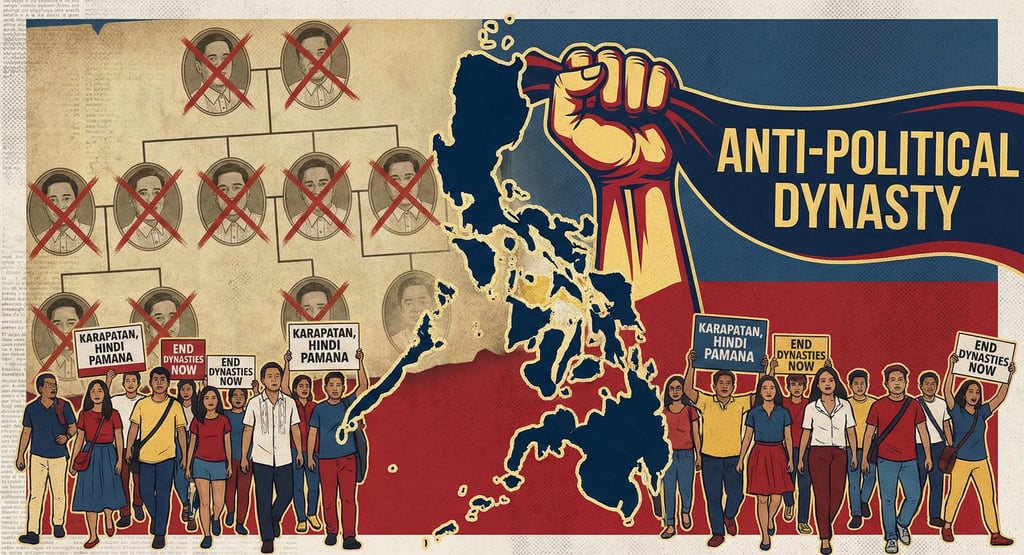
Twelve senators just signed the committee report on the anti-political dynasty bill. It passed the Senate Committee on Electoral Reforms and People's Participation on February 24, 2026, and Senator Risa Hontiveros sponsored it on the plenary floor that same afternoon.
This is the first time in almost four decades that an anti-dynasty measure has gotten this far in the Senate. The 1987 Constitution has always said political dynasties should be prohibited. Section 26, Article II. But Congress, dominated by the very families the provision was meant to check, never passed the enabling law.
Until now. Maybe.
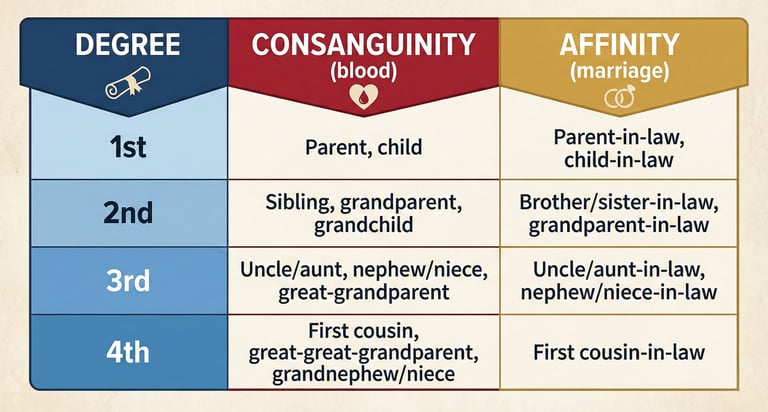
The bill limits the ban to the second degree of consanguinity and affinity. That means parents, children, siblings, grandparents, grandchildren, and spouses. It does not touch uncles, aunts, nephews, nieces, or first cousins.
And that’s where the debate gets real.
Who Signed And What The Bill Actually Says
The 12 senators who endorsed the committee report are: Risa Hontiveros, Erwin Tulfo, JV Ejercito, Kiko Pangilinan, Ping Lacson, Loren Legarda, Sherwin Gatchalian, Robin Padilla, Imee Marcos, Migz Zubiri, Bam Aquino IV, and Lito Lapid. That is 12 out of 13 regular members and two ex-officio members of the committee. Only nine signatures were needed.
The key provisions of the Senate version:
A political dynasty is defined as the concentration, consolidation, or perpetuation of public office and political power by spouses or relatives in national or local elective offices, party-list representation, and any other elective positions created by law.
The prohibition covers up to the second degree of consanguinity and affinity: father, mother, brother, sister, spouse, child, grandparent, grandchild.
National and local positions are counted separately. A family member holding a national seat does not block a relative from a local seat, and vice versa.
Party-list positions are prohibited if a member of a dynasty already holds a national or local position.
Both simultaneous and successive holding of office by relatives are banned. A spouse or relative of an incumbent cannot immediately succeed them.
Illegitimate children are covered. Cohabiting couples, regardless of civil status or SOGIESC, are also covered under the second degree.
The family gets the right of first refusal. They decide among themselves who runs. If they cannot agree, Comelec steps in.
Enforcement mechanisms are delegated to the Commission on Elections.
Target implementation: the 2028 elections.
Hontiveros herself has said she wants the bill passed before the end of March 2026, with the House version ready for bicameral conference by then.
What The Degrees Actually Mean
This is where people get confused, so here it is broken down clearly:
The Senate bill covers up to the second degree only. That means if a governor’s first cousin wants to run for mayor in the same province, that is perfectly legal under this bill. If a congressman’s uncle wants to run for vice governor, the bill does not touch them.
Under a fourth-degree prohibition, those would be banned.
Why Only Second Degree? The Real Reasons.
There are two explanations. One is the official version. The other is the political math.
The official version comes from retired Supreme Court Associate Justice Adolfo Azcuna, who told the Senate hearing that a second-degree limit is more “feasible” because beyond two degrees, it becomes challenging for Comelec to verify and enforce familial relationships. He argued that the poll body’s capacity to trace bloodlines past siblings and direct descendants is limited, especially in a country with inconsistent civil registry records.
Political scientist Julio Teehankee has also described the second degree as the “most acceptable limit” of the anti-dynasty bill. The logic: start with what can actually pass and what can actually be enforced, then expand later.
Hontiveros has been transparent about this. Her own bill, Senate Bill 154, pushes for a fourth-degree ban. She has said repeatedly that the fourth degree is the ideal. But she is working with six different Senate bills that prescribe different degrees: fourth, third, and second. The committee report settled on the second degree as a compromise to get enough signatures.
That is the political math. In a Senate where many members belong to political families themselves, getting 12 signatures on a fourth-degree ban was never realistic. Imee Marcos signed this committee report. A fourth-degree ban would gut the Marcos political apparatus in Ilocos Norte. It would similarly devastate the Dy clan in Isabela, the Singson dynasty in Ilocos Sur, the Dutertes in Davao, the Ynares family in Rizal, and dozens of other obese dynasties nationwide.
The second degree is survivable for most political families. Painful, but survivable. The fourth degree is existential.
That is why it is only the second degree.
Is The Second Degree Enough?
No. Not if the goal is to genuinely dismantle political dynasties as the Constitution intended.
Investigative work on the 2025 elections shows at least 18 “obese” political dynasties winning—families with five or more members in public office. The Singson clan of Ilocos Sur alone had 23 members running. The Marcos family has multiple elected members. The Dutertes have their web across Davao. The Dy family sprawls across Isabela like a political franchise.
A second-degree ban would stop a governor’s son from succeeding as governor, or prevent siblings from simultaneously holding the same level of office in the same locality. But it would not stop a governor’s nephew, uncle, or first cousin from running in the same province. It would not stop the rotation game: step down, install a cousin, wait one cycle, come back.
Studies on dynasties point out that around almost all provinces have at least one dominant political family, with multiple dynastic clans per province. Most of these dynasties extend well beyond the second degree. They are networks of uncles, aunts, in-laws, and cousins occupying positions across multiple jurisdictions and government levels.
Business groups, election watchdogs, and anti-dynasty advocates have been clear: a truly effective anti-dynasty law must reach the fourth civil degree and must also regulate succession and rotation. They also want a mandatory cooling-off period equal to one full electoral cycle for term-limited officials and their relatives.
Some framers of the 1987 Constitution have been blunt in public hearings: the intent was to dismantle feudalistic political control, not to scratch the surface and leave the structure intact. For them, anything less than a fourth-degree ban is already a compromise.
The House Version Is Even Weaker
While the Senate is at least moving on a second-degree ban, the House version filed by Speaker Bojie Dy III and Majority Leader Sandro Marcos, House Bill 6771, has been widely criticized as a “pro-dynasty” measure.
HB 6771 only bans relatives from simultaneously holding the same level of elective position. It does not ban succession, rotation, or substitution. It permits family members to hold power across different jurisdictions and government levels. Critics have called it “too shallow” and a peak performative move.
Analysts argue HB 6771 is designed to pass and be non-threatening. Youth leaders and progressive blocs have pointed out that it allows political families to maintain control in their respective districts and government levels, continuing the strategic redistribution of relatives across localities.
The stronger alternative in the House is HB 5905, which pushes for a fourth-degree ban and covers simultaneous, successive, and substitution-based dynasties with continuous enforcement mechanisms.
When the Senate and House versions go to bicameral conference, the final product will likely be watered down further. That is the danger.
The SK Reform Act: Proof That Second Degree Works (Barely)
The only existing anti-dynasty provision in Philippine law is found in Republic Act 10742, the Sangguniang Kabataan Reform Act of 2015. It prevents SK candidates from running if they are related to incumbent officials within the second degree of consanguinity.
When implemented in the 2018 SK elections, it did produce results. In some cities, the incidence of dynastic SK officials dropped by a few percentage points. Not a revolution, but a measurable change.
These are modest numbers. The provision was limited to the barangay level, applied only to youth councils, and enforcement was inconsistent.
But it proved one thing: even a second-degree ban, when actually enforced, can shift the needle. The question is whether it shifts it enough.
The Enforcement Problem
Comelec officials themselves have flagged serious concerns about implementation.
Right now, election laws do not require candidates to declare relatives in elective posts on their certificates of candidacy. If the anti-dynasty bill passes without amending the Omnibus Election Code, candidates can simply claim good faith, saying they were unaware a relative was running.
There is also a technical issue between disqualification and cancellation. Disqualification allows the substitution of a candidate, which means a dynasty could simply swap one family member for another. Cancellation, on the other hand, means the candidate committed a material misrepresentation and cannot be substituted. The bill needs to be crystal clear on which remedy applies.
Regional Comelec officials have said openly: enforcing a law that is ambiguous, full of loopholes, and vague on remedies will be extremely difficult. But they also say that a strong, clear law can be implemented even in areas with intense clan politics.
Hontiveros has acknowledged that the ball will be in Comelec’s court once the law is enacted. The bill proposes giving Comelec mechanisms to enforce the prohibitions, including the power to step in when families cannot agree on who among them should run.
What Would Be Better
If the second degree is the political compromise needed to pass something, anything, after 39 years of nothing, then fine. Take the win. But call it what it is: a first step, not a solution.
A genuinely effective anti-dynasty law would include:
A fourth-degree prohibition on consanguinity and affinity, covering first cousins, uncles, aunts, nephews, nieces, and their in-law equivalents.
A ban on both simultaneous and successive holding of office by relatives, with no gap that allows rotation.
A mandatory cooling-off period of one full electoral cycle for term-limited officials and their relatives, preventing perpetual family succession.
An explicit prohibition on substitution and position-switching among relatives to circumvent term limits.
Mandatory disclosure of relatives in certificates of candidacy, with criminal penalties for false declarations.
A continuous enforcement framework that empowers Comelec to act proactively, accept verified petitions, and remove winners even after proclamation.
Coverage of party-list positions, which have become a backdoor for dynasties to expand their reach.
The core idea is simple: merit, not lineage, should decide who serves.
So, Does This Anti-Dynasty Bill Matter?
This bill is a crack in a wall that has stood untouched for 39 years. That breaks more than 3 decades of inaction and failure. The 1987 Constitution mandated the prohibition of political dynasties, and every Congress since then has failed to act. It took scandals, public outrage, and a more informed electorate to create enough pressure for this bill to even get a committee report.
But a second-degree ban is a band-aid on a systemic wound. It stops the most obvious forms of dynasty—the father-to-son handoff, the husband-and-wife tandem—but leaves the deeper networks intact. The uncles and cousins and in-laws who form the real scaffolding of political power in this country will remain.
Hontiveros knows this. She has said the second degree is a starting point, not the finish line. If Comelec implements it well for 2028, it will shake things up at the local level. And if the political appetite grows, the degree can be expanded later.
The real test is not whether this bill passes. The real test is whether the bicameral version survives the House, where dynasties hold an even tighter grip. And whether what comes out the other end is a law with teeth, or another performative gesture designed to look like reform while preserving the status quo.
Filipinos have waited 39 years. They deserve more than a compromise. But if this is what it takes to start, then let it start.
SOURCES:
https://docs.google.com/document/d/15MbueP9AMiT2rHRM3TQPCuwG2BUQ2K6qj3_qTkNjLbs/edit?usp=sharing
Contact us
subscribe to morning coffee thoughts today!
inquiry@morningcoffeethoughts.org
© 2024. All rights reserved.
If Morning Coffee Thoughts adds value to your day, you can support it with a monthly subscription.
You can also send your donation via Gcash: 0969 314 4839.