
I understand cleaning the house when visitors are coming. You sweep the floor, put things away, and finally deal with whatever you have been postponing because someone else is about to see it.
What I struggle with is the point where that familiar courtesy becomes an excuse to hide the people who live there.
A repaired sidewalk is useful. Residents can walk on it long after the motorcade has passed, provided the work is done properly.
A wall placed between a visitor’s car and a poor community leaves me with a different question. What exactly did we improve for the people behind it?
The question has come up whenever different Philippine administrations prepared for international visitors. Historical reports describe whitewashed settlements, barriers along delegation routes, demolished shelters, and homeless people removed before important guests arrived.
The people being moved out of sight are citizens. Their presence should never become something the government apologizes for through a coat of paint.
THE HOUSEHOLD EXCUSE
During the Asian Development Bank’s annual meeting in Manila in 2012, authorities installed a temporary barrier along an airport-to-downtown route. According to an Associated Press report, it screened a settlement beside a garbage-strewn creek from passing visitors.
Presidential spokesman Ricky Carandang defended the preparations by comparing them to fixing up before guests arrive. Then-MMDA chairman Francis Tolentino said the government wanted visitors to see an orderly Metro Manila, while denying that officials intended to hide poor people.
I understand cleaning my house because I have visitors coming. Asking neighbors to help clean a shared street would be reasonable, too.
Pero kung pati kapitbahay ko kailangan kong takpan dahil ayokong makita ng bisita ang kalagayan niya, ibang usapan na iyon. Bakit siya ang kailangang mawala sa paningin para ako ang magmukhang maayos?
The household comparison becomes uncomfortable once someone else has to bear the cost of your good impression.
Did the families behind the barrier receive safer homes? Was the creek cleaned? Did they get reliable water, proper drainage, or a safer place to raise their children?
The barrier itself could answer none of those questions.
A government has responsibilities to the people whose homes are being screened. Comparing the whole arrangement to tidying a private house skips over those responsibilities, along with the question of who gets to decide which residents are presentable.
A WOMAN PAINTED HER HOUSE. THEY DEMOLISHED IT ANYWAY.
In 1976, Manila was preparing to host the annual meetings of the International Monetary Fund and the World Bank. Contemporary reporting in TIME described freshly whitewashed shanties among the preparations for the gathering.
On October 7, The New York Times reported that more than 400 families had been forcibly evicted and their homes demolished in and around Tondo. Many had been transported in garbage trucks to distant relocation sites.
The newspaper described the hurried removals as apparently part of Imelda Marcos’s beautification efforts before thousands of foreign delegates arrived.
Rosario Malinis said authorities told her to paint her house to save it. She spent 54 pesos, which she described as the equivalent of three days of her husband’s work when work was available.
According to her account, officials returned the next morning and demolished the house anyway.
There is something especially cruel about making a family spend scarce money to comply with an instruction, then destroying the home they were trying to protect.
For an official preparing a city for visitors, a house can become something along a route that needs fixing or clearing. For the family living there, it is somewhere to sleep, somewhere to leave belongings, somewhere to return after work.
The word “beautification” becomes difficult to accept when the improvement requires someone else to lose that much.
THE VISITORS ALREADY KNEW
Who did the government imagine it was fooling?
Months before the meetings, the World Bank had announced $32 million in loans for an urban-development project intended to benefit approximately 180,000 people in Manila’s poor communities. Its announcement named Tondo Foreshore and Dagat-Dagatan and described improvements involving water, sewerage, drainage, and other services.
Its announcement also described upgrading settlements as an alternative to resettlement. During the meetings, a senior Bank official told The New York Times that the project called for improving the communities while moving as few families as possible and causing as little disruption to their lives as possible.
The World Bank already knew about these conditions. It was lending money to improve them.
That makes the hurried effort to improve appearances feel even more insulting.
It resembles being lied to by someone who knows you already understand the situation. You are expected to go along politely while the families whose homes were demolished have to live with what happened.
THE PRACTICE SURVIVED DIFFERENT PRESIDENTS
During the 1996 APEC gathering under President Fidel Ramos, The Irish Times reported that police were tearing down cardboard shelters and moving homeless people away from routes used by delegates staying along Roxas Boulevard.
In 2012, the barrier installed before the ADB meeting led to another public dispute over whether officials were hiding poor communities from visitors.
Then came two separate controversies in 2015 under President Benigno Aquino III.
For Pope Francis’s January visit, the Department of Social Welfare and Development brought homeless families to a resort in Nasugbu, Batangas. The Philippine Daily Inquirer reported that 490 people participated, staying from January 14 to 19.
DSWD secretary Corazon Soliman denied that the government was hiding them. She described a family-development and housing-orientation activity and cited concerns about the risks families could face during the papal crowds.
DSWD subsequently reported that 74 of the 99 participating families were renting homes through its assistance program, while other families had received different forms of support. Those figures came from the department; they were not an independent check on what happened to every family over time.
Later that year, Human Rights Watch documented preparations for APEC involving highway repainting, walls screening slum areas, vendor removals, and the detention of adults and children. Its November report said more than 140 children were among those detained.
DSWD described the clearing operations as regular outreach and rescue work and denied their connection to the summit. HRW presented accounts from people affected that challenged that explanation.
In 2017, during Rodrigo Duterte’s presidency, The Philippine Star reported that Manila authorities had rounded up 48 street dwellers and 10 ambulant vendors in an operation before the November ASEAN summit. Twenty-nine of the street dwellers were children.
City officials said the operation was part of continuing efforts to help homeless people. Summit organizing official Marciano Paynor Jr. also described the removal of homeless people as a security measure, arguing that people intending harm could exploit their presence.
Each administration offered its explanations. The people cleared from the streets still deserve answers about what happened to them afterward.
CLAIRE CASTRO’S DEFENSE
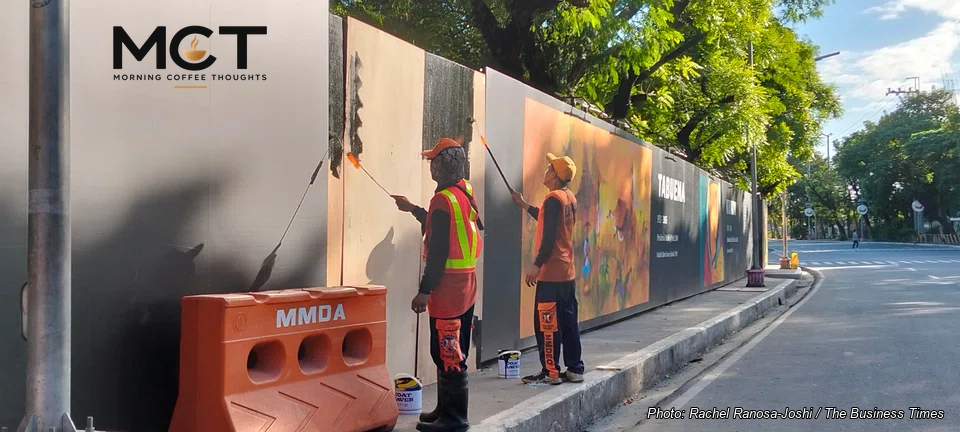
Reports ahead of the November 2026 ASEAN summit describe art-covered barriers along J.W. Diokno Boulevard and clearing operations affecting vendors and street dwellers near summit routes. Critics have accused the government of hiding urban poverty.
Palace Press Officer Claire Castro has rejected that accusation. She has defended clearing operations as security preparations for visiting leaders and said the country also wants to demonstrate Filipino hospitality.
According to Castro, the barriers serve security purposes and showcase Filipino artwork, while the broader preparations help present the Philippines positively to foreign investors.
She has also rejected accusations that the preparations serve President Marcos’s personal vanity. She says the government is improving the country and working for Filipinos’ welfare.
Hosting an international gathering requires security arrangements. That still leaves questions about the measures chosen and their cost to residents.
If a particular barrier is necessary for security, officials should explain why, as far as they can without putting anyone at risk. If families or vendors must temporarily leave an area, the public should know what assistance they receive, where they can go, and when they can return.
Attracting investors also leaves a question unanswered. What improvement reaches the community behind the artwork?
Castro has said that poverty should never be covered up and acknowledged that it is a reality. The government should be held to that after the summit, when the people affected by these preparations are still here.
Local officials have also said they need to manage traffic and keep roads clear. Parañaque officials have said vendors will be allowed to return after the gathering.
Even a few days without work can hurt a household that depends on daily earnings.
With the summit’s opening scheduled for November 15, we cannot yet know what will happen afterward. Whether people can return, whether assistance reaches them, and whether improvements remain useful are questions to follow after the delegates leave.
ANGER STILL NEEDS AN ACCURATE HISTORY
There is not enough evidence here to trace these specific practices to the Commonwealth.
The 1974 Miss Universe pageant appears in later accounts. A 2012 Associated Press report carried the Philippine Communist Party’s account of whitewashed walls screening settlements along visitors’ routes, while a November 2026 VERA Files article also identifies the pageant as an occasion when fences and walls were whitewashed to screen shanties.
Those accounts were written years later. The 1976 IMF–World Bank meetings are documented in newspaper reports published at the time.
VERA Files has also debunked a satirical story about an enormous curtain supposedly ordered to hide poverty during the current ASEAN preparations. That fabricated curtain is separate from the reported barriers and clearing operations.
The documented cases are troubling enough. Similar disputes have appeared under different presidents, at different international gatherings, with officials saying they wanted to improve appearances, help homeless people, protect visitors, or attract investment.
What needs scrutiny is the decision to hide a community or move its residents without improving their lives.
Once a government makes that decision, the people affected are entitled to more than assurances that the city must look good.
KUNG KAYA KAPAG MAY BISITA
A sidewalk should be safe because residents use it every day. A family should receive housing assistance because it needs somewhere secure to live.
Those responsibilities do not become more urgent because a foreign delegation might notice their neglect.
Kung kaya itong gawin ng gobyerno kapag may bisita, kaya niya itong gawin araw-araw. The speed of these preparations makes the usual waiting harder to accept.
Residents have to wonder why their daily needs get less attention than a foreign visitor’s schedule.
Hindi naman kailangang araw-araw magpintura ng bangketa. Pero dapat araw-araw may naglilinis, may nag-aayos, at may tumutugon sa mga problemang matagal nang tinitiis ng mga nakatira rito.
What I expect is consistent attention to the conditions officials suddenly find urgent when guests are coming.
If officials can identify broken pavement before a summit, residents should have a reliable way to get it repaired during the rest of the year. If a family needs help leaving the streets, that help should remain available after the last delegation departs.
A foreign visitor’s schedule should never become the most reliable way to get the government’s attention.
THE PEOPLE WHO STAY
When a government places a screen in front of a poor community, it risks telling the people behind it that their visibility is the problem.
I find that deeply offensive.
The families did not embarrass the country by continuing to live where visitors could see them. They have lives to manage in the conditions available to them, often while officials make decisions about where they can stay or work from somewhere far more comfortable.
By all means, sweep the streets. Repair the pavement, improve drainage, collect the garbage, and make public places safer.
Then stay long enough to answer for what happens to the people affected by the preparations.
Rosario Malinis said she spent money to paint her house because authorities told her that would save it. They demolished it the following morning.
Any account of the city’s preparations should have to answer for what happened to her family, too.
After decades of preparing the country for visitors, we should be able to give its residents an answer better than asking them to step aside again.
SOURCES
- Associated Press / Taipei Times, “Philippines erects wall to hide slums,”https://www.taipeitimes.com/News/world/archives/2012/05/04/2003531983
- TIME, “Conferences: Pomp and Austerity in Manila,”https://time.com/archive/6879838/conferences-pomp-and-austerity-in-manila/
- The New York Times, “Slum Evictions in Manila Embarrass the World Bank,”https://www.nytimes.com/1976/10/07/archives/slam-evictions-in-manila-embarrass-the-world-bank-evictions-from.html
- World Bank, “World Bank to Assist Manila Slum Upgrading,” May 28, 1976,https://documents1.worldbank.org/curated/en/099017009162216618/txt/IDU044dbf11d0c7910443c0ac1b0265e1c772e5d.txt
- The Irish Times, “Homeless and shanties given boot as Manila cleans house for APEC,”https://www.irishtimes.com/news/homeless-and-shanties-given-boot-as-manila-cleans-house-for-apec-1.109524
- Philippine Daily Inquirer, “Homeless not hidden from Pope; they were in training,”https://newsinfo.inquirer.net/667636/homeless-not-hidden-from-pope-they-were-in-training
- Philippine Daily Inquirer, “DSWD: Poor families brought to resort during papal visit now off streets,”https://newsinfo.inquirer.net/675879/dswd-poor-families-brought-to-resort-during-papal-visit-now-off-streets
- Human Rights Watch, “Philippines: Mass Arrests Before APEC Summit,”https://www.hrw.org/news/2015/11/15/philippines-mass-arrests-apec-summit
- The Philippine Star, “Manila rounds up street dwellers,”https://www.philstar.com/metro/2017/11/02/1755031/manila-rounds-street-dwellers
- GMA News Online, “Taking homeless off the streets ahead of ASEAN Summit also a security measure — Paynor,”https://www.gmanetwork.com/news/topstories/nation/630836/taking-homeless-off-the-streets-ahead-of-asean-summit-also-a-security-measure-paynor/story/
- South China Morning Post, “Philippines’ Marcos accused of hiding Manila’s poor behind art for Asean summit,”https://www.scmp.com/week-asia/politics/article/3373978/philippines-marcos-accused-hiding-manilas-poor-behind-art-asean-summit
- Philippine News Agency, “Palace: ASEAN Summit clearing ops part of security measures,”https://www.pna.gov.ph/article/palace-asean-summit-clearing-ops-part-of-security-measures
- Manila Bulletin, “Palace: P22.9-billion ASEAN hosting budget is ‘money well spent,’”https://mb.com.ph/2026/11/12/palace-p229-billion-asean-hosting-budget-is-money-well-spent
- SunStar, “Palace defends P22.9-B Asean hosting budget,”https://www.sunstar.com.ph/manila/palace-defends-p229-b-asean-hosting-budget
- The Philippine Star, “ASEAN cleanups all for show?”https://www.philstar.com/nation/2026/11/12/2569638/asean-cleanups-all-show
- VERA Files, “FACT CHECK: NO Palace order to hide poverty for ASEAN summit,”https://verafiles.org/articles/fact-check-no-palace-order-to-hide-poverty-for-asean-summit
- The Philippine Star, “Philippines ready to welcome ASEAN leaders,”https://www.philstar.com/headlines/2026/11/12/2569522/philippines-ready-welcome-asean-leaders