
Did COMELEC Set A Dangerous Precedent By Saving Rodante Marcoleta?
This blog looks at how the COMELEC decision saving Rodante Marcoleta from SOCE violations may have set a damaging precedent for future campaign finance cases. It also breaks down how Rodante Marcoleta’s victory at COMELEC could push his big donors into the crosshairs of the BIR instead.
9 min read
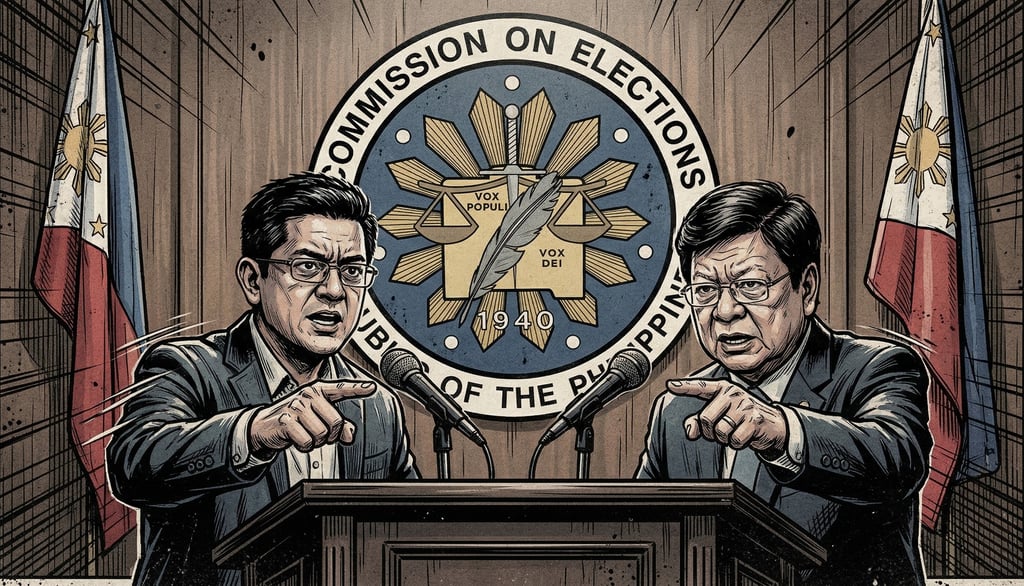
The COMELEC decision on Rodante Marcoleta’s SOCE made my blood pressure spike. Tens of millions in questionable or undisclosed campaign funds, clear rules on paper, and somehow the ruling still leaned toward the powerful.
I’ve spent the last two days trying to calm down enough to write this. I’m a blogger and researcher, but I’m also a Filipino who has to live with these decisions, and the initial anger made it hard to think straight. So I stepped back, reread the Omnibus Election Code, checked the tax rules on campaign contributions, and waited for my heartbeat to slow down.
Now that I’m calmer, here’s what I see when COMELEC’s campaign finance rulings collide with BIR rules on donor’s tax, income tax, and unspent campaign funds.
WHAT THE LAW SAYS ON PAPER
When I went back to Batas Pambansa Blg. 881, the Omnibus Election Code, the basic promise was clear: transparency. Section 99 forces every candidate and party to file a Statement of Contributions and Expenditures (SOCE) within thirty days after election day. The SOCE is supposed to list every contribution and every expense: who gave, how much, when, and where the money went.
The logic is simple. If voters can see who paid for your campaign, they have a better shot at understanding who you’ll prioritize in office. To make it serious, the law adds teeth: failure to file, or willfully lying or hiding, can bring perjury, possible jail time, loss of the right to vote, and permanent disqualification from public office.
Section 95 goes further. It bans certain people and entities from donating to campaigns. Section 95(c) blocks government contractors and subcontractors that supply goods, services, or public works from contributing, directly or indirectly, to partisan political activity. It’s the law’s attempt to stop the usual “you fund my campaign, I give you the project” cycle: the pay‑to‑play politics that bloats contracts and robs the public.
On paper, the rules know what the problem is. The COMELEC officials? I'm not so sure.
WHEN THE RULES MEET REAL CAMPAIGNS
The Supreme Court has also tried to protect the right of ordinary people to run. In cases like Marquez v. COMELEC and Juan Olila Ollesca’s 2022 presidential bid, the Court said lack of money alone doesn’t automatically make someone a nuisance candidate. The idea is: being poor shouldn’t erase your candidacy.
But anyone who has watched Philippine elections knows money still decides a lot. Campaigns need TV, digital machinery, ground operations, lawyers, and logistics; this is not a cheap game. So we live with a contradiction: the law insists being poor shouldn’t erase your run, but winning still tracks big spending.
That’s why enforcement around campaign finance is crucial, to some of us at least. If COMELEC lets dark money slide while insisting the rules look strict on paper, those Supreme Court protections start feeling like lines in a decision, not real‑world fairness.
WHAT MADE THE MARCOLETA RULING SO HARD TO SWALLOW
In Marcoleta’s case, complaints pointed to tens of millions in donations that either weren’t properly disclosed or raised serious questions about classification and source. These weren’t simple typos; they went straight to Section 99’s demand for full, honest reporting of contributions and expenses.
Yet the COMELEC en banc cleared him and ended the probe. The explanation leaned heavily on technical points: how the complaint was framed, what supporting documents were submitted, and how certain rules were interpreted. Former COMELEC officials and watchdogs publicly said the decision “defies logic” and warned it could weaken future enforcement.
Reading that, it felt like COMELEC chose to be a technician, not a referee. The law’s spirit—full transparency, real consequences—was standing in the corner while the body focused on procedure.
And this goes alongside other cases where campaign finance issues involving powerful figures, like Francis “Chiz” Escudero, ended in ways that signaled the same thing: serious questions can be met with technical clearances if you have enough lawyers and political capital. For people with enough money and legal support, the message is clear: if you can play the paperwork, you can survive.
TURNING TO THE TAX SIDE
Because the COMELEC angle felt like a dead end, I followed the money to the Bureau of Internal Revenue.
Normally, if you give more than 250,000 pesos in gifts in a year, the excess is hit with a 6 percent donor’s tax. That’s the baseline. But Section 13 of RA 7166 and Section 94(a) of the Omnibus Election Code carve out a special break: campaign contributions to candidates, parties, and party‑list groups, whether in cash or in kind, are exempt from donor’s tax.
That exemption isn’t automatic. It depends on following both election and tax rules.
Here’s the part that should worry donors:
If a donor gives big money and it isn’t properly reported or documented as a campaign contribution, the BIR can treat it as a regular donation. Then the 6 percent donor’s tax applies to the amount above 250,000 pesos.
If a candidate receives contributions, doesn’t spend them all on actual campaign activities, and keeps leftovers after the election, those unspent funds can be treated as taxable income.
If the candidate fails to withhold the required 5 percent creditable withholding tax on certain campaign expenses, the BIR can also reclassify affected amounts as the candidate’s income, not just campaign spending.
Same money, different failures, different problems: donor’s tax for financiers who hide or mishandle donations, income tax for candidates who don’t follow the rules on spending, reporting, or withholding.
THE LEGAL MASK: “PERSONAL CAPACITY” AND HALF‑VISIBLE DONORS
While reading cases and commentary, I kept running into one phrase: “personal capacity.”
The pattern goes like this: someone connected to a prohibited entity—say, a government contractor—makes a big donation. When questioned, the defense says: I donated as a private citizen, not as the company. Therefore, Section 95 shouldn’t apply.
On a legal memo, that argument looks clean. In a country where company survival often depends on government contracts and politicians often rely on those same companies, it feels like a thin mask. If you “personally” donate millions while your firm benefits from the same politicians, does the conflict really vanish?
Then there’s how donors can appear in SOCEs. Sometimes the form is technically filled, but the information still keeps the real source blurry: layered entities, vague descriptions, or classifications that hide the donor’s true nature. The document exists, but voters still can’t truly see who is behind the money.
These are the kinds of moves that hollow out transparency without obviously breaking the template.
WHERE COMELEC ENDS AND BIR BEGINS
At some point, I realized something I didn’t like: the more campaigns twist the rules to survive COMELEC complaints, the more the real danger switches over to the BIR.
If a donation isn’t properly disclosed in the SOCE and doesn’t line up with BIR requirements, that money can lose its tax‑exempt status. The financier can face the 6 percent donor’s tax on large contributions. The candidate can face income tax on unspent funds or on amounts tied to campaign expenses where the required 5 percent withholding was ignored.
In Marcoleta’s case, COMELEC has already signaled this split: he’s cleared, but donors and campaign financiers may face separate tax and election complaints. It’s the institutional way of saying, “We’re done with the senator; if anything is wrong, talk to the people who bankrolled him.”
The irony is that Marcoleta’s own bravado helped draw the line. In defending himself and projecting that he had nothing to hide, he effectively separated his fate from his financiers in the public conversation. COMELEC may have saved him this round, but his big mouth threw some of his donors—the very people he was trying to protect—under the bus.
For the rest of us, that might actually be the good news hiding inside this absurd decision. If COMELEC won’t touch the core of the problem, then at least those donors may finally have to answer to the BIR. Hopefully.
ARE LAWMAKERS EVEN PAYING ATTENTION?
All of this makes me wonder if the people who write our laws are actually watching what COMELEC just did. The loopholes that saved one senator while hanging his donors out to dry are the same loopholes future candidates and financiers will study and copy. Because why not?
If lawmakers are serious about clean elections, this is their homework. Tighten Section 95 so “personal capacity” can’t be used as a magic shield, clarify SOCE rules so technicalities can’t erase tens of millions in questionable funds, and align election law with BIR rules so there’s no safe gray zone for dark money to hide in.
WHAT THIS SAYS ABOUT THE SYSTEM
Because even if Congress wakes up and cleans up the text of the law, we’re still left with the system that applied it this way. On one level, our laws already know what the problems are: dark money, contractor influence, fake transparency, pay‑to‑play governance. The Omnibus Election Code and RA 7166 build a structure that, on paper, should help voters see who owns which politicians and should keep campaign donations from becoming tax‑free personal wealth.
On another level, COMELEC decisions like the Marcoleta ruling show how easily that structure can be softened for those with power and legal talent. The rules stay on the page; the consequences fade in practice.
Meanwhile, the BIR is in the background with rules on donor’s tax, unspent funds, and 5 percent withholding, backed by circulars and reminders stretching back years. If it chooses to push, it can hurt financiers and candidates financially, even when COMELEC walks away.
As a blogger and researcher, this is the question I’m left with: are we drifting into a system where dark campaign money fears tax audits more than it fears election watchdogs? If regular Filipinos can be chased over small tax mistakes, what does it mean when large, suspicious campaign funds get treated with this much flexibility on the election side—and only maybe, later, on the tax side?
Keep an eye on COMELEC in the coming weeks and months, because if decisions like this keep sliding through, we’re not just watching one senator get saved—we’re watching the rules of the game quietly being rewritten in front of us.
SOURCES:
Omnibus Election Code of the Philippines – Batas Pambansa Blg. 881
https://elibrary.judiciary.gov.ph/thebookshelf/showdocs/2/53271Omnibus Election Code of the Philippines, Article XI (Contributions and Expenditures) – Wikisource
https://en.wikisource.org/wiki/Omnibus_Election_Code_of_the_Philippines/Article_XICampaign contributions and the tax implications – Association of Certified Public Accountants in Public Practice (ACPAPP)
https://www.acpapp.org.ph/post/campaign-contributions-and-the-tax-implicationsTax Treatment of Campaign Contributions – BDB Law
https://www.bdblaw.com.ph/index.php/newsroom/articles/tax-law-for-business/844-tax-treatment-of-campaign-contributionsTaxation of Campaign Contributions – MTF Counsel
https://mtfcounsel.com/2022/01/27/taxation-of-campaign-contributions/A refresher on taxes for campaign contributions – PwC Philippines
https://www.pwc.com/ph/en/tax/tax-publications/taxwise-or-otherwise/2025/a-refresher-on-taxes-for-campaign-contributions.htmlBIR reminds candidates to declare unspent funds, pay income tax – Philippine Daily Inquirer
https://newsinfo.inquirer.net/770538/bir-reminds-candidates-to-declare-unspent-funds-pay-income-taxBIR imposes 5% tax on campaign contributions and expenditures – VERA Files
https://verafiles.org/articles/bir-imposes-5-tax-on-campaign-contributions-and-expendituresTaxability of Election Contribution – BDB Law
http://bdblaw.com.ph/index.php/newsroom/articles/tax-law-for-business/424-the-2019-corporation-code-and-its-effects-on-the-taxabDonor’s tax and campaign contributions (study material / summary) – Studocu
https://www.studocu.com/ph/document/de-la-salle-university/law-on-income-taxation/1-sdfsdfasdfasgasd-sgfsdf/27501202Philippine Campaign Contributions Tax Exemption (Donor’s Tax) – Scribd
https://www.scribd.com/document/391602579/Tax-Donors-TaxComelec clears Marcoleta in SOCE probe, orders election raps vs some campaign donors – ABS-CBN News
https://www.abs-cbn.com/news/nation/2026/3/18/comelec-clears-marcoleta-in-soce-probe-orders-complaints-vs-defensor-other-campaigComelec clears Marcoleta in SOCE probe – The Philippine Star
https://www.philstar.com/headlines/2026/03/19/2515354/comelec-clears-marcoleta-soce-probeComelec clears Marcoleta; ‘it defies logic,’ says poll watchdog – Philippine Daily Inquirer
https://newsinfo.inquirer.net/2198048/comelec-clears-marcoleta-it-defies-logic-says-poll-watchdogComelec: Decision on Marcoleta's SOCE case may affect future elections – Inquirer.net
https://www.inquirer.net/470625/comelec-admits-decision-on-marcoletas-soce-case-may-affect-future-elections/Comelec clears Marcoleta over SOCE, terminates probe – Philippine News Agency
https://www.pna.gov.ph/articles/1271328Comelec: Marcoleta not guilty but his donors are – The Manila Times
https://www.manilatimes.net/2026/03/19/news/national/comelec-marcoleta-not-guilty-but-his-donors-are/2302993Loopholes that made Marcoleta's SOCE violation untouchable, explained – The Philippine Star
https://www.philstar.com/headlines/2026/03/19/2515426/loopholes-made-marcoletas-soce-violation-untouchable-explainedPoll body's decision on Marcoleta SOCE case 'absurd' – ABS-CBN News
https://www.abs-cbn.com/news/nation/2026/3/20/ex-comelec-commissioner-poll-body-s-decision-on-marcoleta-soce-case-absurd-1229Comelec to ask Marcoleta to explain SOCE 'misdeclaration' – Philippine Daily Inquirer (earlier coverage)
https://newsinfo.inquirer.net/2139728/comelec-may-summon-marcoleta-over-soceComelec EN BANC drops probe vs Sen. Rodante Marcoleta over alleged non-disclosure of campaign donors – GMA Public Affairs (Facebook post)
https://www.facebook.com/gmapublicaffairs/posts/comelec-en-banc-drops-probe-vs-sen-rodandte-marcoleta-over-alleged-non-disclosurONENewsPH: Lacson says Comelec pressured not to sign Marcoleta SOCE resolution – One News (Facebook post)
https://www.facebook.com/ONENewsPH/posts/lacson-says-comelec-pressured-not-to-sign-marcoleta-soce-resolutionstorycon-senaONENewsPH: Comelec explains reason for delayed release of Marcoleta SOCE decision – One News (video)
https://www.facebook.com/ONENewsPH/videos/marcoleta-soce-case/884830374390120/Comelec clarifies probe vs Marcoleta's SOCE not yet junked – ABS-CBN News (video context before final ruling)
https://www.youtube.com/watch?v=oqk9y6IFA-8COMELEC concludes probe vs Marcoleta's SOCE during 2025 nat'l elections – GMA News (video)
https://www.youtube.com/watch?v=l10549hLih0Limits on Cash and In-Kind Contributions Under Philippine Law – Respicio & Co.
https://www.respicio.ph/commentaries/limits-on-cash-and-in-kind-contributions-under-philippine-lawBIR imposes 5% tax on campaign contributions and expenditures – VERA Files (archival but still relevant to 5% withholding)
https://verafiles.org/articles/bir-imposes-5-tax-on-campaign-contributions-and-expendituresBIR reminders and guidance on unspent funds and income tax (2016 reminder) – Philippine Daily Inquirer
https://newsinfo.inquirer.net/770538/bir-reminds-candidates-to-declare-unspent-funds-pay-income-taxFacebook discussions quoting Section 95(c) of the Omnibus Election Code (government contractors prohibition)
https://www.facebook.com/groups/705579023468045/posts/1645889419436996/Section 95 of the Omnibus Election Code (Batas Pambansa Blg. 881, as amended by RA 7166) – public post reference
https://www.facebook.com/josephine.codilla/posts/the-omnibus-election-code-states-no-contribution-for-purposes-of-partisan-politComelec to issue decision on Rodante Marcoleta SOCE case – public group post (timeline/context)
https://www.facebook.com/groups/717920131901740/posts/2882909875402744/
Contact us
subscribe to morning coffee thoughts today!
inquiry@morningcoffeethoughts.org
© 2024. All rights reserved.