
LATEST COMMENTARY
FIVE THINGS TO KNOW
MCT READER PULSE · MCT-PULSE-2026-017
MCT READER SURVEY
Gaano ka nagtitiwala na tama ang ginagawa ng Kongreso sa budget ng bayan?
This is an informal survey of people who choose to participate. It is not a scientific or nationally representative sample.
ABOUT QUIBOLOY’S EXTRADITION: WHAT HAPPENS BEFORE HE CAN BE SENT TO THE US
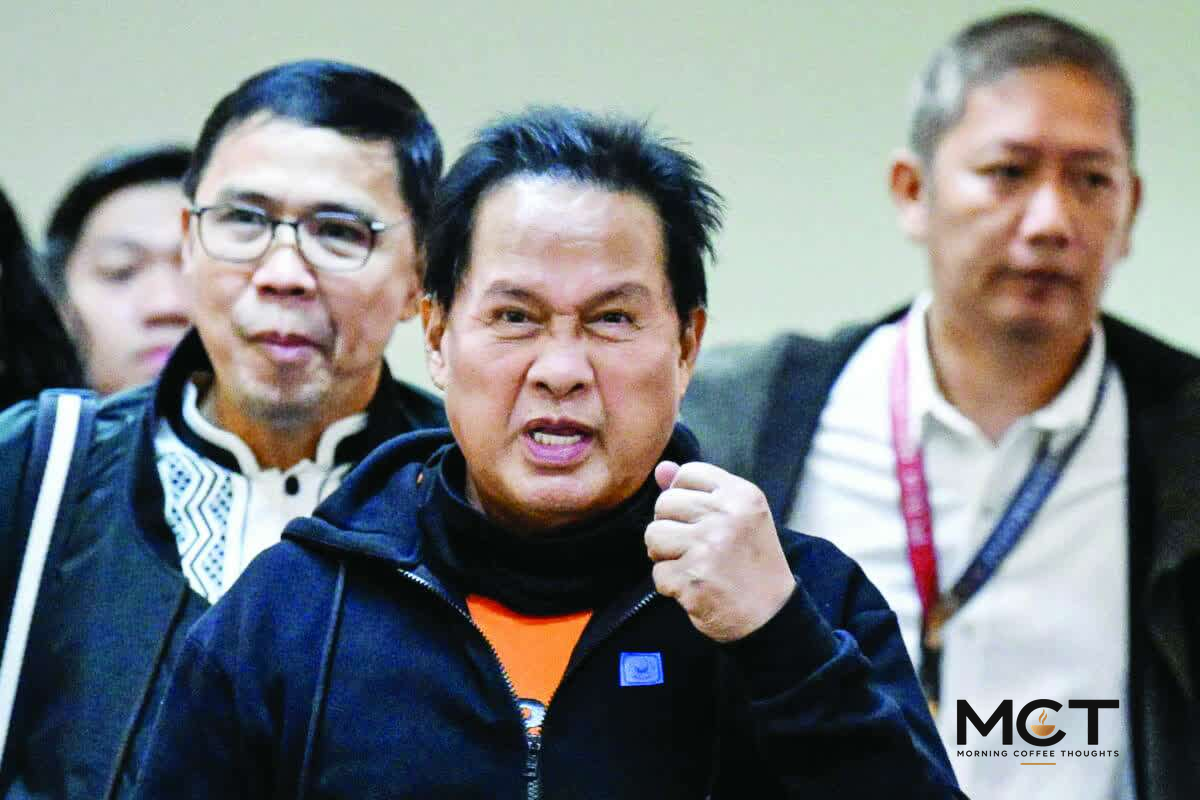
An extradition warrant has been issued against Apollo Quiboloy. That brings the US request another step forward, but it does not mean he is about to board a plane.
The Department of Justice filed the petition on November 9. Makati Regional Trial Court Branch 145 issued warrants against Quiboloy and two others on November 12, and the DOJ announced them the following day. Quiboloy is already detained in the Philippines, where he also faces criminal cases. He denies the accusations against him.
There are still decisions to be made about the US request, his response and the Philippine cases. Here is what happens next.
1
THE WARRANT BRINGS HIM BEFORE THE EXTRADITION COURT
The new warrant belongs to the extradition case. Quiboloy’s existing detention comes from Philippine proceedings; the US request needs its own court action.
Before issuing an extradition warrant, the judge checks the petition and supporting documents for grounds to proceed. That includes whether the person sought is the person named in the request and whether the alleged offense can qualify for extradition.
This is an early decision. The court has not yet finished hearing the petition or ordered his final surrender to US authorities.
The NBI said on November 13 that it was ready to help with the process. Bringing a detained person before the court and carrying out a final transfer are different tasks, and the agency did not give a transfer date.
WHAT TO WATCH
The court’s orders on custody and service of papers, rather than treating an agency’s readiness as a departure announcement.
2
THE PHILIPPINE COURT WILL DECIDE WHETHER HE CAN BE EXTRADITED
Extradition is the process for handing someone over to another country to face criminal proceedings or serve a sentence. In this case, the Philippine court must check whether the US request meets the treaty and Philippine legal requirements.
The US–Philippines treaty generally covers conduct punishable in both countries by more than one year in prison. The two countries do not have to use the same name for the offense. What the person is accused of doing is more important than whether the legal labels match.
The extradition court does not decide whether Quiboloy is guilty of the US charges. Those charges would have to be answered in the criminal proceedings there. The Philippine court’s decision concerns whether the request meets the requirements for surrender.
WHAT TO WATCH
How the petition connects the alleged conduct to the treaty, and what grounds Quiboloy’s lawyers raise against the request.
3
HE HAS A DEADLINE TO ANSWER, BUT IT DOES NOT RUN FROM THE NEWS ANNOUNCEMENT
Under the Supreme Court’s extradition rules, the respondent has 15 calendar days to submit a verified answer after receiving the summons, petition and its attachments.
The date of receipt is important. Counting 15 days from the DOJ’s announcement could produce the wrong deadline.
The answer gives the respondent a chance to raise defenses against extradition. The court then considers the documents and any further proceedings it requires. Live witnesses are not automatically necessary; the rules allow the court to decide from the filed papers when it finds those adequate.
Readers should therefore not expect the case to follow the same sequence as an ordinary criminal trial, with a long series of witnesses taking the stand.
WHAT TO WATCH
Confirmed receipt of the papers, the filing of the answer and the court’s instructions on what it needs before deciding.
4
THE PHILIPPINE CASES CAN AFFECT WHEN A TRANSFER HAPPENS
Quiboloy’s pending cases here do not disappear because the United States wants to prosecute him.
The treaty allows surrender to be delayed while the requested person faces proceedings or serves a sentence in the country holding him. It also allows temporary surrender under agreed conditions, including arrangements for his return.
Philippine rules provide a court process for that second option. The justice authorities may ask the court handling the local criminal case to allow temporary surrender. Whether to allow it, and under what conditions, still needs a decision.
It would be premature to say that every Philippine case must finish before any transfer is possible. It would be equally wrong to say that the US request automatically takes priority over the people pursuing cases here.
WHAT TO WATCH
Any request for delayed or temporary surrender, the local court’s ruling and the conditions protecting the continuation of Philippine proceedings.
5
A DECISION AND AN APPEAL CAN STILL COME BEFORE A TRANSFER
Even if the extradition court grants the petition, there is an appeal process. The rules provide 10 calendar days from receipt of the decision to appeal to the Court of Appeals. An appeal pauses enforcement of the extradition judgment.
A handover would also require arrangements between Philippine and US authorities. The treaty provides for agreement on the time and place of surrender after extradition is approved and the applicable proceedings have been completed.
That is why the warrant alone cannot supply a reliable flight date. The answer, court decision, any appeal and handling of the local cases can all affect the schedule.
WHAT TO WATCH
A judgment on the petition, whether it is appealed, and an official surrender arrangement. Those documents will show how close a transfer really is.
BOTTOM LINE
The US request is now before a Philippine court, and the warrants allow the extradition proceedings to move forward. Quiboloy can answer the petition, the court must decide it, and his pending Philippine cases still need to be handled.
For now, the useful questions are concrete: Have the papers been served? Has an answer been filed? What has the court ordered? Until those steps are clear, a claim that he is already on his way to the United States goes beyond what the warrant says.
SOURCES
- Philstar, November 13, 2026: Quiboloy extradition petition, warrants and service of court papers
- GMA News, November 13, 2026: NBI readiness and the remaining court process
- Supreme Court: Rules on Extradition Proceedings, A.M. No. 22-03-29-SC
- Supreme Court, October 27, 2025: Explanation of the extradition rules
- US Senate Committee on Foreign Relations: US–Philippines Extradition Treaty report, including offense requirements and temporary or delayed surrender
GOOGLE PREFERRED SOURCES
FOLLOW MCT ON GOOGLE
Google’s Preferred Sources feature lets you choose publications you want Google to prioritize for you. Select “Add to Preferred Sources” to make MCT easier to find in Top Stories and other eligible Google results. This does not subscribe you to email.
SUPPORT MCT
HELP KEEP INDEPENDENT POLITICAL WRITING GOING.
Morning Coffee Thoughts is reader-supported. Contributions help pay for research tools, hosting, and the work required to verify and explain each development.