
LATEST COMMENTARY
FIVE THINGS TO KNOW
MCT READER PULSE · MCT-PULSE-2026-017
MCT READER SURVEY
Gaano ka nagtitiwala na tama ang ginagawa ng Kongreso sa budget ng bayan?
This is an informal survey of people who choose to participate. It is not a scientific or nationally representative sample.
ABOUT UNPAID DEBTS: CAN YOU BE JAILED, AND WHAT CAN A LENDER DO?
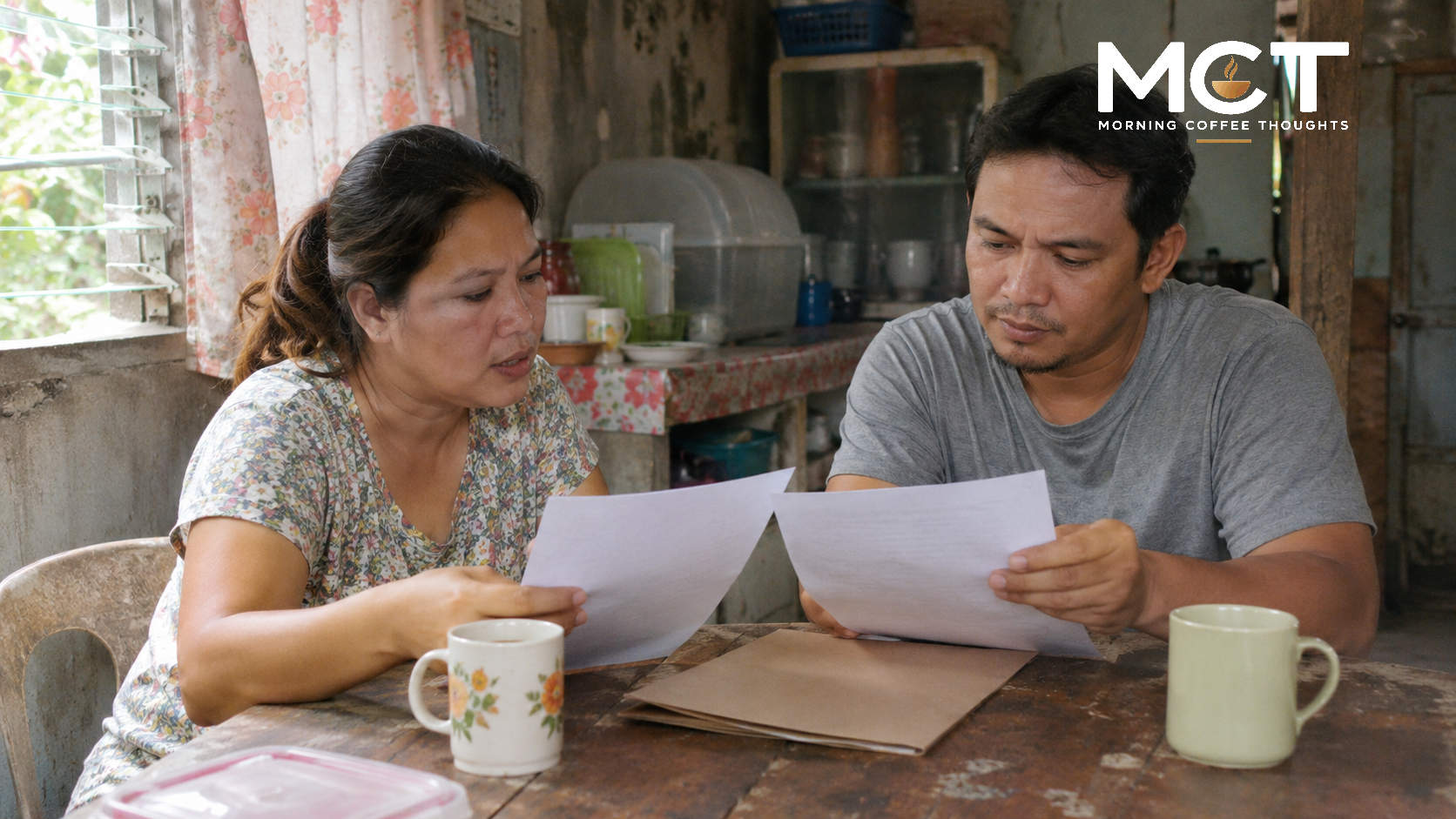
A missed payment can turn a familiar phone number into something you dread seeing. The lender wants the money back. The borrower may be choosing between that payment, groceries and rent. Then someone says, “Ipapakulong kita.”
Philippine law does not make an unpaid personal loan a crime just because payment is late. It also does not erase the loan. Knowing those two points helps both sides deal with the debt without confusing a collection demand with a criminal case.
1
AN UNPAID LOAN ALONE IS NOT A REASON TO JAIL SOMEONE
Article III, Section 20 of the Constitution bars imprisonment for debt. A borrower who cannot repay an ordinary personal loan does not become a criminal simply because the due date has passed. A lender cannot turn that missed payment into an arrest order by sending a threatening message.
The duty to repay can still be enforced through a civil case. Under the Civil Code, valid contracts bind the people who entered into them. Losing income does not automatically cancel the balance or give the borrower the right to set new payment dates alone.
WHAT TO WATCH
Keep the loan agreement, payment receipts and messages. If the amount is disputed, make a dated list of what was borrowed and what has already been paid. A clear account is more useful than another round of threats.
2
FRAUD IS NOT THE SAME AS FALLING BEHIND
Estafa is not a label that automatically fits every unpaid loan. For estafa through false pretenses, the deceit must precede or accompany the transfer of money and induce the other person to part with it. A promise that later goes unfulfilled does not, by itself, prove that kind of fraud.
That does not protect someone from a genuine criminal complaint supported by the facts. A dishonored check can also raise a different issue under the Bouncing Checks Law. Neither the word “loan” nor the phrase “no imprisonment for debt” settles every case involving money.
WHAT TO WATCH
Look at how the money was obtained, not only whether it was repaid. Anyone receiving a criminal complaint or a notice involving a bounced check should have a lawyer review it, rather than relying on advice meant for a simple loan.
3
CHECK THE BALANCE, NOT JUST THE TOTAL IN THE MESSAGE
Ask for a breakdown of principal, payments, interest and penalties. The principal is the amount borrowed. Interest is not something a lender can simply invent after the borrower falls behind. The Civil Code says agreed interest must be expressly put in writing.
That rule does not mean an unwritten interest agreement makes every overdue debt permanently interest-free. Interest as damages for delay is a different legal issue. The contract, demand for payment and applicable law can affect the amount owed. Do not accept a new total merely because it arrives in an official-looking letter.
WHAT TO WATCH
Compare the demand with the original terms and your receipts. Ask a lawyer about disputed charges before signing a new acknowledgment of debt. A lower monthly installment can still leave you paying a larger total.
4
SMALL CLAIMS CAN BE A ROUTE TO COLLECT
The Supreme Court’s small-claims procedure covers qualifying claims for payment or reimbursement of money of up to ₱1 million, excluding interest and costs. These include covered claims arising from loans. It is a civil process, not a request to jail the borrower.
The amount alone does not decide whether a case belongs there. The kind of claim and other filing rules also count. A demand to recover land, for example, is not turned into a small-claims case simply by attaching a low peso value to it. Use the Court’s official forms and ask the clerk of court about the proper filing steps, rather than copying an old social-media template.
WHAT TO WATCH
A lender needs proof of the claim, not just a name and an amount. A borrower should check whether previous payments are reflected. Both sides should keep complete copies of what they submit.
5
DO NOT IGNORE COURT PAPERS BECAUSE YOU THINK THE DEBT IS WRONG
A collection text and court summons are not interchangeable. A summons identifies a court and a case. If papers claiming to come from a court arrive, verify them with that court using contact details found independently. For a small-claims summons, the official court form gives the defendant ten calendar days from receipt to file a verified Response with the court and serve it on the plaintiff. Read the hearing instructions too.
An incorrect balance is a reason to prepare your answer, not to throw the papers away. Gather proof of payments and any written change to the loan terms. If you want to propose installments, put forward an amount and schedule you can meet. The other side must agree to a negotiated arrangement; a request for more time does not itself change an existing deadline.
WHAT TO WATCH
Do not send money to an unfamiliar account merely to “cancel” a supposed case. Verify the recipient and any settlement terms. Keep proof of every payment and ask for written acknowledgment of what balance remains.
BOTTOM LINE
“No jail for debt” is a protection against imprisonment for an ordinary unpaid obligation. It does not cancel the duty to repay. For borrowers, the useful next step is to check the balance and respond to genuine court papers. For lenders, it is to document the claim and use the proper collection process. Threats do not do either job.
This explains general Philippine rules for personal debts. A lawyer should review papers involving a criminal accusation, disputed charges or an existing case.
SOURCES
- 1987 Constitution, Article III, Section 20. https://elibrary.judiciary.gov.ph/thebookshelf/showdocs/3/353
- Civil Code, Articles 1159, 1956 and 2209. https://elibrary.judiciary.gov.ph/thebookshelf/showdocs/2/53360
- Supreme Court, Miguel v. People, G.R. Nos. 267525 and 268329, July 2, 2026. https://elibrary.judiciary.gov.ph/thebookshelf/showdocs/1/70603
- Supreme Court, Moster v. People, G.R. No. 167461, on the elements of B.P. Blg. 22. https://elibrary.judiciary.gov.ph/thebookshelf/showdocs/1/44600
- Supreme Court, rules on expedited procedures and small claims, March 2022. https://sc.judiciary.gov.ph/?p=32628
- Supreme Court, official small-claims forms. https://sc.judiciary.gov.ph/small-claims/
- Supreme Court, Statement of Claim and information for the small-claims defendant. https://sc.judiciary.gov.ph/wp-content/uploads/2023/07/FORM-01-_SCC-Statement-of-Claim.pdf
- Supreme Court, Hun Hyung Park v. Eung Won Choi, on agreed interest and interest as damages. https://elibrary.judiciary.gov.ph/thebookshelf/showdocs/1/65094
GOOGLE PREFERRED SOURCES
FOLLOW MCT ON GOOGLE
Google’s Preferred Sources feature lets you choose publications you want Google to prioritize for you. Select “Add to Preferred Sources” to make MCT easier to find in Top Stories and other eligible Google results. This does not subscribe you to email.