
LATEST COMMENTARY
FIVE THINGS TO KNOW
MCT READER PULSE · MCT-PULSE-2026-017
MCT READER SURVEY
Gaano ka nagtitiwala na tama ang ginagawa ng Kongreso sa budget ng bayan?
This is an informal survey of people who choose to participate. It is not a scientific or nationally representative sample.
ABOUT USING YOUR PHONE WHILE DRIVING: WHAT THE RULES ACTUALLY COVER
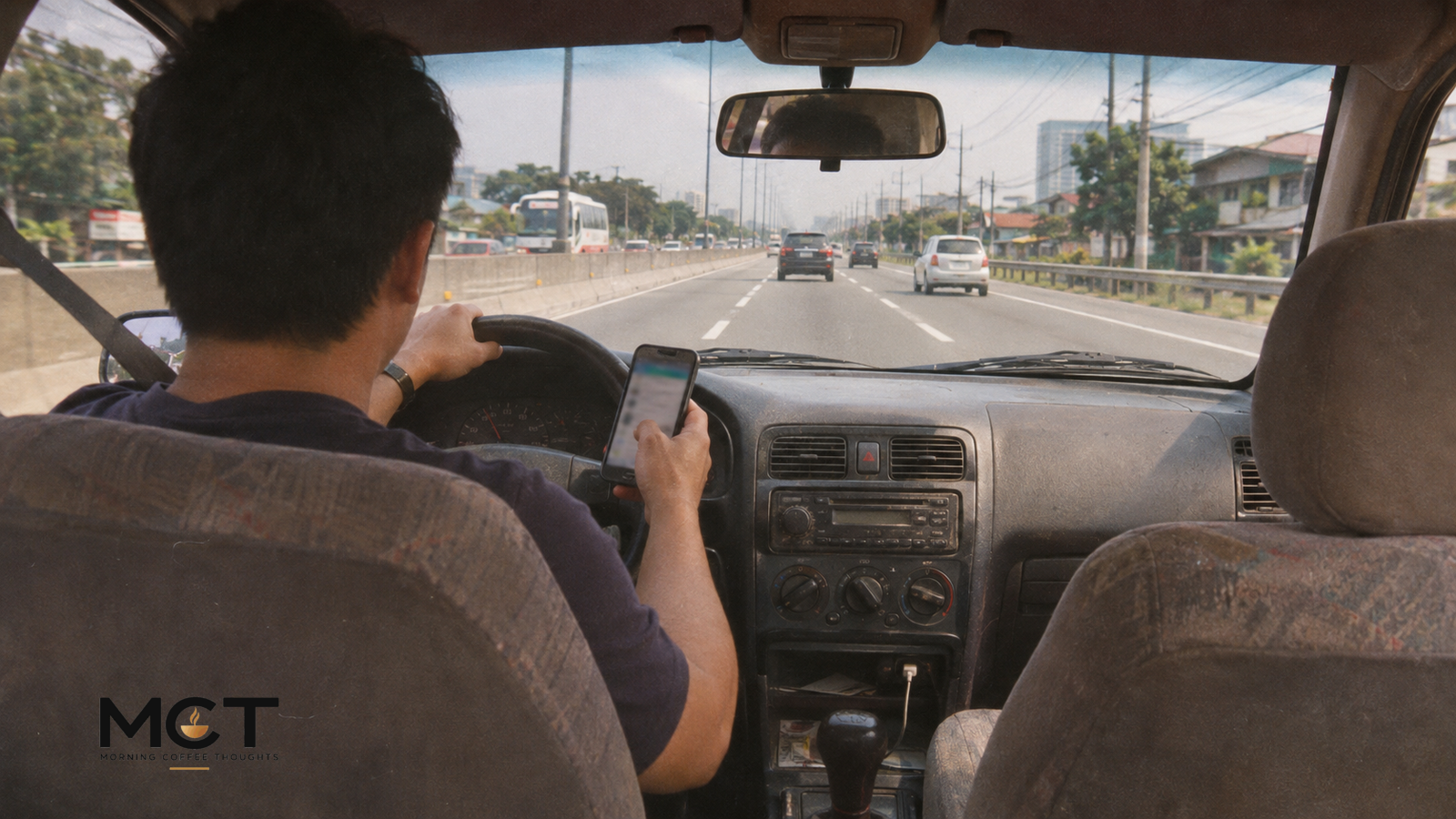
A message arrives while you are waiting at a red light. The navigation app needs a new destination. Someone calls to ask where you are. These are ordinary moments behind the wheel, and the rules do not depend on whether the message feels urgent to you.
Today's reporting on the Land Transportation Office's action over a viral driving video puts the Anti-Distracted Driving Act back in the news. Republic Act No. 10913 has been law since 2016. It covers phone and device use in private and public vehicles, with specific conditions for hands-free calls and emergencies. Knowing those conditions before a trip is more useful than trying to work them out with a phone in one hand.
1
A RED LIGHT IS NOT A BREAK FROM THE PHONE RULE
Section 4 covers a vehicle in motion or temporarily stopped at a red light. It prohibits using a mobile device to write, send or read messages, make or receive calls, and similar acts, subject to the law's hands-free and emergency provisions. It also covers using electronic devices for games, movies, browsing, messages, e-books and calculations.
So a driver does not get an automatic chance to reply just because the light turns red. The car is still part of the traffic flow. Wait until you are safely parked in a lawful place before handling the phone. Section 5(c) also says the rule still applies when a driver has pulled over to comply with a traffic regulation. A temporary traffic-directed stop is not the same as parking to use your phone.
The law reaches beyond private cars. It covers motorcycles and public vehicles, and also lists bicycles, pedicabs and other forms of transport when used on public roads or in circumstances involving public safety.
WHAT TO WATCH
Before leaving, tell anyone expecting an immediate reply that you will answer after parking safely. A delay in replying is easier to manage than a message that takes your attention away as traffic moves.
2
HANDS-FREE USE STILL HAS CONDITIONS
The law permits hands-free functions or similar devices that allow calls without holding the phone. It also requires the phone or hands-free device to be placed where it does not interfere with the driver's line of sight.
Turning on the speaker while continuing to hold the handset does not meet the law's description of a call made without holding the device. A phone mount is not permission to watch a video or browse while driving, either. Those activities are separately covered by the prohibition.
Set up the equipment before moving. If the connection fails or the call needs your full attention, park somewhere safe and lawful before sorting it out. The permission for hands-free calls should not be treated as a reason to keep a distracting conversation going.
WHAT TO WATCH
Check the setup from the driver's normal seated position. The device should not hide the road, pedestrians or the view needed to drive, and you should not need to pick it up to handle the call.
3
SORT OUT THE ROUTE BEFORE THE VEHICLE MOVES
A navigation app can help with directions, but entering a destination, reading a long message from a customer or searching for a new route can draw your eyes and hands away from driving. Set the route before departure. If a change needs typing or close attention, park safely and lawfully first, or let a passenger handle it.
This is particularly useful for riders and drivers who depend on their phones for bookings and deliveries. A customer can send new instructions, but the arrival of those instructions does not remove the driver's responsibility to keep control of the vehicle.
Do not turn a stop at a red light into a navigation-editing session. Leave time to pull into an appropriate parking place instead of relying on a few seconds between moving vehicles.
WHAT TO WATCH
Check the destination, mounting position and sound before departure. If a passenger helps, ask them to give short directions rather than hold a screen in front of your view.
4
THE EMERGENCY EXCEPTION IS FOR EMERGENCIES
Section 6 exempts phone use for emergency purposes, including calls to law enforcement, a health-care provider, the fire department or another emergency service. It also covers a motorist using a phone while operating an emergency vehicle, such as an ambulance or fire truck, within the course of their duties.
That is different from an ordinary work call, a customer asking for an update or someone wanting to know why you are late. The law's exception is tied to the emergency purpose; it is not a general pass to describe every pressing message as an emergency.
If an emergency occurs, give responders the location and the help needed. Where possible, a passenger can make the call, or the driver can park in a safe place. The aim is to obtain help without creating another danger on the road.
WHAT TO WATCH
Keep emergency contacts easy to reach before a trip. In an actual incident, clear information about location and immediate danger helps responders more than a lengthy account sent while the vehicle is moving.
5
FINES CAN ALSO COME WITH LOSS OF THE LICENSE
Section 8 sets a ₱5,000 fine for a first offense and ₱10,000 for a second. A third offense carries ₱15,000 and a three-month license suspension. A fourth carries ₱20,000 and license revocation.
It provides a higher penalty of ₱30,000 and a three-month suspension for drivers of public utility vehicles, school buses or school-service vehicles, carriers of volatile, flammable or toxic materials, and violations within 50 meters of school premises. These are the amounts written in the law, which also permits later increases subject to limits and publication requirements. Check the current LTO assessment on any notice. Other legal liabilities can still arise from what happened on the road.
A preventive suspension during an investigation should not be confused with a final finding that a driver committed a particular repeat offense. In the case reported this week, the driver has already appeared before the LTO and publicly apologized. She said she is going through the agency's process. Her appearance and apology do not by themselves tell us the final administrative outcome.
WHAT TO WATCH
If you receive a notice, read the alleged violation, response deadline and instructions carefully. Check the notice with the issuing office and keep copies of what you submit. Do not assume that a social-media clip or a headline tells you the final result of a case.
BOTTOM LINE
Prepare the phone before you prepare to move: route set, calls handled and the device positioned out of the way. If a message, booking or change of plan needs your attention during the trip, give it that attention after parking safely and lawfully. The person waiting for a reply can wait until you have parked.
SOURCES
- Republic Act No. 10913, 2016, sections 4–6 and 8–9: Anti-Distracted Driving Act.
- Senate Legislative Reference Bureau, Republic Act No. 10913: Legislative record and full text.
- Philippine News Agency, November 12, 2026, 8:44 a.m.: LTO summons P-pop girl group member over viral distracted driving video.
- News5, November 12, 2026, 8:36 a.m.: BINI Mikha apologizes for using phone while driving.
Photo credits
AI illustration / OpenAI OpenAI
GOOGLE PREFERRED SOURCES
FOLLOW MCT ON GOOGLE
Google’s Preferred Sources feature lets you choose publications you want Google to prioritize for you. Select “Add to Preferred Sources” to make MCT easier to find in Top Stories and other eligible Google results. This does not subscribe you to email.
SUPPORT MCT
HELP KEEP INDEPENDENT POLITICAL WRITING GOING.
Morning Coffee Thoughts is reader-supported. Contributions help pay for research tools, hosting, and the work required to verify and explain each development.