
LATEST COMMENTARY
FIVE THINGS TO KNOW
MCT READER PULSE · MCT-PULSE-2026-017
MCT READER SURVEY
Gaano ka nagtitiwala na tama ang ginagawa ng Kongreso sa budget ng bayan?
This is an informal survey of people who choose to participate. It is not a scientific or nationally representative sample.
BARANGAY SUMMONS: WHAT HAPPENS WHEN SOMEONE FILES A COMPLAINT AGAINST YOU?
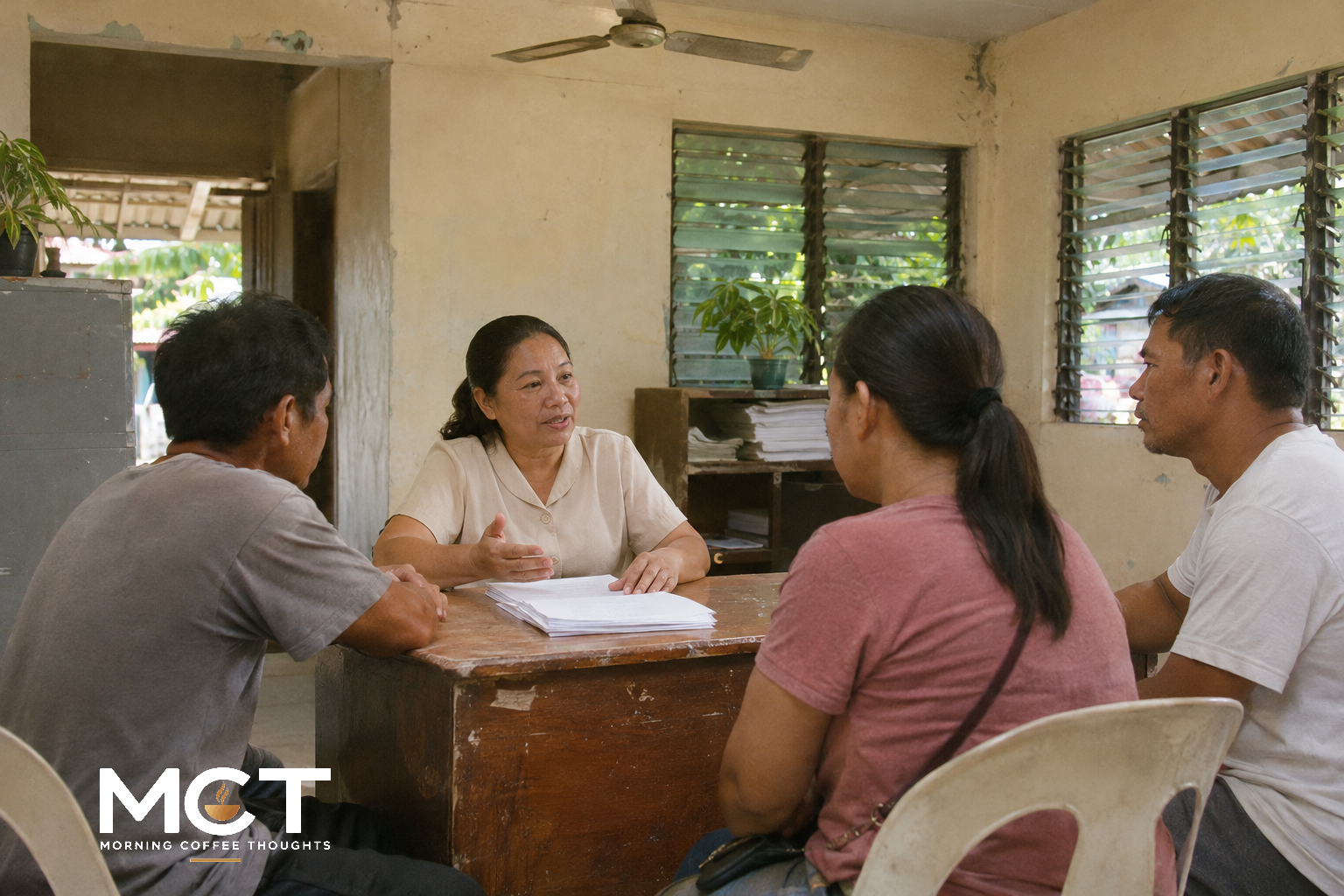
A barangay notice arrives, and suddenly a disagreement with a neighbor feels frightening. May kaso na ba? Do you need a lawyer? Can the barangay make you sign an agreement just to end the argument?
For disputes covered by Katarungang Pambarangay, the barangay tries to help the people involved reach a settlement. Here are five things to know before the meeting.
1
CHECK WHAT THE NOTICE ACTUALLY SAYS
Read the names, complaint, date, time and issuing office. Keep a copy and confirm unclear details with the barangay itself. A summons to barangay conciliation calls you to a settlement process; receiving it does not mean a court has already found you guilty.
Coverage depends on the dispute and where the parties actually live. Many covered disputes involve individuals living in the same city or municipality, but the law has exceptions. Do not assume every disagreement must pass through the barangay before anyone can go to court. Ask about the specific complaint, especially if a company, a public official's official duties, or people living in different municipalities are involved.
2
DO NOT SIMPLY IGNORE IT
Willfully refusing to obey a valid barangay summons can have consequences. The Local Government Code allows an application to the city or municipal court for indirect contempt. A complainant can be barred from bringing the same claim to court; a respondent can lose the right to file a connected counterclaim.
The barangay does not automatically acquire the power to jail you because you missed a meeting. The reason for the absence and the proper process count. The DILG-hosted handbook includes notices calling an absent party to explain. If illness, work or another problem prevents attendance, contact the office promptly, explain and keep proof. A request to move the meeting is not the same as an approved new date.
3
YOU USUALLY HAVE TO SPEAK FOR YOURSELF
In barangay conciliation, the parties generally appear personally without the assistance of a lawyer or representative at the proceedings. The law has a narrow exception for minors and people it calls “incompetents,” who may be assisted by non-lawyer next of kin. Do not assume this exception covers every older person or every person with a disability.
The Supreme Court has enforced this rule even when a lawyer claimed to be acting only through a special power of attorney. You can seek legal advice outside the meeting so you understand the complaint and any proposed agreement. Bring the documents that help explain your side, and ask for words you do not understand to be explained before you sign.
4
A SIGNED SETTLEMENT CAN BE ENFORCEABLE
Do not sign a payment schedule, apology or promise just because everyone wants to go home. Read the complete terms, ask for a copy and make sure the dates and amounts match what you actually agreed to.
Under the Local Government Code, a barangay settlement generally acquires the force of a final court judgment ten days from its date unless properly repudiated. Repudiation is not a casual change of mind: the law gives a ten-day route for consent obtained through fraud, violence or intimidation, through a sworn statement filed with the lupon chairman. Get legal help promptly if that happened. Arbitration has its own rules and should not be confused with an ordinary settlement.
5
ABUSE MUST NOT BE TREATED AS AN ORDINARY NEIGHBOR DISPUTE
When relief is sought under the Anti-Violence Against Women and Their Children Act, its rules take a different path. Section 33 excludes the usual barangay conciliation provisions and bars officials from forcing or unduly influencing a protection-order applicant to compromise or abandon the protection sought.
“Huwag nang palakihin” is not a proper substitute for protection. A victim can seek help from the barangay VAW desk, police Women and Children Protection Desk or a lawyer. If there is immediate danger, seek emergency help rather than waiting for a scheduled settlement meeting. Which remedies fit depends on the conduct and relationship covered by the law.
BOTTOM LINE
Take the notice seriously, prepare your side and understand any agreement before signing. Showing up does not oblige you to accept every demand. If the complaint, your safety or the proposed terms raise legal questions, get advice for your own situation.
This is general Philippine legal information, not advice on a particular case.
SOURCES
- Republic Act 7160, Sections 408–418 and 515. https://lawphil.net/statutes/repacts/ra1991/ra_7160_1991.html
- Katarungang Pambarangay: A Handbook, Philippines–Canada Local Government Support Program / SALIGAN, hosted by DILG Region V. Pages 38–43 and forms on failure to appear. https://region5.dilg.gov.ph/attachments/article/182/Related_Laws_Katarungang_Pambarangay_Handbook.pdf
- Supreme Court, Magno v. Velasco-Jacoba, A.C. 6296, November 22, 2005. https://www.lawphil.net/judjuris/juri2005/nov2005/ac_6296_2005.html
- Republic Act 9262, Sections 3, 30, 33 and 35. https://lawphil.net/statutes/repacts/ra2004/ra_9262_2004.html
- Supreme Court, Ngo v. Gabelo, G.R. 207707, August 24, 2020, including exceptions to mandatory barangay conciliation. https://elibrary.judiciary.gov.ph/thebookshelf/showdocs/1/66338
GOOGLE PREFERRED SOURCES
FOLLOW MCT ON GOOGLE
Google’s Preferred Sources feature lets you choose publications you want Google to prioritize for you. Select “Add to Preferred Sources” to make MCT easier to find in Top Stories and other eligible Google results. This does not subscribe you to email.