MCT DAILY

No fake news. No noise. Just the facts you need.

The morning Daily Brief anchors the day. New developments and short explainers follow when the story changes.

FIVE THINGS TO KNOW…

Short explainers published throughout the day.

MCT READER PULSE · MCT-PULSE-2026-004

MCT READER SURVEY

Do you agree with Atty. Lorna Kapunan’s view that Vice President Sara Duterte’s public remarks about threats and hiring an assassin contribute to the problem of violence among Filipino youth?Sang-ayon ka ba sa pananaw ni Atty. Lorna Kapunan na nakadaragdag sa problema ng karahasan sa kabataang Pilipino ang mga pampublikong pahayag ni Vice President Sara Duterte tungkol sa pagbabanta at pagkuha ng assassin?

During an August 19 online press briefing, Kapunan said she was not blaming the Vice President alone. She said Sara Duterte was “contributing to the problem and not to the solution,” while also pointing to political leadership, family values, news coverage, and social media.

Read the report and Kapunan’s quoted remarks before answering.

This survey measures reader opinion. It cannot establish that a public statement or action caused a violent incident. It reflects only the views of verified MCT readers who choose to participate and is not nationally representative.

Open the shareable survey page →
View reader pulse archive →
Checking your reader session…

August 25, 2026 · 6:45 AM6-minute read

ABOUT THE FIRST BANGSAMORO PARLIAMENTARY ELECTION

More than two million BARMM voters are scheduled to choose the first regular 80-seat Bangsamoro Parliament on September 14.

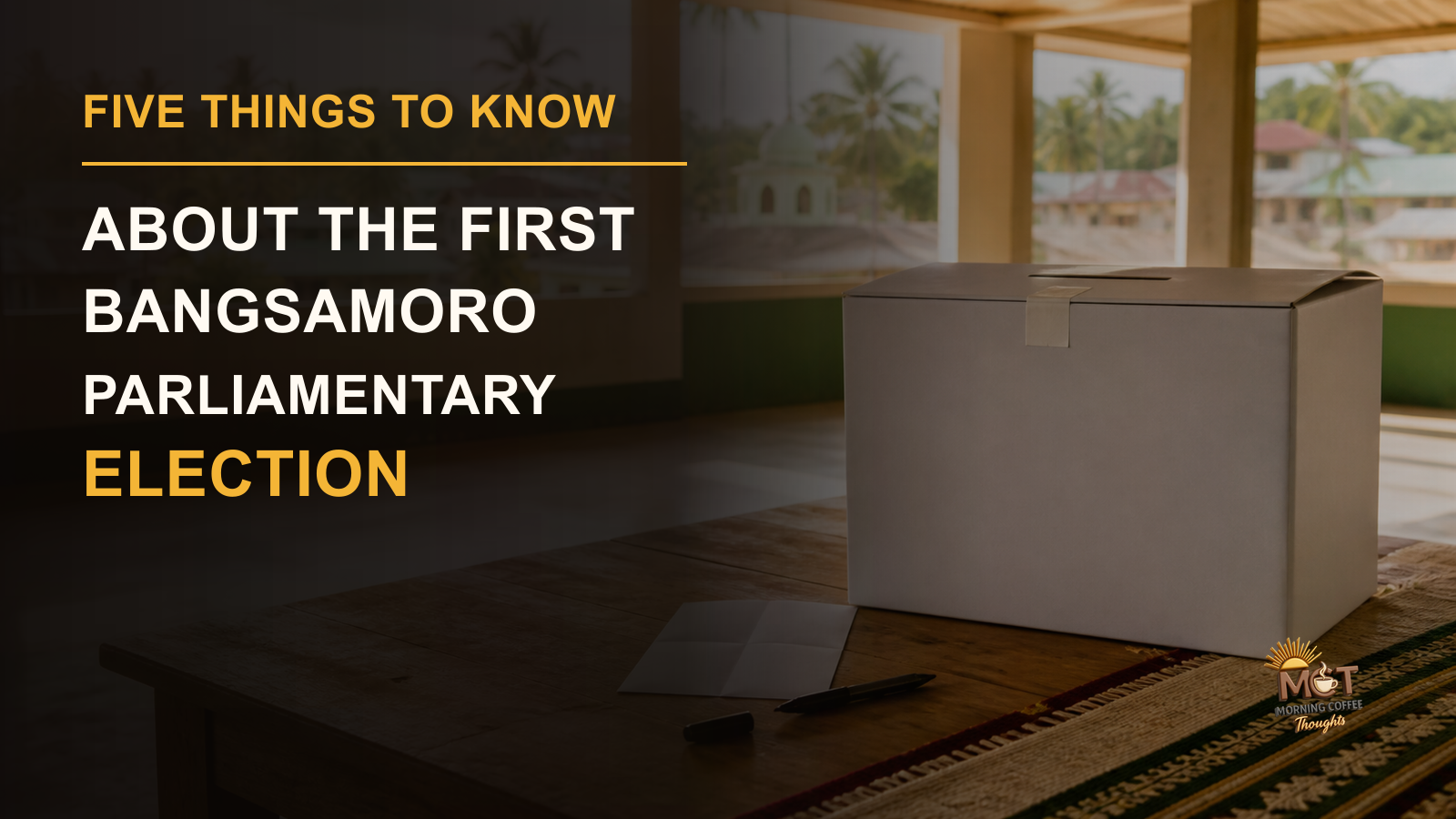
A ballot box on a wooden table inside a bright Bangsamoro community polling place.

More than two million voters in the Bangsamoro Autonomous Region in Muslim Mindanao are scheduled to elect their first regular regional parliament on September 14. The vote will replace an appointed transition authority with an elected government and introduce a ballot that works differently from the national and local elections most Filipinos know.

The result will decide who writes regional laws, approves the Bangsamoro budget, oversees ministries, and chooses the chief minister. It will also test whether the peace agreement that created the autonomous region can move from a long transition into an elected parliamentary system.

1

THIS IS THE FIRST REGULAR ELECTION FOR THE BANGSAMORO PARLIAMENT

The Bangsamoro Transition Authority has governed the autonomous region since 2019. Its members were appointed while the region established its ministries, parliament, election rules, and other institutions under the Bangsamoro Organic Law.

Several legal and scheduling problems delayed the first regular vote. Republic Act No. 12317 now sets the election for September 14, 2026. Comelec reported in early August that about 95 percent of election preparations had been completed for 2.393 million registered voters in 5,212 precincts across 105 municipalities and two cities.

For residents, this is the first chance to choose the parliament that will govern the region after the transition. The election will give the incoming government a public mandate that an appointed body cannot claim in the same way.

WHAT TO WATCH

Watch Comelec’s final calendar, polling-place notices, ballot instructions, and any court ruling that affects a candidate, party, district, or election rule before September 14. Voters should rely on the final Comelec material because some older guides refer to dates and rules that have since changed.

2

THE 80-SEAT PARLIAMENT USES THREE FORMS OF REPRESENTATION

The Bangsamoro Parliament has 80 seats. Forty are assigned through votes for regional political parties. Thirty-two belong to single-member parliamentary districts. Eight are reserved for sectors: two each for non-Moro Indigenous Peoples and settler communities, plus one each for women, youth, traditional leaders, and ulama.

A district contest resembles a familiar local race because the candidate with the most votes represents that area. The party vote works across the region and determines how many of the 40 party seats each qualified party receives. Parties submit ranked nominees, so a voter choosing a party is also helping decide which names from that list may enter Parliament.

Sectoral seats follow separate voting or assembly procedures under the Bangsamoro Electoral Code and later amendments. Voter education has to explain which choices appear on the regular ballot and which sectoral process applies to a particular voter. Confusion can cause people to leave valid choices blank or vote without understanding how each part affects the final Parliament.

WHAT TO WATCH

Watch Comelec’s final sample ballot and voter demonstrations. Pay attention to the official list of parties, district candidates, party nominees, sectoral candidates, and sectoral voting instructions. Older explainers may contain thresholds or procedures that were revised in 2026.

3

VOTERS WILL NOT ELECT THE CHIEF MINISTER DIRECTLY

The chief minister is the head of the Bangsamoro Government, but the position does not appear as a direct region-wide contest on the ballot. The newly elected members of Parliament will choose the chief minister from among themselves on the first day of session.

The Bangsamoro Organic Law requires a majority vote of all members. In a complete 80-member Parliament, that means 41 votes. If nobody obtains a majority in the first round, the two members with the largest vote totals proceed to a runoff inside Parliament.

A party vote therefore helps decide more than the distribution of legislative seats. It can affect which party or coalition has enough support to form the regional government, choose the chief minister, and appoint the Cabinet that runs Bangsamoro ministries. Voters should examine a party’s nominees, program, and possible coalition partners rather than looking only at its name or symbol.

WHAT TO WATCH

Watch whether parties identify their proposed chief minister and coalition conditions before election day. After the results, watch the official seat allocation and the first parliamentary session, where alliances will determine who can reach the required majority.

4

THE DISTRICT MAP NO LONGER INCLUDES SULU

The Supreme Court ruled in 2024 that Sulu is outside the Bangsamoro region after the province rejected the Bangsamoro Organic Law in the 2019 plebiscite. That decision required a new distribution of parliamentary districts among the areas that remain in BARMM.

Comelec’s current allocation gives nine district seats to Lanao del Sur, five each to Maguindanao del Norte and Maguindanao del Sur, four each to Basilan and Tawi-Tawi, three to Cotabato City, and two to the Special Geographic Area. The total remains 32 district seats.

Residents need to know their exact parliamentary district because it may differ from a congressional district or an old BARMM map. The elected district member will work in the regional Parliament, while members of the national House of Representatives continue to hold separate offices.

WHAT TO WATCH

Watch Comelec’s final precinct finder, district maps, and candidate lists. A voter who recently transferred, lives near a district boundary, or previously relied on an older Sulu-inclusive map should verify the assigned precinct and parliamentary district before election day.

5

SECURITY AND PUBLIC TRUST WILL BE PART OF THE ELECTION’S TEST

Comelec and the Philippine National Police have identified 108 election areas of concern across BARMM at different risk levels. The national government announced plans to deploy 8,299 police personnel, coordinate with the Armed Forces and Coast Guard, and use joint peace mechanisms created through the government’s agreement with the Moro Islamic Liberation Front.

The election period runs from July 16 to September 29, with restrictions on carrying firearms and using unauthorized security personnel. Authorities increased coordination after the August 15 attack on the convoy of Interim Chief Minister Abdulraof Macacua. Macacua was unharmed, and investigators had not publicly established the motive in the latest reports.

A peaceful vote requires more than personnel at polling places. People must be able to campaign, attend meetings, report intimidation, and choose freely. Transparent counting, access for accredited observers, quick investigation of threats, and political neutrality from security forces will affect whether residents accept the result.

WHAT TO WATCH

Watch Comelec’s updated areas-of-concern list, reported violations, observer accreditation, peace-monitoring reports, and the handling of complaints before and after election day. The credibility of the new Parliament will depend on both accurate results and the freedom of voters to make their choices without coercion.

BOTTOM LINE

The September 14 vote will decide the membership of an 80-seat regional Parliament through party, district, and sectoral representation. That Parliament will then choose the chief minister and form the Bangsamoro Government. Voters need to understand each part of the ballot, verify their district and precinct, examine party nominees as well as local candidates, and follow official instructions that reflect the latest rules. For the rest of the country, the election is a test of whether the Bangsamoro peace process can produce an elected regional government that people regard as legitimate, representative, and able to govern.

RECENT COMMENTARY

THE LATEST FROM MCT

View all commentary →

SUPPORT MCT

HELP KEEP INDEPENDENT POLITICAL WRITING GOING.

Morning Coffee Thoughts is reader-supported. Contributions help pay for research tools, hosting, and the work required to verify and explain each development.

Choose the monthly support amount you are comfortable with.Continue through PayPal
Send support through GCash0969 314 4839