
LATEST COMMENTARY
FIVE THINGS TO KNOW
MCT READER PULSE · MCT-PULSE-2026-017
MCT READER SURVEY
Gaano ka nagtitiwala na tama ang ginagawa ng Kongreso sa budget ng bayan?
This is an informal survey of people who choose to participate. It is not a scientific or nationally representative sample.
WHAT CHANGES AFTER THE U.S. MIDTERMS
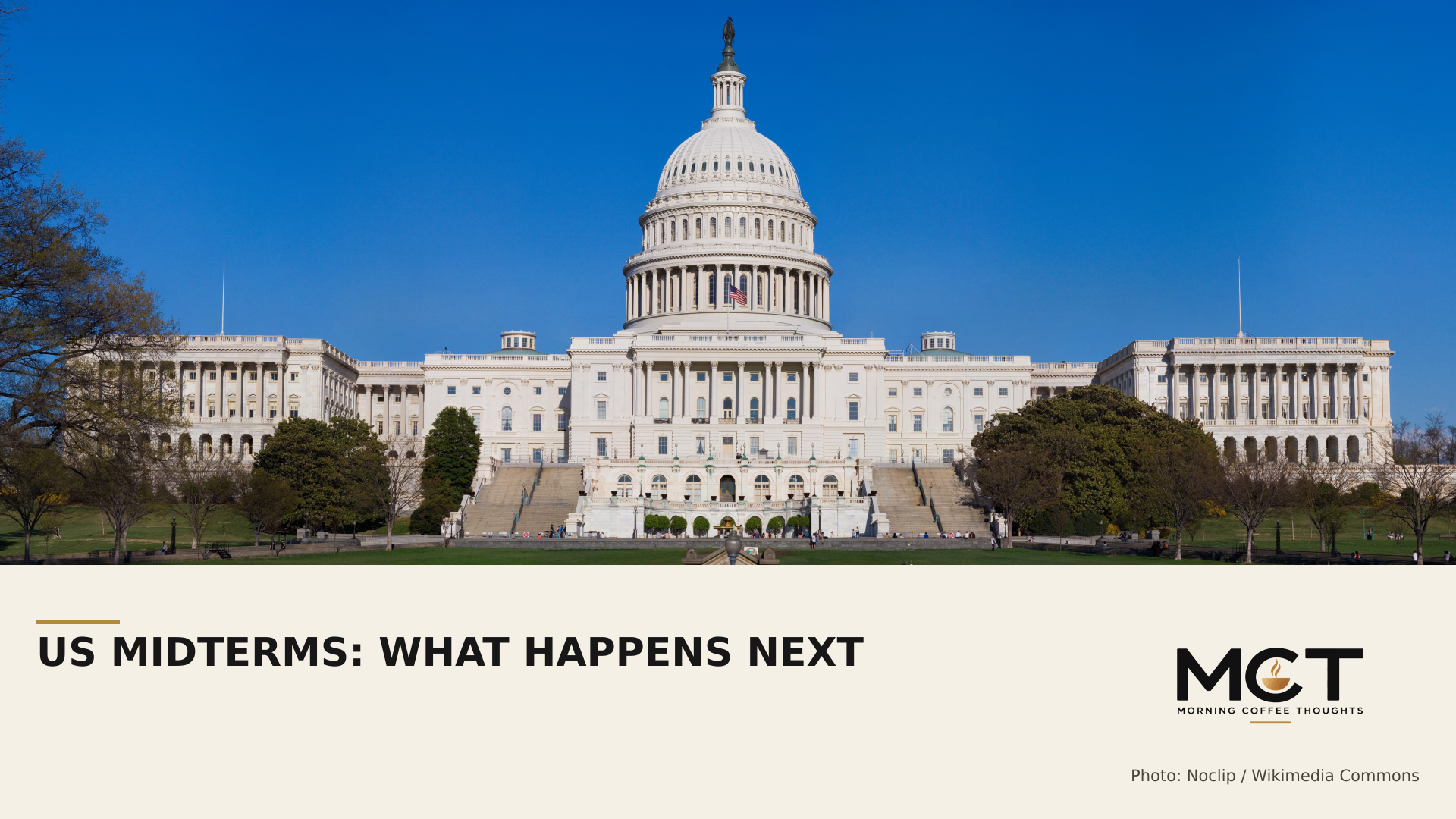
AP has called Democratic control of the U.S. House and Senate. For Filipinos watching immigration policy and decisions in Washington, the next question is what that result allows the incoming Congress to do. The answer depends on which power is involved—and which decisions still require the president’s agreement or enough votes to overcome his veto.
1
A NEWS ORGANIZATION’S CALL IS DIFFERENT FROM CERTIFICATION
AP’s call identifies the expected control of the two chambers. Official election results still come from election authorities after the required checks. The U.S. Election Assistance Commission explains that canvassing aggregates and reconciles election results, while certification formally attests to the results.
An election-night total can remain unofficial even when a results page says every precinct has reported. Deadlines and procedures differ between states. A call about congressional control can therefore come while some races and the final seat totals remain unsettled.
2
THE NEW CONGRESS STARTS IN JANUARY; TRUMP REMAINS PRESIDENT
The incoming congressional terms begin at noon on January 3, 2027, under the Twentieth Amendment. Until then, the current Congress remains in office.
Donald Trump remains president after the new Congress takes office. The presidency and Congress have separate terms, so the incoming majority will be working alongside his administration.
For readers following a proposed policy change, the timing matters. The incoming lawmakers will have to turn campaign promises into measures they can introduce, debate and put to a vote.
3
CONGRESS CAN INVESTIGATE; THE SENATE CONSIDERS NOMINEES
Congressional investigations can examine how federal programs operate and help lawmakers decide whether legislation is needed. Hearings and requests for information can expose decisions to public scrutiny, although the exercise of those powers remains subject to legal and procedural limits.
The Senate also considers presidential nominations for specified offices, including federal judges and senior executive officials. The president nominates; senators decide whether to give the required consent. Confirmation is a Senate responsibility.
These powers give lawmakers a way to question how agencies operate and who leads them. Changing the laws those agencies enforce requires a separate legislative process.
4
PASSING A LAW STILL REQUIRES MORE THAN WINNING CONGRESS
Legislation generally must pass both chambers in the same form and be presented to the president. A president can sign it or veto it; the Constitution also provides circumstances in which a bill becomes law without a signature.
Overriding a presidential veto requires two-thirds of members present and voting in each chamber, with a quorum. A simple majority in the House and Senate is therefore not enough to guarantee that a bill opposed by the president becomes law.
This matters when assessing promises to repeal a law or change government funding. Control of Congress gives lawmakers tools to advance proposals, but the relevant votes and enactment process still have to happen.
5
ICE ENFORCEMENT DOES NOT AUTOMATICALLY END
Existing immigration law and funding do not disappear because congressional control changes. One concrete example is Section 202 of Public Law 119-98: it appropriates $31.075 billion to U.S. Immigration and Customs Enforcement for fiscal 2026, available through September 30, 2029, for specified enforcement personnel, removal transportation and related purposes.
That sum is one funding allocation, not ICE’s total budget or the amount already spent. Changing the allocation or the agency’s statutory powers requires the relevant legal action.
For a Filipino family following a visa application or an immigration case, the result alone grants no new status or protection. The useful evidence will be enacted measures and official implementation rules, including who qualifies and when any change takes effect.
SOURCES
- APhttps://apnews.com/article/ef6199e25927a9ac9f4c18eae0e497cd
- EAChttps://www.eac.gov/election-officials/election-results-canvass-and-certification
- Twentieth Amendmenthttps://constitution.congress.gov/constitution/amendment-20/
- Senate investigationshttps://www.senate.gov/about/powers-procedures/investigations.htm
- Senate nominationshttps://www.senate.gov/about/powers-procedures/nominations.htm
- Senate legislative guidehttps://www.senate.gov/legislative/common/briefing/leg_laws_acts.htm
- Article I, Section 7https://constitution.congress.gov/browse/article-1/section-7/clause-2/
- Senate on checks and balanceshttps://www.senate.gov/artandhistory/senate-stories/checks-and-balances.htm
- Public Law 119-98, Section 202https://www.govinfo.gov/content/pkg/PLAW-119publ98/html/PLAW-119publ98.htm
GOOGLE PREFERRED SOURCES
FOLLOW MCT ON GOOGLE
Google’s Preferred Sources feature lets you choose publications you want Google to prioritize for you. Select “Add to Preferred Sources” to make MCT easier to find in Top Stories and other eligible Google results. This does not subscribe you to email.