
On the Moral Balcony: A Kakampink Self‑Examination
This is a self-examination from a kakampink who believed in good governance, watched the pink wave rise, and then lived through the crash. It’s a long piece, because I’m documenting our mistakes now in the hope that we don’t repeat them in 2028. I walk through our habits, pride, defeats, silences, and the way we treated DDS and BBM supporters when we thought we were on the moral balcony, because there’s a lot to be done and I believe looking inward is the first step.
19 min read
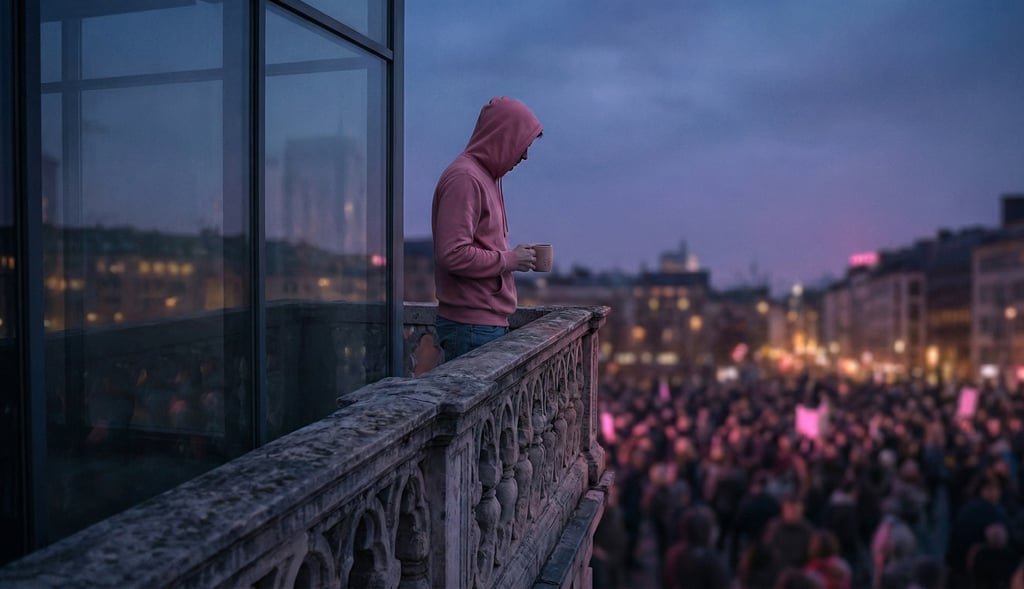

There’s a meme that has been stuck in my head: the Judgmental Volturi. Three vampires in heavy robes, standing on a marble balcony, looking down with cold, aristocratic superiority. Online, they’re the symbol of people who feel above everyone else, even if they’re only slightly better off.
One morning, scrolling through my feed with coffee, I saw that meme again. The caption this time: “Kakampinks watching the masa complain about high prices under Marcos Jr.” I laughed for a second, then it hit a nerve. Because that was us. That was me. Not literally in a Volturi cloak, but in the way I looked at DDS and BBM supporters and thought, If only you listened. If only you read. If only you cared the way we care.
I told myself it came from wanting better governance, cleaner politics, and a decent future. I still think that was true. But it also came with a kind of quiet pride I never really questioned. The same pride that lives in our usual Filipino habit of criticism: we’re quick to point out what’s wrong with others and allergic to being challenged ourselves. Online, it turns into a sport of screenshots, corrections, and callouts, all justified as “for the greater good,” but often just a way to feel taller than someone else for a moment.
Seeing the Volturi meme with “kakampink” in the caption forced a harder question: What if we weren’t only the hopeful, principled side of the 2022 election? What if we were also the ones on the balcony, looking down? What if we were right about many issues, but wrong about how we carried that “rightness” over everyone else?
This piece comes from that question. It’s a self-examination from someone who stood in the pink crowd, believed in the advocacy, and still sees pieces of the Volturi in how we acted during and after the campaign. From here, I want to go back to who we were at our loudest, how we treated those who disagreed with us, and what happened to us after we lost.
THE BALCONY – WHO WE WERE AT OUR PEAK
Before anything else, it’s only fair to admit this: what we built around Leni Robredo in 2022 was real. It wasn’t just a color, or a hashtag, or a trending sound on TikTok. For a few months, it felt like an entire country could tilt on the back of volunteers, small donations, and a stubborn belief that decency still had a chance.
The images are burned into memory. Ayala and Makati packed for the miting de avance, with organizers and police putting the crowd at around 700,000 to 780,000 people. Pasay’s Macapagal rally hitting more than 400,000. Pasig’s river of pink at around 90,000. Cebu’s “CeBOOM” rally drawing about 150,000 even after local power brokers endorsed the other side. These were not normal numbers for an opposition candidate in a country shaped by machinery and dynasties.
On the ground, it didn’t feel like a traditional campaign. It felt like a people’s project. Students printing shirts and stickers with their own money. Small businesses donating food to volunteers. Artists designing posters, murals, and clever placards that mixed memes, gender politics, and policy in the same space. Academic work later described the rallies as “prefigurative spaces,” places where supporters tried to live out the future they wanted – more equal, more inclusive, less macho, less corrupt – even if only for a few hours in a park or on a city street.
For many of us, Leni was the anchor that made that possible. Her Office of the Vice President had just come from four straight years of the highest audit rating from COA. While the national government bungled many parts of the pandemic response, her office used limited funds, private donations, and partnerships to run telemedicine, free swab tests, vaccine shuttles, and relief operations. There were COA flags in her early years, but they were fixed, and the later reports became part of her credibility. She could talk about transparency and “walang kurakot” without sounding like a punchline.
Her platform in 2022 was not perfect, but it was concrete. Jobs and support for small businesses. Help for farmers and fisherfolk. Health care, education, transport, housing. She promised to continue useful infrastructure while cleaning up the way contracts were awarded. She framed good governance as something boring but life-changing: a government that does basic things well, without stealing. In a political culture that often rewards charisma over competence, that alone felt radical.
At the rallies, she wrapped this in a language of radical love. She asked supporters to stay humble, to listen, to reach out to people who didn’t like her, to avoid arrogance even when attacked. Many embraced that call. A lot tried their best. Some used it as a slogan more than a practice. But it was there, at the center of the speeches: no one gets left behind, even the people who disagree.
From up on that balcony, it felt earned. We had the biggest crowds. We had the cleanest audit reports. We had a more detailed platform. We had a candidate whose office tried to fill the gaps in a failing pandemic response instead of milking it for politics. The movement wrapped those facts into a sense that we were on the right side of history. And for a moment, surrounded by pink flags and screaming strangers who felt like family, it was easy to believe that being right would be enough.
That was the height. That was the view from the balcony, before we ask the harder question of what we started to look like from below.
THE COSTUME – WHEN IDENTITY BECAME PERFORMANCE
After a while, being kakampink stopped feeling like just a political choice and started feeling like a full identity. It was in the shirts, the pins, the tote bags, the framed rally photos, the bio lines on social media. Pink wasn’t only a color; it was a statement that said, I am one of the good ones. It felt like stepping into a uniform, and that uniform came with an unspoken rank.
Online, our feeds turned into mirrors. We shared infographics made for people who already agreed with us. We retweeted clever takedowns of Marcos lies and DDS talking points. We laughed at the same screenshots, reacted to the same viral threads, rolled our eyes at the same “bobotante” comments. Studies on the 2022 election talk about polarization between the Marcos Jr. and Robredo camps, how both sides used social media to reinforce their own stories and identities. You did not even need the research to see it; one look at your feed and you knew you were living in a bubble.
Class and geography quietly shaped that bubble. Many kakampinks were urban or suburban, college-educated or at least comfortable in English, with stable internet and enough free time to argue online. The jokes, the memes, even the policy posts assumed a certain baseline: that you knew what COA meant, that you had read a thread about Cambridge Analytica, that you were on Twitter and not just on TikTok or YouTube shorts. Meanwhile, the people we needed to reach were often outside that world: families in provinces where the local dynasty held both the mayor’s office and the barangay captains, INC members whose vote was decided by a bloc endorsement, workers whose entire political education came from forwarded videos and radio.
The volunteer call from the campaign itself was actually clear. Bam Aquino told kakampinks the fight was “not just online.” He urged people to organize, persuade, counter fake news, convince their own families first, and avoid attacking those with different suggestions for the campaign. “Pink-lusive is the new inclusive,” he said, pushing for a true people’s campaign that would reach “every corner of the Philippines.” The instruction was there: go out, talk, listen. But many of us stayed where it was more comfortable – in circles where everyone already spoke the same language.
There were people who did the hard work. House-to-house in far-flung barangays. Long conversations with hesitant relatives. Late-night calls with OFW family members. They existed, and they carried more than their share. At the same time, there was a visible segment of kakampinks whose participation was mostly performative. Even critics from outside the movement saw it: Reddit threads after the election called many kakampinks “clout chasers” who loved the aesthetic of sacrifice – sleeping on the ground for a rally, posting bruised feet and sunburned faces – but were also addicted to the applause that came with it.
Academic work on “groupism” around DDS, Loyalists, and kakampinks points to the same risk. Once the label hardens, you stop being a person who supports a candidate and start being a walking symbol of a camp. Your posts are no longer about specific policies; they’re about defending the group’s honor. You quote-check, dogpile, and mock because that is what your side does. The research warns that none of these groups are truly monolithic; people join for different reasons, with different levels of understanding. But the public performance flattens everyone into one image. For kakampinks, that image was smart, moral, awakened – and very sure of itself.
Looking back, that is where the Volturi costume started to feel real. We put on the pink cloak, stepped onto the balcony of our timelines, and spoke mostly to each other. The robes looked good. The values printed on them were good. But from the ground, from the side of the screen where people saw only corrections, quote-tweets, and private jokes in English, it did not always look like hope. Sometimes, it just looked like another set of elites in nicer colors, staring down.
THE JUDGMENT – HOW WE LOOKED DOWN
If the costume was the pink shirt and the curated feed, the judgment was the voice that came with it. The way kakampinks talked to, and about, people who were not on their side.
The line was always, “Let’s talk.” Tara, usap tayo. DDS and BBM supporters were invited into comment threads, Discord servers, Facebook groups, sometimes even into rallies, in the name of dialogue. But a lot of those “conversations” were not built to listen. One postmortem on Reddit described it bluntly: kakampinks said they wanted to engage, but they mostly loved the sound of their own arguments. The moment someone pushed back, the tone shifted into preaching, scolding, or outright insult.
The words came easy: bobotante, tanga, uneducated, kulto, walang alam. Sometimes it was direct. Sometimes there was a “haha joke lang” to soften the blow. Grammar became a weapon. Wrong spelling or broken English became proof that someone’s political opinion was worthless. Screenshots of bad takes were passed around group chats and subreddits so everyone could roll their eyes together. It was framed as punching up – against trolls, against corrupt leaders, against people who “sold their vote.” In practice, it often meant punching down at ordinary Filipinos who never had the same advantages.
You could see the same pattern offline. In some rallies, the emcee would act as a hype person by throwing insults at opponents and their supporters. Jokes about “bobotante,” digs at DDS being “walang utak,” call-and-response lines that turned whole classes of voters into one big punchline. The crowd roared, clapped, chanted along. It felt cathartic to release years of anger at impunity and corruption. It also trained people to enjoy ridicule as a form of political participation. Whatever “radical love” meant on paper, the sound on the ground sometimes contradicted it.
A lot of this came from frustration. But the effect was the same: whole groups of voters collapsed into caricatures.
Consider an Iglesia ni Cristo member. For many INC families, disobeying the bloc vote is not a small, private choice. Former members describe the threat of expulsion, family separation, social isolation, even spiritual fear as constant pressure every election season. Legal discussions around the Omnibus Election Code see this as a form of coercion in voting. Yet when precinct results in an INC-heavy barangay tilted to Marcos, many kakampinks shrugged and said, “Eh kulto naman sila, what do you expect.” The story behind the vote did not matter. The label did.
Consider the provincial voter whose survival is tied to a local dynasty. The mayor controls short-term jobs, medical referrals, and scholarship slots. The barangay captain decides who gets help when a roof collapses or a child needs transport to the hospital. Research on political dynasties and transactional voting keeps documenting this dynamic: for many families, crossing a political clan in the ballot box is not a simple act of conscience; it is a risk to livelihood. Still, the language online after 2022 defaulted to “binili,” “bayaran,” “walang pakialam sa future.”
Then there were DDS and Marcos loyalists who were not trolls and not on a payroll. They were people who genuinely felt safer under Duterte, or more optimistic under the Marcos name, or simply less chaotic in their daily lives. Some of their arguments were just talking points and propaganda. Some were rooted in actual experiences: fewer visible addicts, a feeling of “disiplina,” a local road finally finished. It was fair to challenge the stories they believed. The problem was how often the challenge came wrapped in contempt for them as people.
This is where the “marginally better” problem shows up. On average, kakampinks had more formal schooling, better English, more stable internet, and more time to consume political content. Studies on the 2022 election talk about how identities like DDS, Loyalist, and Kakampink hardened into tribes that saw themselves as morally superior and painted others as irrational, ignorant, or brainwashed. The lines between “we” and “they” became bright and thick.
Political scientist Anzelwise Y. Paras calls this groupism – the tendency to treat fluid, diverse people as fixed, uniform groups and then make moral judgments based on those group labels. In his work on DDS, Kakampinks, and Loyalists, he warns that once these identities solidify, each side stops seeing individuals and starts reacting only to the camp. A stranger is no longer a person with their own mix of fears, obligations, and half-understood beliefs. They are just “DDS,” “loyalist,” or “kakampink,” and the script for how to treat them is already written before they even speak.
The effect, looking back, is not just that there was judgment. It is that the judgment came from a balcony that was not as high as it felt. Yes, many kakampinks volunteered, donated, and studied the issues. But many also coasted on that identity without matching it with the depth of sacrifice they demanded from others. The real gap between a kakampink and a voter being mocked online was often just a few steps: a diploma, a slightly better paycheck, a more reliable data plan, an extra hour at night to scroll through analysis instead of falling asleep from exhaustion.
There were concrete scenes everywhere. A relative sharing a pro-Duterte meme and getting met with a long, English-heavy reply full of links they would never click, ending in a sarcastic line designed to shame them in the family group. A stranger mixing up “their” and “there,” and that single error became proof that their view on drugs, crime, or jobs didn’t matter. A coworker saying, “Baka bumalik yung ginhawa dati kay Marcos,” and being answered not with questions about what “ginhawa” means in their life, but with a moral verdict about supporting thieves. None of these interactions were bridges. They were performances.
From the balcony, this behavior felt like moral clarity. From below, it often looked like contempt.
THE CAMPAIGN – WHEN STRENGTH HID WEAKNESS
From the inside, the campaign felt strong. Crowds, volunteers, small donors, a clean track record in the OVP, a serious platform – we already walked through that. The harder part is accepting that all of that was not enough, and that some weaknesses were baked into the way the campaign was built.
Structurally, we started late and light in places that mattered the most. Analyses of the 2022 race show that Robredo’s operation was loudest where she was already loved – urban centers, university towns, social-media-heavy areas – and thinnest in provinces dominated by long-standing dynasties and Marcos or Duterte loyalties. Machinery, patronage, and local alliances still decide a lot of votes in this country. Volunteers and good intentions can help, but they cannot fully replace a network of mayors, governors, barangay captains, and ward leaders who can deliver actual people to precincts. We celebrated that she was “anti-trapo,” but that also meant she came into 2022 with fewer indebted allies on the ground.
Messaging had a similar problem. On paper, the platform talked about jobs, rice, fuel, health care, education, agriculture. In practice, what cut through most to supporters was the moral frame: honest vs corrupt, decent vs abusive, good governance vs impunity. In communities where everyday life is dominated by questions like “May trabaho ba?” “Magkano bigas?” “May babalik ba sa amin kung bumoto kami diyan?” the moral language alone was not enough. People needed a simple, repeated, credible answer to “Ano bang mangyayari sa amin kung siya yung manalo?” and many never heard it in a way that felt real.
Then there was the information war we kept pretending we could win with infographics and fact-check threads. Tsek.ph found that 92% of false or misleading posts about Marcos were positive for him, while 96% of disinformation about Robredo was negative. The stream of lies about her – “leni lugaw,” communists, cheats, “walang nagawa” – was relentless. Fact-checks were published. Volunteers fought back online. But disinformation researchers and even Robredo herself later admitted a painful truth: her camp underestimated the scale and depth of the problem and responded too late. She said she ignored a lot of attacks during her VP years, only to realize during the campaign that entire alternative realities had already been built in people’s feeds.
So we had this mismatch:
We looked at rallies and saw momentum.
We looked at small-donor lists and saw proof of a people’s campaign.
We looked at COA reports and pandemic programs and saw a record that deserved a win.
But underneath that, the numbers that actually decide elections told a different story: a 27.94% vote share, a base that reached roughly 15 million and stalled there, and a country where many voters either never heard the case for Robredo in a language that matched their fears, or heard it only after months of absorbing lies about her.
From our side of the balcony, the campaign felt like strength. In hindsight, a lot of that strength was concentrated, not widespread. It was a bright, intense light over certain parts of the map, and a flicker, or complete darkness, in others.
THE FALL FROM THE BALCONY – “AYAW NIYO MAKINIG”
Election night is a blur now, but the feeling is still fresh. The numbers came in fast. Marcos Jr. pulled away early. Robredo’s count climbed, but the gap stayed huge. Screenshots of the COMELEC quick count spread across group chats. In some threads, people were still clinging to theories about late surges and undervotes. In others, the mood turned from disbelief to something heavier: grief mixed with humiliation.
Robredo herself came out and did what leaders are supposed to do. She told supporters to accept the final results, to bring what they learned and offered into a “bigger fight” that went beyond elections. She did not immediately concede in the traditional sense, and she promised to look into irregularities, but her message was clear: we lost this round, and we have to face it. It was a call to absorb the pain without letting it harden into denial.
The base did something else.
Across timelines and comment sections, one line started repeating in different forms:
“We tried to help.”
“Ayaw niyo makinig.”
“So suffer the consequences.”
Sometimes it was word-for-word. Sometimes it was wrapped in sarcasm. Sometimes it came with an “I told you so” list of all the things kakampinks had warned about: corruption, incompetence, conflict of interest, dynasties, revisionism. The message underneath was the same: We did our part. You refused. Bahala kayo ngayon.
Psychologists now have a name for what many people felt in that moment: political grief. Studies on countries going through democratic backsliding describe it as a grief-like reaction to political loss – a mix of shock, anger, sadness, and a sense that the future has become unstable and unsafe. It is not just about losing an election. It is about feeling that the country itself has chosen a path that endangers everything you value. That grief can either paralyze people or push them into new forms of engagement. It rarely leaves them unchanged.
On top of that, research on elections shows that partisan losses hurt more than partisan wins feel good. One study found that losing a presidential election hits supporters’ happiness about twice as hard as major national tragedies hit the general public. That sounds dramatic until you remember how it felt to watch the vote tallies that night, and how social media looked: people crying on live streams, posting black profile pictures, sharing prayers and goodbye messages to “democracy.” For a lot of kakampinks, that election was not just politics. It was personal identity on the line.
In that context, the “ayaw niyo makinig” line makes emotional sense. It is a shield. It says:
I am hurting because I cared.
I am exhausted because I tried.
I am washing my hands now because you chose this.
It is a way to protect whatever is left of your belief in yourself when your belief in your country has taken a beating.
The problem is what that shield turns into when left unchecked. The same sentence that starts as grief easily becomes contempt set in stone. The same people who spent months saying “Tara, usap tayo” suddenly shifted to “Bahala kayo sa buhay niyo.” The invitation closed. The balcony doors shut. The moral high ground remained, but now it was used as a place to watch the country burn and say, “See? Told you.”
There is a cruel mirror here. For years, kakampinks accused DDS and Marcos loyalists of refusing to listen, of dismissing evidence, of choosing loyalty over reason. After May 9, many kakampinks responded with their own version of that refusal: You didn’t listen, so we won’t, either. You didn’t care when we talked, so we won’t care when you suffer. The posture we hated in others became the posture we took for ourselves.
Political grief researchers warn that when people feel their political world has collapsed, they can slide into paralysis and withdrawal. Depression tied to politics is increasingly recognized as a quiet danger to democracies, because disillusioned citizens are more likely to tune out, stop participating, or retreat to small private circles. That is exactly what happened to a lot of kakampinks. The line “We tried to help” became not just a description of the past but a closing statement on the future.
From the balcony, “ayaw niyo makinig, so suffer the consequences” felt like a justified response to a country that rejected everything you fought for. From below, it looked like giving up on the same people you claimed to be fighting for in the first place.
BEHIND THE CURTAIN – THE SILENCE AND THE LURKING
After the anger posts, after the “ayaw niyo makinig” phase, something quieter set in.
Timelines that used to be full of pink banners, infographics, and rally photos slowly went back to food shots, K‑dramas, pets, and random memes. Group chats that once coordinated house-to-house visits turned into spaces for chismis and work complaints. The people who once argued with strangers about COA reports and disinformation suddenly stopped replying. A few unfollowed political pages. Some muted relatives. Others just learned to scroll past bad news without engaging.
Studies on democratic participation say this pattern is not unique. In many countries, citizens show up in large numbers to vote, then disappear from civic life in between elections. A recent report from the Philippine Observatory on Democracy found that while around 8 out of 10 urban Filipinos vote, only 4 out of 10 regularly attend local meetings or engage with community issues. Politics becomes a one-day event every few years, not a sustained practice. That is already a problem even in normal times. When you add political grief and disillusionment on top of that, disengagement becomes even more likely.
Political depression research backs this up. Scholars tracking the emotional toll of politics warn that sustained exposure to loss, corruption, and perceived injustice can push citizens into a kind of numbness. It is not loud like rage. It looks like tired scrolling, avoiding news, telling yourself “wala nang mangyayari,” and stepping back from anything that feels like a fight. The same people who cared enough to campaign, donate, and argue can become the ones who say, “Ayoko na. Nakakapagod na.” That fatigue doesn’t just sit inside individuals. It slowly drains the collective power of groups that used to push back.
You can see it in the way kakampinks exist online now. Many have turned into lurkers. They watch. They read. They send screenshots to trusted friends with a “grabe oh,” but they rarely post their own take. They only surface when someone attacks Leni, calls kakampinks “bobo,” or blames them for every problem under Marcos. Then you see the old fire: a long comment here, a sarcastic retort there, a thread defending good governance and accountability. Once the moment passes, they sink back into the feed again.
Electorally, the numbers support the sense that the base stayed more or less the same. Analysis from 2025 discussions estimates the core kakampink vote at roughly 15 million – the people who stuck with opposition or reformist candidates across cycles. In the 2025 midterms, Bam Aquino returned to the Senate with over 20 million votes, and Kiko Pangilinan made it into the Magic 12 with around 15 million. That was a win, and it mattered. But deeper reads of the data suggest something sobering: the victories likely came from a combination of the stable kakampink base plus new younger voters and crossover support, not from a massive expansion of the old pink core. The base did not disappear, but it did not explode either. It held. It did not transform.
At the same time, the forces kakampinks opposed did not fade. The DDS bloc remained strong enough to push figures like Imee Marcos, Marcoleta, and Bato into comfortable positions. Vote-buying stayed normal in many areas. Dynasties kept their grip. For every story about a reformist candidate winning, there were multiple stories of old names returning to power. The system absorbed the 2022 shock and kept going.
So the kakampink today often looks like this: still believes in good governance, still hates corruption, still follows the news, still feels a tug in the chest when Leni appears in a headline or when a reform-minded mayor stands up to Malacañang. But louder expressions have been replaced by quiet consumption. Instead of threads, there are read receipts. Instead of rallies, there are bookmarks. Instead of “tara, usap tayo,” there is “ayoko na makipagsagutan, wala namang point.”
From the balcony metaphor, it might seem like people stepped down. In reality, a lot of kakampinks stayed up there – they just pulled the curtains. The judgment is still there, aimed at DDS, at “bobotante,” at trapo. The exhaustion is there too, aimed at the system. What’s missing is the willingness to step out and be seen again, to risk the same pain and ridicule that came with 2022.
The danger is that silence feels like safety but functions like surrender. The people who cared enough to fight retreat. The ones who are comfortable with impunity stay. The field doesn’t stay neutral; it tilts toward whoever is still willing to play.
STEPPING OFF THE BALCONY – THE QUESTION
For all the mess, the core values that pulled people into pink in the first place still make sense. Wanting honest officials, public money that actually reaches services, contracts that are not rigged, police that do not kill with impunity, leaders who can explain policy without lying – none of that became wrong just because our candidate lost. If anything, the years after 2022 made those values feel even more necessary.
You can see traces of them in places that no longer carry the kakampink label. Young voters in 2025 rejected some high-profile celebrity candidates and dynastic heirs in favor of people with clearer platforms on education, jobs, and corruption. Reformist mayors and governors started refusing confidential funds and calling for more transparency, and they did not come out of nowhere; they grew in a climate where voters had already been taught to ask, “Saan napupunta ang pera?” Every time a city backed an official who was serious about audits and services, some part of the old pink insistence on accountability showed up in the vote.
The question is not whether those values were real. They were. The harder question is what we attached to them. Did we fight for good governance, or did we fight for the feeling of being the ones who cared about good governance more than everyone else? Did we want accountability, or did we want the satisfaction of telling people “I told you so” when things went wrong? Did we share COA reports because we hoped others would understand, or because it proved we were more informed than the crowd?
Outside the Philippines, writers on political grief say something similar. Grief after political loss can turn into three things: numbness, permanent rage, or a more grounded, less romantic way of staying involved. Numbness says, “Nothing matters.” Rage says, “Only my side is human.” The third path is harder. It means accepting that the country is what it is – unequal, easily manipulated, often cruel – and still choosing to act inside it without needing to feel superior every time you do.
For kakampinks, that third path would look very different from 2022. Less balcony, more ground. Less rally aesthetic, more barangay hall. Less obsession with proving we were right, more patience with people whose lives and information diets are far from ours. It could mean volunteering in local school boards, quietly backing candidates in city councils, supporting journalists when they expose corruption, helping neighbors understand what a confidential fund or a SALN actually is. None of that comes with pink confetti or drone shots. It also cannot function from a place of contempt.
The Volturi in the meme never step off the balcony. Their power only works from above, in robes, with an audience. The kakampink doesn’t have that luxury anymore. The robes are gone. The crowd has scattered. What’s left is the question each of us has to answer without applause:
Can we hold on to our belief in good governance, accountability, honesty, and integrity without needing to feel taller than the people who didn’t vote like us?
Can we still show up for this country in smaller, less glamorous ways, even if no one calls it a movement and no one thanks us for it?
Or are we going to stay behind the curtain on that balcony, watching things fall apart, whispering “see, we were right,” while the people who never cared about these values keep running the show?
SOURCES:
https://docs.google.com/document/d/1TTG7mfNT22sR9iehfiC3HvoSZegpMze11M5TK04f3ps/edit?usp=sharing
Contact us
subscribe to morning coffee thoughts today!
inquiry@morningcoffeethoughts.org
© 2024. All rights reserved.
If Morning Coffee Thoughts adds value to your day, you can support it with a monthly subscription.
You can also send your donation via Gcash: 0969 314 4839.