
Philippines, ICC, and Justice: The Debate Over Bato dela Rosa’s Arrest
This blog explores whether the Philippines should surrender Senator Bato dela Rosa to the International Criminal Court. Written from the point of view of a concerned citizen without legal training, it breaks down the main legal arguments and shows why the case matters to ordinary Filipinos. The post offers a clear look at both sides and asks what justice and accountability should mean for all of us.
25 min read
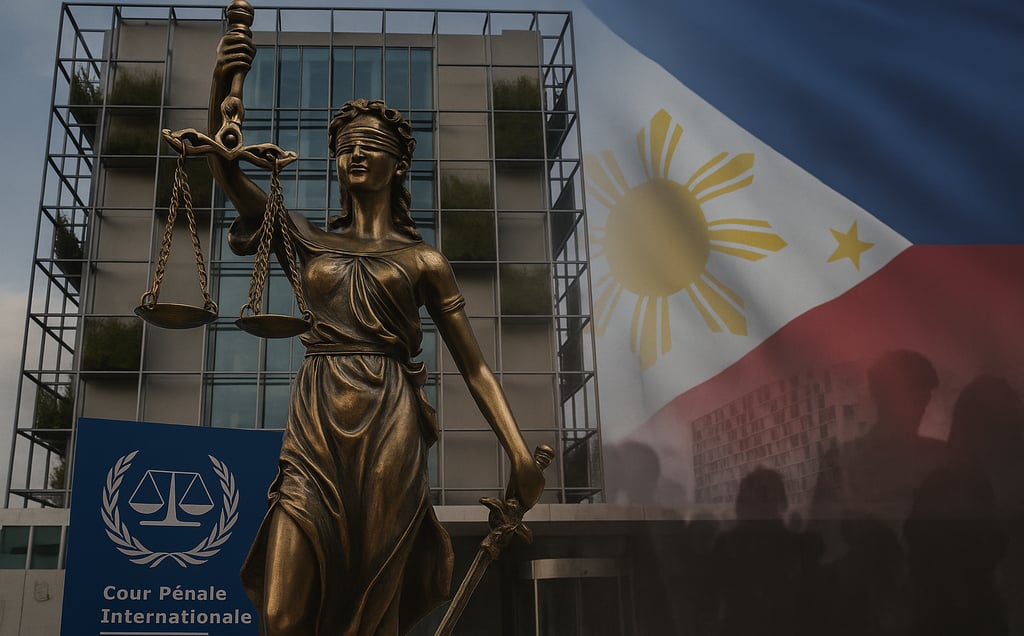
I'm not a lawyer. Let me be clear about that from the start. But like many Filipinos, I found myself curious—deeply curious—about the legal storm surrounding Senator Ronald "Bato" dela Rosa and the International Criminal Court arrest warrant that has everyone talking. This isn't just another political controversy; it's a question that cuts to the heart of justice, accountability, and what happens when our own systems fail to deliver either.
So I did what any concerned citizen would do: I researched. I read through legal arguments, examined the law, and tried to understand both sides of this debate. What follows is my attempt to make sense of it all—written not in legal jargon, but in plain language that I hope helps others understand what's at stake.
The Issue at Hand
On November 8, 2025, reports emerged that the International Criminal Court had issued an arrest warrant for Senator Ronald dela Rosa, the former Philippine National Police chief who led the implementation of President Rodrigo Duterte's brutal "war on drugs." The government indicated it might use Section 17 of Republic Act 9851—our law on crimes against international humanitarian law and crimes against humanity—as the legal basis to surrender Dela Rosa to the ICC.
His lawyers immediately pushed back, arguing the government has no legal authority to do this. They raised constitutional objections, questioned the law's interpretation, and warned that surrendering a Filipino senator to an international tribunal without proper judicial review violates his fundamental rights.
But others—including legal experts, human rights advocates, and former Supreme Court justices—argue the opposite: that RA 9851 provides clear legal authority for the government to cooperate with the ICC, and that failing to do so would make a mockery of our commitment to fight impunity for the world's worst crimes.
Both sides have compelling arguments. Let me walk you through them.
The Case Against Surrender: What Dela Rosa's Lawyers Argue
Constitutional Due Process
Dela Rosa's legal team starts with the Philippine Constitution. Article III, Section 2 explicitly requires that "no warrant of arrest shall issue except upon probable cause to be determined personally by the judge after examination under oath or affirmation of the complainant and the witnesses he may produce." This is a fundamental protection—no Filipino can be arrested without a Philippine judge personally examining the evidence and determining there's probable cause.
The ICC warrant, they argue, was issued by foreign judges who never examined witnesses under Philippine legal standards. The ICC uses a "reasonable grounds to believe" standard, not our constitutional "probable cause" requirement. No Philippine judge reviewed the evidence. No Philippine court made any determination. Surrendering Dela Rosa based solely on this foreign warrant, his lawyers contend, violates this constitutional safeguard.
It's a straightforward argument: the Constitution protects all Filipinos from arrest without proper judicial process. An ICC warrant, issued thousands of miles away without Philippine judicial oversight, doesn't satisfy that requirement.
The Word "May" Means Discretion, Not Mandatory Action
Section 17, paragraph 2 of RA 9851 states that authorities "may dispense with the investigation or prosecution" and "may surrender or extradite" suspects to international tribunals. Dela Rosa's lawyers emphasize that crucial word: may.
In legal interpretation, "may" is permissive—it grants an option, not an obligation. It's discretionary, not mandatory. The law says the government can surrender someone if it chooses to, not that it must. This means the government needs proper justification and must exercise that discretion carefully, with safeguards to protect constitutional rights.
Simply invoking Section 17 isn't enough, they argue. The discretionary nature of the provision requires the government to show why surrender is appropriate in this specific case, and to ensure due process protections are met before depriving a Filipino citizen of his liberty.
No Implementing Rules or Procedural Framework
Here's where things get really problematic, according to the defense: RA 9851 provides no detailed procedures for how a surrender should work. Unlike extradition law, which has extensive rules requiring judicial hearings, verification of identity, assessment of evidence, and opportunities for the accused to challenge the process, Section 17 is basically silent on procedure.
There are no rules specifying:
Whether a Philippine court must approve the surrender
How the person's identity should be verified
What process exists for challenging the surrender
What standards must be met before someone can be removed from the country
Whether the accused gets to present evidence or contest the allegations
This absence of procedural safeguards, the lawyers argue, creates a constitutional problem. You can't deprive someone of liberty—especially by handing them over to a foreign tribunal—without meaningful due process. The law's silence on procedures doesn't eliminate the constitutional requirement for fair process; it creates a gap that must be filled before any surrender can occur.
Complementarity: Philippines Hasn't Been Found Unwilling or Unable
The ICC operates under something called "complementarity." This principle means the ICC only has jurisdiction when national authorities are "unwilling or unable" to genuinely investigate or prosecute. It's supposed to be a court of last resort, not first choice.
Dela Rosa's lawyers argue that no formal determination has been made that the Philippines is unwilling or unable to prosecute. We have RA 9851 itself—a comprehensive law that criminalizes crimes against humanity domestically. We have courts, prosecutors, and a justice system. The mere fact that the ICC issued a warrant doesn't automatically mean our domestic system has failed or refused to act.
Under the complementarity principle, they argue, the Philippines should retain primary jurisdiction. Surrendering Dela Rosa without even attempting domestic prosecution contradicts this fundamental principle and potentially violates the state's sovereign right to exercise jurisdiction over crimes committed in its territory.
The Philippines Withdrew from the Rome Statute
The Philippines officially withdrew from the Rome Statute—the treaty that created the ICC—and that withdrawal took effect on March 17, 2019. Once you're no longer a member, Dela Rosa's lawyers argue, you have no treaty obligation to cooperate.
Yes, there's Article 127(2), which says withdrawal doesn't affect matters "already under consideration" by the Court. But there's genuine legal debate about what "under consideration" means and whether it applies to investigations that continued or expanded after withdrawal.
The bottom line for the defense: The Philippines voluntarily left the ICC. Any cooperation now is purely discretionary, not legally mandatory. The government can't claim it's "required" to surrender Dela Rosa when we're not even members of the treaty anymore.
Senate Bill 2454: Even Congress Recognized the Problem
Back in 2014, Senator Miriam Defensor Santiago filed Senate Bill No. 2454, which sought to repeal Section 17, paragraph 2's surrender provision. Her explanatory note stated: "This provision is otiose and superfluous. On the one hand, under the principle of complementarity, it is the Philippines that has primary jurisdiction over international crimes. The general rule is that national jurisdiction will be primary at all times, when the state authorities regularly perform their functions of investigation or prosecution."
While this bill never passed, it demonstrates that even legislative minds recognized potential problems with the surrender provision. Senator Santiago—a respected legal mind and former judge—saw it as potentially undermining Philippine sovereignty and the complementarity principle.
Confusion Between Extradition and Surrender
There's significant confusion about whether ICC warrants should trigger "extradition" procedures (which involve detailed judicial oversight) or "surrender" procedures under RA 9851 (which apparently don't). This matters tremendously.
The Supreme Court recently issued new Rules on Extradition Proceedings requiring judicial review before anyone can be removed from the Philippines. Dela Rosa's lawyers argue these rules should apply, requiring a domestic court process before any transfer to the ICC.
Additionally, the ICC isn't a sovereign state—it's an international tribunal. Traditional extradition law and treaties were designed for state-to-state transfers. Whether they apply to international tribunals, and what procedures should govern such transfers, remains genuinely unclear in Philippine law.
Risk of Politically Motivated Prosecution
Finally, the defense raises concerns about executive overreach. Since Section 17 uses "may," the ultimate discretion rests with the President. This creates potential for politically motivated decisions—surrendering some individuals while protecting others based on political considerations rather than legal principles.
If the government can surrender Filipino citizens to international tribunals without judicial oversight, purely on executive decision, that represents a dangerous concentration of power vulnerable to abuse.
The Case for Surrender: Arguments Supporting Government Authority
Now let's look at the other side—the arguments from legal experts, human rights advocates, and others who believe the government has both the legal authority and moral obligation to cooperate with the ICC.
RA 9851 Section 17 Provides Express Authorization
The law is clear, supporters argue. Section 17 explicitly states that "the relevant Philippine authorities may dispense with the investigation or prosecution" and "may surrender or extradite suspected or accused persons in the Philippines to the appropriate international court." This provision was enacted by Congress precisely to enable cooperation with international tribunals investigating crimes against humanity.
Former Supreme Court Justice Antonio Carpio has consistently argued that RA 9851 provides the legal basis for surrender. Unlike extradition, which requires bringing arrested persons before a Philippine court, RA 9851 establishes a different framework. The only requirement is that "another court or international tribunal is already conducting the investigation or undertaking the prosecution"—a condition clearly satisfied since the ICC has been investigating the drug war since 2018.
When Congress passed this law in 2009, it explicitly declared as state policy that "the most serious crimes of concern to the international community as a whole must not go unpunished" and that it is "the duty of every State to exercise its criminal jurisdiction over those responsible" for crimes against humanity. Section 17 operationalizes this commitment.
The legislative intent was clear: create a mechanism for the Philippines to cooperate with international justice when appropriate.
No Constitutional Requirement for Additional Judicial Review
Supporters of surrender argue that the statute itself provides the due process framework. When Congress enacted Section 17, it established that surrender to an international tribunal conducting an investigation is legally permissible—that is the due process as provided by law.
ICC-accredited lawyer Kristina Conti explains that "surrender under Section 17 of RA 9851 is presumptively the due process as provided by law." The statute creates the procedure; additional Philippine judicial review isn't constitutionally required because Congress already determined this mechanism satisfies legal requirements.
Moreover, the ICC warrant wasn't issued arbitrarily. The ICC Pre-Trial Chamber—a panel of independent judges—examined evidence and determined there were "reasonable grounds to believe" that crimes within the ICC's jurisdiction had been committed. This is a judicial determination, just made by an international rather than domestic court.
When Philippine authorities execute an ICC warrant under RA 9851, they're implementing a lawful judicial directive issued by a competent international court that our own domestic law recognizes and authorizes cooperation with.
The Doctrine of Incorporation: International Law Is Domestic Law
Here's something many people don't realize: Article II, Section 2 of our 1987 Constitution declares that the Philippines "adopts the generally accepted principles of international law as part of the law of the land." This is called the doctrine of incorporation—international law automatically becomes part of our domestic legal system.
RA 9851 operationalizes this constitutional principle by aligning Philippine law with international humanitarian law and the Rome Statute framework. The law explicitly requires Philippine courts to apply "the rules and principles of customary international law" and "judicial decisions of international courts."
Therefore, cooperation with the ICC under RA 9851 doesn't violate sovereignty—it affirms our Constitution's commitment to international law. We chose to incorporate these principles. Honoring them is fidelity to our own constitutional commitments.
Article 127(2): Obligations Continue for Prior Matters
Regarding withdrawal from the Rome Statute, supporters point to Article 127(2), which explicitly states that withdrawal "shall not prejudice in any way the continued consideration of any matter which was already under consideration by the Court prior to the date on which the withdrawal became effective."
The ICC Pre-Trial Chamber ruled on October 23, 2025, that it retains jurisdiction over alleged crimes committed in the Philippines between November 1, 2011, and March 17, 2019. The Chamber held that the preliminary examination conducted by the ICC Prosecutor in February 2018—before the Philippines' withdrawal took effect in March 2019—constituted a "matter already under consideration."
Even our own Supreme Court recognized this in the Pangilinan v. Cayetano case, stating: "Even if it has deposited the instrument of withdrawal, it shall not be discharged from any criminal proceedings. Whatever process was already initiated before the International Criminal Court obliges the state party to cooperate."
The Philippines remains bound to cooperate for crimes committed during the period we were a State Party. Withdrawal doesn't erase obligations for matters already under ICC consideration.
Complementarity Actually Supports ICC Jurisdiction
Here's the uncomfortable truth about complementarity: it's supposed to kick in when national authorities are unwilling or unable to prosecute. And the evidence suggests exactly that.
Despite thousands of killings during the drug war, the Philippines has not initiated any prosecutions for crimes against humanity under RA 9851. Most cases are ordinary murder charges at the trial court level, not systematic prosecution of the campaign as a widespread attack on civilians—which is what crimes against humanity means.
Moreover, key perpetrators like Duterte and Dela Rosa enjoy immunity protections. Duterte had presidential immunity while in office; Dela Rosa has legislative immunity as a senator. This creates a legal impossibility for domestic prosecution of the very people most responsible.
Add to this the government's public statements refusing to cooperate with ICC investigations and calling them threats to sovereignty. When a state explicitly refuses to investigate crimes against humanity, that's the textbook definition of "unwillingness" under complementarity principles.
The ICC's jurisdiction isn't undermining complementarity—it's fulfilling it. The Court is intervening precisely because domestic mechanisms have failed or refused to act.
"May" Grants Authority, Doesn't Prohibit Action
Yes, Section 17 uses "may" rather than "shall." But supporters argue this cuts the other way. The permissive language means the government has the authority to surrender—it grants discretion to choose international cooperation when appropriate.
It doesn't mean surrender is prohibited or unconstitutional. It means the decision rests with "the relevant Philippine authorities"—which, given presidential control over law enforcement and foreign relations, ultimately means the President.
Choosing to cooperate with the ICC is a legitimate policy choice within the executive's constitutional authority. The discretionary nature of "may" doesn't create a constitutional barrier; it provides flexibility in deciding when international cooperation serves justice.
Supreme Court Precedent Upholds Section 17
In the 2011 case Bayan Muna v. Romulo, the Supreme Court examined Section 17 of RA 9851 and upheld its validity. The Court held that Section 17's surrender provision is constitutional and provides a legitimate mechanism for cooperation with international tribunals.
The Court interpreted Section 17 as establishing that "the Philippines is required to surrender persons accused of grave crimes under RA 9851 to the proper international tribunals if it does not exercise primary jurisdiction to prosecute them."
Significantly, the Supreme Court rejected arguments that surrender provisions violate Philippine sovereignty, stating that "entering into international agreements inherently involves a voluntary shedding of some aspect of sovereignty for greater benefits or reciprocal undertakings."
The Court affirmed that RA 9851's framework respects both international obligations and domestic legal processes. This precedent validates the government's authority under Section 17.
Sovereignty Is Exercised, Not Abdicated
Dela Rosa's team frames surrender as "abdication of sovereignty." But supporters argue the opposite: executing ICC warrants under RA 9851 represents an exercise of sovereignty through a freely chosen legal framework.
When Congress enacted RA 9851 and when the Philippines ratified the Rome Statute, these were sovereign acts expressing our nation's commitment to international humanitarian law. Honoring those commitments represents fidelity to the rule of law, not subordination to foreign authority.
True sovereignty isn't isolationist defiance—it's the exercise of national will in accordance with law and international commitments freely undertaken. Cooperation with the ICC affirms our sovereignty by demonstrating we keep our word and uphold the values we've constitutionally embraced.
Extradition Rules Don't Apply to ICC Surrender
Regarding the new Supreme Court extradition rules, legal experts clarify that these apply to state-to-state transfers, not surrender to international tribunals under RA 9851. Extradition involves bilateral treaties between sovereign states; surrender to the ICC is governed by the specific statutory framework Congress created in RA 9851.
The ICC is not a sovereign state but an international judicial body. RA 9851 Section 17 provides the specific legal regime for cooperation with such bodies, which takes precedence over general extradition procedures.
The Purpose of RA 9851: Ending Impunity
Finally, supporters emphasize that RA 9851 was enacted precisely to ensure accountability for the most serious international crimes. Section 2 declares that "the most serious crimes of concern to the international community as a whole must not go unpunished" and commits the Philippines to "put an end to impunity for the perpetrators of these crimes."
Interpreting Section 17 to create insurmountable procedural barriers that prevent ICC cooperation would frustrate the very purpose of the law. If the provision is read to require endless domestic proceedings before any surrender—especially when domestic authorities refuse to prosecute—it would render international cooperation meaningless and defeat the legislative intent to combat impunity.
Laws should be interpreted to give effect to their purpose, not to create loopholes for avoiding accountability.
The Uncomfortable Truth About Our Justice System
Now I need to talk about something that makes this whole debate deeply personal for many Filipinos: the reality of our justice system's performance—or lack thereof—when it comes to the drug war killings.
The Scale of the Violence
Let's start with the numbers, though even these are contested. The Philippine government admits that over 6,000 people were killed in police operations during the drug war between July 2016 and May 2022. But that's only the official count—killings directly acknowledged by police.
Human rights organizations tell a very different story. Conservative estimates from the UN Office of the High Commissioner for Human Rights put the number at over 8,600. The ACLED research organization documented at least 7,742 civilian deaths—25% higher than government figures. Domestic human rights groups estimate the total at 27,000 or even 30,000 when you include killings by unidentified assailants that evidence links to state forces or vigilantes.
Thousands of mostly poor men—drug users, small-time dealers, people whose names appeared on "watch lists" created outside any legal process—were shot in the streets. Many had multiple gunshot wounds. Many were shot at close range. Many were shot in the head, showing clear intent to kill.
This wasn't law enforcement gone wrong. The UN Human Rights Office found that "the killings related to the anti-illegal drugs campaign appear to have a widespread and systematic character"—the legal definition of crimes against humanity.
The Failure to Prosecute
Here's what really matters for the complementarity analysis: what has our justice system done about these killings?
The answer is devastating: almost nothing.
According to a 2023 US State Department report, there have been only three prosecutions and convictions for extrajudicial killings in connection to the war on drugs since 2016. Three. Out of thousands of deaths.
The most famous case is Kian delos Santos, a 17-year-old boy shot to death in a Manila alley in August 2017. Three police officers were convicted of his murder in 2018—but only because there was overwhelming video evidence and massive public outcry. It remains the only conviction that happened during the Duterte administration, and the officers' conviction is still on appeal.
In 2021, the Department of Justice conducted a review of drug war killings. They looked at just 52 cases out of thousands. What did they find? Grave lapses in police procedures. Absence of autopsy reports, ballistics tests, medical certificates, and other required documentation. Many victims with multiple gunshot wounds showing clear intent to kill. Police narratives that victims "fought back" contradicted by physical evidence.
And the result? Only seven cases resulted in dismissal of officers involved. Most got demoted or suspended for a few months. No criminal charges. No prosecutions.
Human Rights Watch noted: "Impunity was a significant problem in the security forces, particularly in the PNP. Local and international human rights organizations described widespread impunity for killings."
Why the System Failed
The reasons for this failure are multiple and troubling:
Police investigations of police: Internal police investigations consistently cleared officers of wrongdoing. When police investigate police, accountability rarely follows.
Prosecutors' passivity: The UN Special Rapporteur on Extrajudicial Executions found prosecutors "refused to take a role in gathering evidence, and instead being purely passive, waiting for the police to present them with a file."
The Ombudsman's inaction: The Ombudsman's office "did almost nothing," failing to act on complaints of extrajudicial executions.
Intimidation of victims' families: Families who tried to file cases faced intimidation. Investigators discouraged them, saying prosecution would be "futile." Those who persisted lived in fear of police reprisal.
Lack of legal definition: The Philippines still hasn't adopted a legal definition of extrajudicial killing, so prosecutors don't even know which killings they can prosecute as such.
Political protection: President Duterte publicly promised police they would never go to jail for following his orders to kill drug suspects. He created a climate of impunity from the very top.
Immunity protections: Duterte enjoyed presidential immunity while in office. Dela Rosa, now a senator, has legislative immunity. The very architects of the campaign are legally protected from domestic prosecution.
The DOJ Review: Too Little, Too Late
In 2021, responding to international pressure and the ICC investigation, the DOJ promised to review drug war cases. They eventually reviewed 52 cases—52 out of thousands. The review took years. The results were kept confidential, shared only with the President. Victims' families weren't interviewed and couldn't access the findings.
Amnesty International called it "woefully inadequate" and "a distressingly belated effort." Legal experts said it showed the system was "unwilling and unable to sufficiently investigate and prosecute crimes against humanity."
Even Justice Secretary Menardo Guevarra, in a stunning admission to the UN Human Rights Council in 2021, acknowledged that police failed to follow standard protocols, didn't examine recovered weapons, didn't conduct ballistic examinations, and didn't properly process crime scenes. This official admission undermined the government's standard claim that suspects were killed because they fought back.
Yet despite this admission of police culpability, meaningful prosecutions still didn't follow.
What This Means for Complementarity
Under ICC law, a case is admissible—meaning the ICC can exercise jurisdiction—when national authorities are "unwilling or unable" to genuinely investigate or prosecute.
The evidence of unwillingness is overwhelming:
No prosecutions under RA 9851 for crimes against humanity
Only three total convictions for drug war killings in eight years
Systematic failure to investigate properly
Passive prosecutors and an inactive Ombudsman
Intimidation of victims' families
Government's explicit refusal to cooperate with ICC investigations
Immunity protections for key perpetrators
Public statements by officials treating the killings as justified policy rather than crimes
The evidence of inability is also strong:
Structural problems in having police investigate police
Lack of resources for independent investigations
Political interference and pressure
Absence of legal frameworks to prosecute systematic campaigns
Power imbalances that make prosecuting high-ranking officials practically impossible
This isn't a case where domestic justice is working but just needs more time. This is a case where domestic justice has demonstrably failed, repeatedly, systematically, for years.
Opinion: Why the ICC Is the Necessary Recourse
Now I want to share my own analysis, based on everything I've learned. This is where I stop trying to be neutral and say what I believe needs to be said.
We are both unwilling and unable to hold Senator Dela Rosa accountable. The ICC is our necessary recourse.
The Reality We Must Face
Senator Ronald dela Rosa was the chief implementer of a campaign that killed thousands of Filipinos—mostly poor, mostly from urban slums, mostly without any due process, many likely innocent of any crime more serious than using drugs. As PNP Chief from 2016 to 2018, he oversaw the operations, set the policies, established the metrics, and created the environment that led to this bloodshed.
He did this publicly, proudly. He followed President Duterte's orders and made no secret of it. The campaign was explicit in its objectives and brutal in its execution.
These killings constitute crimes against humanity—widespread and systematic attacks on a civilian population, carried out pursuant to state policy. That's not my opinion; that's the finding of the ICC Pre-Trial Chamber based on extensive evidence, echoed by the UN Human Rights Office, Amnesty International, Human Rights Watch, and numerous international legal experts.
Under RA 9851—our own law—crimes against humanity are among the most serious crimes imaginable. They must not go unpunished.
We Cannot Prosecute Him Domestically
But here's the brutal truth: our system cannot and will not prosecute Dela Rosa.
He has immunity: As a senator, he enjoys legislative immunity from arrest for offenses punishable by up to six years imprisonment. While this immunity has exceptions, it creates significant practical barriers and legal complications for prosecution.
He has powerful political protection: Dela Rosa remains popular in certain circles. He has allies in government. Any domestic prosecution would face enormous political pressure and likely interference.
The justice system has shown itself unwilling: After eight years, three convictions out of thousands of deaths, systematic failures in investigation and prosecution, and explicit government refusal to treat the drug war as criminal—we have overwhelming proof the system will not act.
There's no political will: The Marcos administration has repeatedly stated it will not cooperate with the ICC. It considers ICC investigations a threat to sovereignty rather than a pursuit of justice. If the government views accountability itself as threatening, how can we expect it to prosecute the architects of the killings?
The crime is too big: Prosecuting crimes against humanity requires investigating a systematic campaign involving multiple agencies, thousands of actors, high-level officials, and intricate chains of command. Our justice system struggles to successfully prosecute ordinary crimes; it's utterly unprepared for this scale of investigation and prosecution.
Why Legal Technicalities Cannot Stand in the Way
Dela Rosa's lawyers raise legitimate legal questions about procedure and constitutional protection. In an ideal world, with a functioning justice system and genuine commitment to accountability, those questions would matter greatly.
But we don't live in that ideal world.
When a justice system categorically fails to address massive crimes—when unwillingness and inability are proven through years of inaction—then technical barriers to international justice become excuses for impunity.
Yes, Section 17 of RA 9851 could use clearer implementing rules. But the absence of detailed procedures doesn't negate the law's fundamental purpose or authorization. Congress intended to enable international cooperation. The lack of procedural details should prompt us to develop those procedures, not to declare cooperation impossible.
Yes, the word "may" indicates discretion. But discretion should be exercised to serve justice, not to shield the powerful from accountability. When domestic prosecution is impossible, discretion should favor international cooperation—that's what serves the law's purpose.
Yes, constitutional due process matters. But when the alternative is no process at all—when the only choice is ICC proceedings or complete impunity—the constitutional commitment to justice itself demands action.
The ICC Provides What We Cannot
The International Criminal Court offers what our domestic system cannot:
Independence: ICC judges and prosecutors are independent of Philippine political pressures. They can investigate and prosecute without fear of retaliation or political interference.
Expertise: The ICC specializes in crimes against humanity, war crimes, and genocide. It has the legal framework, procedural expertise, and institutional capacity to handle such complex prosecutions.
Resources: The ICC can marshal investigative resources, forensic experts, and legal expertise that would be difficult or impossible to assemble domestically, especially given political resistance.
Legitimacy: International proceedings carry legitimacy that domestic prosecutions might lack, especially when victims fear the same institutions responsible for the killings.
Due process: ICC proceedings follow rigorous due process standards. Dela Rosa will have defense counsel, the right to challenge evidence, the presumption of innocence, and all protections afforded under international criminal law. He will receive far more process than his alleged victims ever got.
Our Responsibility
We have a responsibility—as a nation and as a people—to seek justice for the thousands killed in the drug war. Those victims were Filipinos. They had families. Many were innocent. Even those guilty of drug crimes deserved due process, not execution in the street.
Their families deserve answers. They deserve acknowledgment. They deserve justice.
For eight years, we have failed to deliver. Our police didn't investigate properly. Our prosecutors didn't prosecute. Our courts didn't convict. Our government didn't care.
The ICC represents perhaps the only chance these families will ever have to see accountability. It may be imperfect. It may be controversial. It may bruise our national pride to admit we cannot handle this ourselves.
But justice for the dead matters more than our pride.
The Sovereignty Argument Is Backwards
Opponents frame ICC cooperation as surrendering sovereignty. But true sovereignty means upholding the rule of law, honoring our commitments, and delivering justice to our people.
When we ratified the Rome Statute, that was an exercise of sovereignty. When Congress passed RA 9851, that was an exercise of sovereignty. When our Constitution adopted international law as part of domestic law, that was an exercise of sovereignty.
Refusing to honor those sovereign commitments—hiding behind technical objections to avoid accountability for mass atrocities—that's what actually undermines sovereignty.
A strong, sovereign nation delivers justice. A weak nation makes excuses.
What Complementarity Really Means
The principle of complementarity exists to respect national sovereignty by giving states the first opportunity to prosecute international crimes. It's built on the idea that domestic justice is preferable when it works.
But complementarity has a flip side: when states are unwilling or unable to prosecute, the ICC must act. That's not undermining complementarity—that's fulfilling it.
The Philippines has had nearly nine years to prosecute those responsible for drug war killings. We've achieved three convictions out of thousands of deaths. We've conducted token reviews and released sanitized summaries. We've protected high-ranking officials with immunity. We've publicly refused to cooperate with international investigators.
We have comprehensively failed the complementarity test.
The ICC's intervention is not premature or illegitimate. It's overdue and necessary.
The Message We Send
If we refuse to cooperate with the ICC—if we hide behind procedural objections while offering no genuine alternative for justice—we send several messages:
To victims' families: Your loved ones don't matter. Your quest for justice is futile. Power protects power.
To future leaders: You can order mass killings with impunity. Just make sure to win elections afterward, or at least stay popular enough that prosecution is politically inconvenient.
To the international community: The Philippines' commitments mean nothing. Our signatures on treaties are worthless. Our proclamations about human rights are empty.
To ourselves: We are a nation that cannot deliver justice, even for the worst crimes. We would rather preserve political alliances than prosecute mass murder.
Is that who we are? Is that who we want to be?
A Choice for Our Future
The debate over Dela Rosa's surrender is ultimately a choice about what kind of country we want to be.
Do we want to be a nation of laws, or a nation where power determines justice?
Do we want to honor our commitments to human rights and international law, or abandon them when accountability gets inconvenient?
Do we want to side with victims seeking justice, or with perpetrators seeking impunity?
The legal arguments matter. Constitutional protections matter. Sovereignty matters. But they cannot be allowed to become shields for crimes against humanity.
We have the law—RA 9851—that provides authority for cooperation. We have the constitutional principle—incorporation of international law—that supports it. We have the Supreme Court precedent—Bayan Muna v. Romulo—that validates it. We have the moral imperative—thousands of dead Filipinos and families still seeking justice—that demands it.
And we have the undeniable reality that we cannot and will not deliver justice ourselves.
That leaves one conclusion: cooperation with the ICC is not just legally defensible—it's morally necessary.
A Reckoning With Justice: Why the ICC Arrest Must Stand
I started by saying I'm not a lawyer, and I'll end the same way. I don't have all the answers. This legal debate is complex, nuanced, and involves genuine questions about constitutional interpretation, sovereignty, and the proper balance between national and international justice.
But some things I know for certain:
Thousands of Filipinos are dead. Our justice system has failed to hold anyone meaningfully accountable. The architects of the killing campaign enjoy immunity and political protection. Victims' families have sought justice for nearly nine years with almost nothing to show for it.
And now an international court—operating under legal frameworks we ourselves helped create and once endorsed—offers a path to accountability.
We can debate the legal technicalities. We should demand proper procedures. We must protect constitutional rights. But we cannot allow those important considerations to become excuses for ensuring that crimes against humanity go unpunished.
Senator Dela Rosa will receive due process at the ICC—more process than the thousands killed in the drug war ever got. He will have lawyers, the right to challenge evidence, the presumption of innocence, and all protections of international criminal law.
The question is whether he—and ultimately we as a nation—will face the reckoning that justice demands.
I believe we must. Not because it's easy, or popular, or without controversy. But because after eight years of deaths, silence, and failed accountability, it may be the only path to justice that remains.
And justice—however late, however uncomfortable, however it bruises our national pride—is something we owe to the thousands of Filipinos who were killed and the families they left behind.
That's not a legal opinion. It's a moral one. And I hope you'll consider it, even if you disagree.
Because this isn't just about Bato dela Rosa, or the ICC, or Section 17 of RA 9851.
It's about who we are, what we value, and whether we believe that in the Philippines, justice should mean something more than protecting the powerful.
SOURCES:
The drug war rages on in the Philippines, https://acleddata.com/2025/05/08/the-drug-war-rages-on-in-the-philippines/
Why did the Philippines turn over its former president to the ICC?, https://www.brookings.edu/articles/why-did-the-philippines-turn-over-its-former-president-to-the-icc/
Arbitrary Power and the Weakening of the Rule of Law, https://lup.lub.lu.se/student-papers/search/publication/7487022
How Duterte's 'war on drugs' is being significantly opposed, https://melbourneasiareview.edu.au/how-dutertes-war-on-drugs-is-being-significantly-opposed/
Arrested on ICC warrant: What was Duterte's 'war on drugs'?, https://www.aljazeera.com/news/2025/3/11/arrested-on-icc-warrant-what-was-dutertes-war-on-drugs
Extrajudicial killings and forced disappearances in the Philippines, https://en.wikipedia.org/wiki/Extrajudicial_killings_and_forced_disappearances_in_the_Philippines
UP's human rights advocates and the continuing “war on drugs”, https://up.edu.ph/ups-human-rights-advocates-and-the-continuing-war-on-drugs/
International Criminal Court investigation in the Philippines, https://en.wikipedia.org/wiki/International_Criminal_Court_investigation_in_the_Philippines
“IF YOU ARE POOR, YOU ARE KILLED”, https://www.amnesty.org.ph/if-you-are-poor-you-are-killed/
World Report 2025: Philippines, https://www.hrw.org/world-report/2025/country-chapters/philippines
How Philippines 'war on drugs' put Duterte in ICC crosshairs, https://www.dw.com/en/how-philippines-war-on-drugs-put-duterte-in-icc-crosshairs/a-68724844
Justice remains elusive for victims of EJK, despite DOJ, https://www.amnesty.org.ph/justice-remains-elusive-for-victims-of-ejk-despite-doj/
International Criminal Court's Philippines Investigation, https://www.hrw.org/news/2023/02/12/international-criminal-courts-philippines-investigation
The Philippines "war on drugs”, https://www.amnesty.org/en/latest/research/2025/10/the-philippines-war-on-drugs/
Philippines: Former President Duterte's arrest a breakthrough for justice, https://www.amnesty.org/en/latest/news/2025/03/philippines-former-president-dutertes-arrest-a-breakthrough-for-justice/
Only 3 prosecutions, convictions for drug war-related EJK, https://newsinfo.inquirer.net/1745301/only-3-prosecutions-convictions-for-drug-war-related-ejk
DOJ drug war review: Killer cops had it easy, https://newsinfo.inquirer.net/1503773/doj-drug-war-review-killer-cops-had-it-easy
Probing Duterte: What ICC must see in PH justice system, https://globalnation.inquirer.net/193620/probing-duterte-what-icc-must-see-in-ph-justice-system
De Lima refutes Acosta's 'no-EJK' claim as false, illogical, https://www.web.senate.gov.ph/?p=press_release&id=4222
Philippines: Government review a woefully insufficient response to extrajudicial executions, https://www.amnesty.org/en/latest/news/2021/10/philippines-government-review-a-woefully-insufficient-response-to-extrajudicial-executions/
3 Police Officers Found Guilty Of Murder In Philippines' War On Drugs, https://www.npr.org/2018/11/29/671838142/3-police-officers-found-guilty-of-murder-in-philippines-war-on-drugs
Philippines Admits Police Role in 'Drug War' Killings, https://www.genocidewatch.com/single-post/2021/02/25/philippines-admits-police-role-in-drug-war-killings
STATEMENT UPR Pres-session on the Philippines, https://upr-info.org/sites/default/files/documents/2022-09/AI_UPR41_PHL_E_Main.pdf
Philippine Act on Crimes Against International Humanitarian Law, Genocide and Other Crimes Against Humanity (RA 9851), https://respicio.ph/2025/01/21/philippine-act-on-crimes-against-international/
The ICC Investigation and Accountability in the Philippines, https://gjia.georgetown.edu/2022/01/27/the-icc-investigation-and-accountability-in-the-philippines/
Slow justice, impunity reigns in the country, https://www.amnesty.org.ph/slow-justice-impunity-reigns-in-the-country/
On Claims Relating to the Investigation of the Prosecutor into the Situation in the Philippines, https://law.upd.edu.ph/2021/09/21/on-claims-relating-to-the-investigation-of-the-prosecutor-into-the-situation-in-the-philippines/
ARTICLE III - BILL OF RIGHTS, https://elibrary.judiciary.gov.ph/thebookshelf/showdocs/29/27374
G.R. No. 159618 - BAYAN MUNA, AS REPRESENTED BY SATUR C. OCAMPO, ET AL. vs. ALBERTO G. ROMULO, IN HIS CAPACITY AS EXECUTIVE SECRETARY, ET AL., https://elibrary.judiciary.gov.ph/thebookshelf/showdocs/1/51983
The legality of Duterte’s arrest, surrender, https://opinion.inquirer.net/174855/the-legality-of-dutertes-arrest-surrender
Law allows Duterte's turnover to ICC; Bato, Albayalde next, https://www.philstar.com/headlines/2025/03/13/2444794/law-allows-dutertes-turnover-icc-bato-albayalde-next
The new Supreme Court rules on extradition do NOT apply to surrender to ICC, https://www.facebook.com/permalink.php?story_fbid=pfbid0KB8F799juHwdEM7ugubT4sRa8NLALyoSojF4o4ShzYBjsRovAN7HsmtjJYTHjDVl&id=100079655430129
The Departed: Implications of the Philippines’ Withdrawal from the ICC, https://opiniojuris.org/2018/04/11/the-departed-implications-of-the-philippines-withdrawal-from-the-icc/
Pangilinan v. Cayetano; G.R. No. 238875, https://elibrary.judiciary.gov.ph/thebookshelf/showdocs/1/66896
Dela Rosa's lawyers cite legal obstacles to his turnover to the ICC, https://www.manilatimes.net/2025/11/10/dela-rosas-lawyers-cite-legal-obstacles-to-his-turnover-to-icc/2035667
Dela Rosa's ICC case has own challenges – lawyer, https://newsinfo.inquirer.net/1745706/dela-rosas-icc-case-has-own-challenges-lawyer
Points of contention: Int'l law experts' views on Duterte ICC case, https://globalnation.inquirer.net/207620/points-of-contention-intl-law-experts-on-duterte-icc-case
Dela Rosa's lawyers cite legal obstacles to his turnover to the ICC (11 Nov update), https://www.manilatimes.net/2025/11/11/news/national/dela-rosas-lawyers-cite-legal-obstacles-to-his-turnover-to-the-icc/2219801
BREAKING | Ombudsman reports ICC warrant vs. Sen. Dela Rosa, https://www.facebook.com/upcebutugani/posts/breaking-ombudsman-reports-icc-warrant-vs-sen-dela-rosa-doj-verifying-informatio/1267782515363370/
Dela Rosa case has own challenges – lawyer (alternate link), https://newsinfo.inquirer.net/2137132/dela-rosa-case-has-own-challenges-lawyer
Remulla Says ICC Warrant Versus Dela Rosa Out; DOJ Verifying, https://www.onenews.ph/articles/remulla-says-icc-warrant-versus-dela-rosa-out-doj-verifying
Duterte's counsel slams ICC arrest warrant claims vs Bato, https://www.mindanaotimes.com.ph/dutertes-counsel-slams-icc-arrest-warrant-claims-vs-bato/
Framing Rodrigo Duterte's ICC arrest: Examining Coverage in Philippine News Media, https://www.asianinstituteofresearch.org/JSParchives/framing-rodrigo-duterte%E2%80%99s-icc-arrest:-examining-coverage-in-philippine-news-media
Palace Draws the Line: No Automatic ICC Surrender Bato Executive Statement, https://www.facebook.com/onetvphilippines/posts/palace-draws-the-line-no-automatic-icc-surrender-batoexecutive-secretary-lucas-b/1279698624173762/
FREQUENTLY ASKED QUESTIONS ON THE ARREST, SURRENDER, AND PROCEEDINGS INVOLVING FORMER PRESIDENT DUTERTE AT THE INTERNATIONAL CRIMINAL COURT, https://law.upd.edu.ph/wp-content/uploads/2025/04/FREQUENTLY-ASKED-QUESTIONS-ON-THE-ARREST-SURRENDER-AND-PROCEEDINGS-INVOLVING-FORMER-PRESIDENT-DUTERTE-AT-THE-INTERNATIONAL-CRIMINAL-COURT.pdf
Dela Rosa says to turn himself in when Senate protection from ICC ends, https://www.abs-cbn.com/news/nation/2025/3/17/dela-rosa-to-turn-in-himself-when-senate-protection-ends-over-possible-icc-warrant-1112
Points of contention: Int'l law experts' views on Duterte ICC case (alternate link), https://globalnation.inquirer.net/268864/points-of-contention-intl-law-experts-views-on-duterte-icc-case
Facebook group discussion: ICC arrest, https://www.facebook.com/groups/kakampinoy/posts/705700779024430/
Philippines: Duterte Arrested on ICC Warrant | Human Rights Watch, https://www.hrw.org/news/2025/03/12/philippines-duterte-arrested-icc-warrant
Philippines: Former President Duterte's arrest a monumental step for justice, https://www.amnesty.org/en/latest/news/2025/03/philippines-former-president-dutertes-arrest-a-monumental-step-for-justice/
PDP Laban - Facebook statement, https://www.facebook.com/officialpdplabanph/posts/official-clarification-on-icc-reports-involving-sen-ronald-bato-dela-rosawe-have/841818344903521/
Polarized Opinion: The Arrest of Duterte, https://carnegieendowment.org/posts/2025/03/polarized-opinion-the-arrest-of-duterte?lang=en
Contact us
subscribe to morning coffee thoughts today!
inquiry@morningcoffeethoughts.org
© 2024. All rights reserved.
If Morning Coffee Thoughts adds value to your day, you can support it with a monthly subscription.
You can also send your donation via Gcash: 0969 314 4839.