
Why Giving Petron to the Government Is a Terrible Idea (And I Tried to Prove Otherwise)
Ramon Ang offered to sell Petron back to the government, and the internet has opinions. This piece does the actual research — testing whether a government takeover of Petron makes sense, looking at the GOCC track record, the corruption numbers, and the international cases that cut both ways. The conclusion wasn't hard to reach, but the attempt to be proven wrong made it worth writing.
14 min read
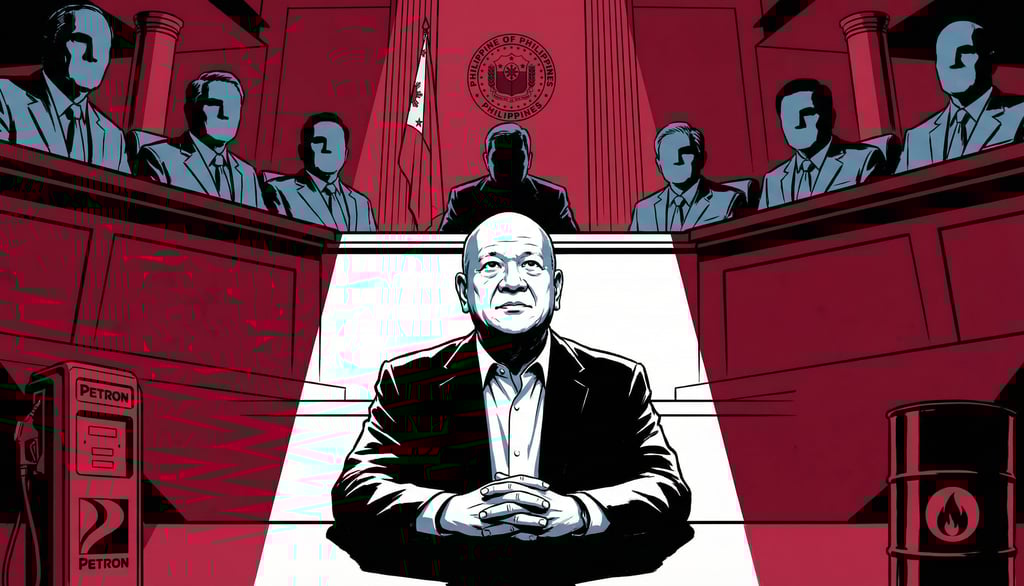
The US and Israel struck Iran on February 28. The Strait of Hormuz — where roughly 20% of global oil and gas passes — was disrupted. Brent crude surpassed $114 per barrel by March 9. Weeks of consecutive fuel price hikes. The Philippines imports 95 to 98% of its crude, most of it from the Middle East.
Senators were furious. Senator Rodante Marcoleta walked out of the DOE hearing in frustration. The public wanted someone to blame, someone to fix it, someone to just do something.
And then Ramon Ang sat before the Senate on March 26 and offered to sell Petron back to the government. "If the government is interested in purchasing Petron from me, and they feel they can handle its operations more efficiently, then I support that decision."
My gut reaction was immediate. This is a terrible idea.
I am not a free-market ideologue. I don't believe private is always better. But handing the country's only refinery to a government with a 32/100 corruption score and a GOCC sector bleeding hundreds of billions — that is not a solution. That is a new problem.
I didn't want to just run on instinct though. So I went looking for evidence that would prove me wrong.
Here is what I found.
WHAT PETRON ACTUALLY IS
Before the argument, the facts.
Petron is the Philippines' only remaining integrated oil refinery. Its plant in Bataan processes 180,000 barrels per day and supplies roughly one-third of the country's total fuel needs. It is not just a gas station chain. It is the single most critical piece of domestic energy infrastructure this country has.
Under San Miguel Corporation's private ownership, Petron absorbed over P11 billion in losses in 2020 during the pandemic and kept operating — when the easier and cheaper move would have been to shut the refinery and simply import finished fuel, the way other oil companies did.
SMC invested $2 billion in upgrading the Bataan refinery and completed it in 44 months — about 16 months faster than industry standard. In 2025, Petron posted a record net income of P15.6 billion, 84% higher than the year before. Revenue was P810 billion.
This is not a struggling company. This is not a patron-fat GOCC pretending to be a business. This is a functioning private enterprise producing results and carrying real national infrastructure responsibility.
The proposal is to hand that to the government.
THE HISTORY WE NEED TO REMEMBER
Something people forget: we already had this argument. And we already chose an answer.
In 1973, the first Marcos administration directed PNOC to acquire Esso Philippines during the global oil shock, renaming it Petrophil Corporation — what we know today as Petron. In fairness, the intent was not stupid. The country needed a strategic buffer during a genuine crisis. Direct state control of the fuel supply was a defensible call in that moment.
But what followed under government control is less flattering. The Oil Price Stabilization Fund, created by Marcos Sr. in 1984, was meant to smooth price volatility. What it became was a fiscal instrument manipulated across administrations — eventually a symbol of the exact mismanagement it was designed to prevent.
Under President Ramos, the government deliberately chose to privatize Petron. The reasoning was simple: the state-run model was bleeding money, private capital could modernize the company faster, and the proceeds from the sale could fund other priorities.
In 1994, PNOC sold 40% to Saudi Aramco and offered another 20% to the public — dubbed the "mother of all IPOs" at the time. Saudi Aramco paid approximately P14.67 billion for its stake. By 2008, PNOC sold its remaining 40% to the Ashmore Group. Ramon Ang's SMC later acquired control through an agreement with Ashmore.
The IMF's 1994 extended fund facility attached oil deregulation as a conditionality. Whatever you think about IMF conditionalities, the architects of the Ramos privatization understood what government ownership of Petron cost. They lived through it.
The current proposal is to undo that choice. Twice over.
HERE IS THE BEST ARGUMENT AGAINST ME
I owe this section intellectual honesty.
There is a coherent argument for state control of a strategic energy asset. The Philippines is structurally exposed to global oil price shocks in a way that pure market mechanisms cannot fix. The Oil Deregulation Act of 1998, RA 8479, removed the government's authority to impose price controls on petroleum products. When prices spike — especially during a geopolitical crisis the country had no part in creating — the government has no direct lever. It can watch. It can appeal. It cannot compel.
Oil companies under deregulation raise prices fast and lower them slowly. That asymmetry is documented and real. It is not paranoia.
And the argument goes further: if the government owned the refinery, it could prioritize national supply, set pricing protections for consumers during crises, and align capital investment with national energy security goals rather than shareholder returns.
Norway has done exactly this. Equinor, the Norwegian state oil company, is 67% government-owned and is consistently ranked among the best-run energy companies in the world. It works. The evidence is there.
The 1973 takeover of Esso Philippines, in its historical context, worked as an emergency measure. The argument is not without foundation.
I found all of that. I held it. And then I looked at what this government has actually done with the institutions it already controls.
THREE CASE STUDIES AND A NUMBER
For once, the contrarian instinct had receipts.
NAPOCOR is the most direct analogy. A government-run energy company. The most direct predecessor to what a government-controlled Petron would look like.
Before the Electric Power Industry Reform Act — EPIRA — was passed in 2001, NAPOCOR was described bluntly as "the single biggest drain on the Philippine government's finances." Its total debt had grown to over P800 billion by the time the law passed, and ballooned further to P1.2 trillion by 2003. The national government absorbed up to P200 billion of that under Executive Order 370 signed in October 2004.
As of 2023, after more than two decades of restructuring, NAPOCOR is still posting a net deficit of P1.907 billion and losing roughly P1 billion a month due to diesel prices. It needed to borrow P15 billion from Landbank just to keep operating.
Twenty-two years after reform legislation. Still bleeding.
PhilHealth is the second case study. A government-run social institution. What happened to it has a name: institutional capture. And it keeps happening.
PhilHealth Senior Vice President Thorrsson Montes Keith went public in August 2020, exposing P15 billion in funds allegedly pocketed through fraudulent schemes inside the agency. Presidential Spokesperson Harry Roque stated publicly that at least P100 billion had been lost to corruption. The Presidential Anti-Corruption Commission found not isolated incidents but, in their own words, a "systematic flaw" — a structural defect enabling recurring corruption.
The government directed PhilHealth to transfer P89.9 billion in alleged "excess funds" to the national treasury through a provision buried in the 2024 General Appropriations Act. The Supreme Court unanimously struck it down as unconstitutional in December 2025, ordering the return of the P60 billion already remitted and permanently blocking the remaining P29.9 billion. Fifteen to zero.
NFA is the food equivalent of what a nationalized oil firm could become.
From 2005 to 2018, NFA averaged P11 billion per year in government subsidies. Its net loss was P15.44 billion in 2020. A PIDS policy study found that around half of its subsidized rice in a given year was diverted to commercial markets, where it was sold at market price — defeating the entire purpose.
The Foundation for Economic Freedom said it plainly: "The NFA has only caused and aggravated rice inflation and rice shortage in several regions, compounded the debt and losses of the national government, and provided opportunities for graft and corruption for its officers and employees."
Rice is not oil. But the mechanism is the same.
The sector-wide number is the one that stopped me.
The Governance Commission for GOCCs reported the sector's adjusted net loss grew 516.24% in a single year — from P144.46 billion in 2022 to P890.23 billion in 2023, partly reflecting the adoption of a new insurance accounting standard across PhilHealth, SSS, and GSIS. Even accounting for that, the losses are real and structural. The government's net lending to GOCCs stood at P26.81 billion in 2023.
The Commission on Audit's own budget was cut from P13.7 billion in 2024 to P12.7 billion in 2025 — the one institution with the mandate to check abuses in these agencies now has less capacity to do it. COA reports, observers note, routinely end up "forgotten in the dustbin."
This is the system being proposed to run the country's only refinery.
THIRTY-TWO OUT OF A HUNDRED
I want to be clear about something.
Skepticism about the government's ability to run Petron is not cynicism. It's not partisan. It's not anti-government posturing. It is a reading of publicly available data.
The Philippines' 2025 Corruption Perceptions Index score: 32 out of 100. Rank: 120th out of 182 countries. That is a drop from 2024. The Philippines is the third most corrupt country in Southeast Asia. It sits below the global average of 43 and below the Asia-Pacific regional average of 44.
Singapore scores 84. Japan 71. Vietnam 40. Indonesia 37. The Philippines: 32.
The Maharlika Investment Corporation, floated as a potential buyer of Petron, was co-filed by the President's son and the Speaker of the House. Comparisons to Malaysia's 1MDB were raised immediately by critics — not as rhetorical attacks, but as documented institutional concerns about governance. A Senate investigation into MIC's investment activities was filed in March 2026.
MIC's own CEO, Rafael Consing, said: "Under RSA's leadership, Petron has grown into an exceptionally well-run company, and I firmly believe it belongs in the private sector."
The potential buyer is arguing against the purchase.
THE PEOPLE WHOSE JOB IS TO GET THIS RIGHT
I'm not alone in this instinct, and the people who share it are not ideologues.
Juan Paolo Colet of China Bank Capital Corporation: "A government takeover of Petron is not necessary. The better policy is to allow the company to continue as a well-managed publicly listed corporation, enabling it to serve its customers more effectively." He added that state ownership would create an unfair competitive advantage over other oil companies, could deter new market entrants, and ironically reduce market competition over time.
April Lee-Tan of COL Financial: "The government has a history of poor performance in managing businesses. Moreover, acquiring a stake in Petron's capitalization would put a strain on the national budget. Our current deficit and debt situation isn't robust, especially as we have yet to recover from the pandemic's adverse effects."
These are not bloggers. These are analysts whose job is to get calls like this right and be accountable when they don't.
NORWAY ALMOST CHANGED MY MIND
This is the section where I got closest to being wrong.
Equinor is 67% state-owned. Norway controls a massive share of a global energy company and it functions extraordinarily well — high production, strong returns, transparent governance, consistent international credibility.
How?
The Norwegian government operates on a strictly arm's-length basis. It acts as a shareholder, not a political operator. The board — not the Ministry of Petroleum — is accountable for performance. A code of corporate governance requires equal treatment of all shareholders, board independence, and transparent reporting that no Norwegian minister can override for electoral convenience.
Norway's Corruption Perceptions Index score: above 80.
The Philippines scores 32.
That's the gap. Not in intention. Not in rhetoric about energy security. In the actual institutional architecture that makes state ownership of a critical company something other than a vehicle for contracts, hiring, and election-season price manipulation.
Venezuela's PDVSA (Petróleos de Venezuela, S.A.) is the other end of this story. In 2002, Chavez fired the entire PDVSA board after a general strike and replaced senior executives with political allies, gutting decades of technical expertise in one move. Production, which had reached around 3 million barrels per day in the late 1990s, collapsed. Academic research captured the specific mechanism: "When the company surplus increases, the government tends to intensify its control to obtain additional benefits, especially during electoral events."
Venezuela's Corruption Perception Index score today: 10 out of 100.
State ownership of an oil company is not inherently catastrophic. State ownership in a country with a 32/100 corruption score, GOCC losses that exploded 516% in a year, and a sovereign wealth fund co-authored by the president's son — that is where the evidence points toward disaster.
I wanted Norway to prove me wrong. Norway got close.
Our own numbers closed the door.
THERE ARE BETTER ANSWERS THAN THIS
The anger behind the takeover proposal is legitimate. Fuel prices are crushing people. The government handed away its price control tools in 1998 under IMF pressure and has been functionally powerless during price shocks ever since. That is a real problem.
But the solution is not to hand the refinery to the institution running NAPOCOR and PhilHealth.
There are actual alternatives: amend RA 8479 to restore limited emergency pricing tools during declared energy crises without changing ownership structure. Build strategic petroleum reserves — the Philippines currently has roughly a 60-day window, and a prolonged Middle East conflict could exceed that. Mandate real-time price transparency from all oil companies. Suspend excise taxes during declared energy emergencies, which the Marcos administration was already weighing. Strengthen competition enforcement at the infrastructure level — storage, terminals, import ports — where the actual oligopoly concentrates.
None of this requires putting the government in charge of a refinery.
Ang himself, at the same Senate hearing, pledged to cap Petron's corporate margins to avoid exploiting the crisis. That accountability came from public pressure on a private actor. It did not require nationalization. It required an engaged public and a functioning media. We have both.
I TRIED TO FIND A REASON TO SAY YES
I went into this research wanting to find the evidence that would prove me wrong.
I found the strongest version of the counterargument. State ownership of energy assets can work. It worked in 1973, to a point. It works in Norway, comprehensively. The anger driving this proposal is not manufactured — it comes from real families paying real prices they cannot control.
But the evidence I found about this government's institutional capacity, this GOCC sector's track record, this country's corruption score, and the specific pattern of how state enterprises get captured by patronage politics — all of it points in the same direction.
The question was never whether government ownership of an oil company can work in theory. The question is whether this government, with its current record, deserves to be trusted with the country's only refinery.
I tried to find a reason to say yes.
I couldn't.
SOURCES
1. GMA Network, How Middle East tensions drove up fuel prices in PH, gmanetwork.com/news/money/economy/980974/crude-reality-how-middle-east-tensions-drove-up-fuel-prices-in-ph-gas-stati
2. Newsweek, Philippines declares national emergency amid Iran war, newsweek.com/philippines-national-emergency-iran-war-11726773
3. Daily Tribune, After Senate spat, Ang offers to sell Petron to gov't, tribune.net.ph/2026/03/27/after-senate-spat-ang-offers-to-sell-petron-to-govt
4. YouTube/ANC, Senate hearing on rising fuel prices March 26, youtube.com/watch?v=SdIJrdyRZjU
5. Petron Corporation, Petron ends 2025 with record net income of P15.6 billion, petron.com/news/petron-ends-2025-with-record-high-net-income-of-p15-6-billion
6. BusinessWorld, Petron takeover seen unnecessary; analysts favor private ownership, bworldonline.com/corporate/2026/03/30/739362/petron-takeover-seen-unnecessary-analysts-favor-private-ownership
7. Philstar, Petron better off with SMC; government buyback unnecessary, philstar.com/business/2026/03/30/2517715/petron-better-smc-government-buyback-unnecessary
8. Insider PH, Maharlika open to energy partnerships as Ang's Petron pitch brings back state role question, insiderph.com/maharlika-open-to-energy-partnerships-as-angs-petron-pitch-brings-back-state-role-question
9. Business Inquirer, Maharlika: Petron takeover unnecessary but options open, business.inquirer.net/582538/maharlika-says-govt-takeover-of-petron-unnecessary-but-its-keeping-options-open
10. Petron Corporation, Our History, petron.com/who-we-are/our-history
11. Wikipedia, Petron Corporation, en.wikipedia.org/wiki/Petron_Corporation
12. Lawphil, Republic Act No. 8479, lawphil.net/statutes/repacts/ra1998/ra_8479_1998.html
13. PIDS, Oil Deregulation in the Philippines, pidswebs.pids.gov.ph/CDN/PUBLICATIONS/pidseid0002-feb.PDF
14. Business Inquirer, Petron completes $2B refinery upgrade, business.inquirer.net/180211/petron-completes-2-b-refinery-upgrade
15. Philstar, Petron cranks up $2B refinery upgrade, philstar.com/business/2014/10/13/1379419/petron-cranks-2-b-refinery-upgrade
16. Manila Bulletin, PNOC land assets excluded in Petron sale, mb.com.ph/2025/1/23/pnoc-land-assets-excluded-in-petron-sale
17. Business Inquirer, Ramon Ang still open to Petron sale to gov't, business.inquirer.net/581935/ang-still-open-to-govt-owned-petron
18. Philstar, RSA ready to sell Petron back to government, philstar.com/business/2026/03/28/2517272/rsa-ready-sell-petron-back-government
19. Insider PH, Ramon Ang revives offer to sell Petron to gov't amid energy crunch, insiderph.com/ramon-ang-revives-offer-to-sell-petron-to-govt-amid-energy-crunch
20. GMA News, PSALM eyes ways for gov't to absorb Napocor debt, gmanetwork.com/news/money/content/23989/psalm-eyes-ways-for-gov-t-to-absorb-napocor-debt/story
21. Bulatlat, NPC: The Debt Zap, bulatlat.com/news/4-23/4-23-npc.html
22. Business Inquirer, Napocor losing P1B a month, says chief, business.inquirer.net/405099/napocor-losing-p1b-a-month-says-chief
23. NPC 2023 Annual Report, napocor.gov.ph/wp-content/uploads/Transparency_Seal/Reports/Annual_Reports/2023_NPC_Annual_Report.pdf
24. Philstar, Napocor debts hit P900 billion as of December 2000, philstar.com/headlines/2001/02/14/89748/napocor-debts-hit-p900-billion-december-2000
25. PIDS, Sale of government power assets built during the Marcos regime, pidswebs.pids.gov.ph/CDN/NEWS/11_19_pressone.pdf
26. Jur.ph, Govt assumes NPC debt up to P200B (EO 370), jur.ph/law/summary/direct-assumption-by-the-national-government-of-a-portion-of-napocors-financial-obligations
27. Lawphil, Executive Order No. 370, lawphil.net/executive/execord/eo2004/eo_370_2004.html
28. PNA, PACC finds systematic flaw in PhilHealth system, pna.gov.ph/articles/1110871
29. Inquirer News, 92% of missing P15B PhilHealth fund liquidated, newsinfo.inquirer.net/1388671/92-of-missing-p-15-b-philhealth-fund-liquidated
30. YouTube/ANC, Roque says P100 billion lost in PhilHealth corruption, youtube.com/watch?v=403x205Z0cU
31. BusinessWorld, PhilHealth writes off P20.67B in unreleased appropriations, bworldonline.com/opinion/2025/03/10/658040/philhealth-writes-off-p20-67b-in-unreleased-appropriations-while-giving-a
32. Inquirer News, SC rejects transfer of excess PhilHealth funds to nat'l treasury, newsinfo.inquirer.net/2151512/sc-rejects-transfer-of-excess-philhealth-funds-to-natl-treasury
33. Facebook/DrTonyLeachon, SC unanimously orders return of P60 billion to PhilHealth, facebook.com/DrTonyLeachon/posts/the-supreme-courts-decision-to-return-philhealth-funds-is-a-step-toward-justice
34. Rappler, SC unanimously orders return of P60 billion to PhilHealth, rappler.com
35. OSG counters SC petition vs PhilHealth fund transfer, newsinfo.inquirer.net/1981276/osg-counters-sc-petition-vs-philhealth-fund-transfer
36. DOF, Government to appear before Supreme Court on PhilHealth transfer, dof.gov.ph/govt-to-appear-before-the-supreme-court-to-shed-light-on-just-cause-behind-philhealths-transfer-of-excess
37. DOF, NFA cuts net loss by 38% to P9.6B in 2021, dof.gov.ph/nfa-cuts-net-loss-by-38-percent-to-p9-6-b-in-2021
38. GMA News, NFA losses reduced to P9.6 billion after Rice Tariffication Law, gmanetwork.com/news/money/economy/830996/nfa-losses-reduced-to-p9-6-billion-after-rice-tariffication-law/story
39. Business Inquirer, Economists group backs call to abolish NFA, business.inquirer.net/256438/economists-group-backs-call-abolish-nfa
40. PIDS, Options for reform of the National Food Authority, pidswebs.pids.gov.ph/CDN/PUBLICATIONS/pidspn1809.pdf
41. GCG Integrated Corporate Reporting System, Financial Overview, icrs.gcg.gov.ph/financial-overview
42. Inquirer Opinion, What happened to the COA findings, opinion.inquirer.net/180014/what-happened-to-the-coa-findings
43. Inquirer Opinion, Doubling the COA budget for accountability, opinion.inquirer.net/187985/doubling-the-coa-budget-for-accountability
44. BusinessWorld, Philippines ranking inches up in global corruption perceptions index 2025, bworldonline.com/top-stories/2025/02/12/652702
45. Facebook/PesoWeekly, Philippines ranked 120th out of 182 countries in 2025 CPI, facebook.com/pesoweekly/posts/the-philippines-ranked-120th-out-of-182-countries-in-the-2025-corruption-percept
46. Facebook/ExplainedPH, Philippines obtained score of 32 in 2025 CPI, facebook.com/ExplainedPH/posts/the-philippines-obtained-a-score-of-32-in-the-2025-corruption-perceptions-index
47. SunStar Davao, PH score dips in global corruption ranking, facebook.com/sunstardavaonews
48. TIME, Why the Philippines' sovereign wealth fund is controversial, time.com/6241736/philippines-sovereign-wealth-fund
49. Heinrich Böll Foundation, The Maharlika Investment Fund: Boon or Bane, th.boell.org/en/2023/08/09/maharlika-investment-fund
50. Wikipedia, Maharlika Wealth Fund, en.wikipedia.org/wiki/Maharlika_Wealth_Fund
51. GMA News, A look back at Maharlika Fund two years later, gmanetwork.com/news/money/economy/953584/sona-2025-maharlika-investment-fund-two-years-later/story
52. Facebook, Senate investigation into MIC March 2026, facebook.com/groups/2697336873931004/posts/2884318091899547
53. Equinor, The Norwegian state as shareholder, equinor.com/about-us/the-norwegian-state-as-shareholder
54. Yale Case Studies, Statoil's Place in Norway, cases.som.yale.edu/equinor/norway-and-oil/statoils-place-norway
55. CSIS, The oil industry won't save Venezuela, csis.org/analysis/oil-industry-wont-save-venezuela
56. CFR, Venezuela: The Rise and Fall of a Petrostate, cfr.org/backgrounders/venezuela-crisis
57. Wikipedia, 2002-2003 Venezuelan general strike, en.wikipedia.org/wiki/2002%E2%80%932003_Venezuelan_general_strike
58. Geoexpro, Before the collapse in oil production, Venezuela saw another collapse, geoexpro.com/before-the-collapse-in-oil-production-venezuela-saw-another-collapse-the-mass-firing-of-most-of-pdvsas-tech
59. Business Perspectives Journal, State-owned enterprises as a political tool, businessperspectives.org/index.php/journals/problems-and-perspectives-in-management/issue-397/state-owned-enterprises-as-a-political-tool
60. Euronews, Oil prices soar above $100 a barrel as Iran conflict impacts supplies, euronews.com/business/2026/03/09/oil-prices-soar-above-100-a-barrel-as-iran-conflict-hits-shipping
61. Reuters, Middle East oil benchmarks hit record highs as war cuts supply, reuters.com/business/energy/middle-east-oil-benchmarks-hit-record-highs-war-cuts-supply-2026-03-16
62. Wikipedia, 2026 Strait of Hormuz crisis, en.wikipedia.org/wiki/2026_Strait_of_Hormuz_crisis
63. Al Jazeera, How US-Israel attacks on Iran threaten the Strait of Hormuz, aljazeera.com/news/2026/3/1/how-us-israel-attacks-on-iran-threaten-the-strait-of-hormuz-oil-markets
64. Britannica, 2026 Iran war, britannica.com/event/2026-Iran-War
65. Manila Bulletin, Marcos declares state of national energy emergency, mb.com.ph/2026/03/24/marcos-declares-state-of-national-energy-emergency
66. Inquirer.net, Marcos declares national energy emergency, newsinfo.inquirer.net/2200774/marcos-declares-natl-energy-emergency
67. SunStar, Marcos declares state of national energy emergency, sunstar.com.ph/manila/marcos-declares-state-of-national-energy-emergency
68. Business Inquirer, Petron suffered P11.4 billion loss in 2020, business.inquirer.net/319262/petron-suffered-p11-4-b-loss-in-2020-as-mobility-curbs-hit-sales
69. Philstar, Petron incurs P11.4 billion loss in 2020, philstar.com/business/2021/03/11/2083410/petron-incurs-p114-billion-loss-2020
70. Petron Corporation, Petron sustains growth momentum in Q4 2020, petron.com/news/petron-sustains-growth-momentum-in-q4-2020-continues-to-recover-from-pandemic-slump
71. Encyclopedia.com, Petron Corporation, encyclopedia.com/books/politics-and-business-magazines/petron-corporation
72. Fuels and Lubes, Petron refinery upgrade to be fully commercially operational, fuelsandlubes.com/petron-refinery-upgrade-to-be-fully-commercially-operational-this-quarter-2
73. Construction Boxscore, Petron completes US $2 billion refinery upgrade, constructionboxscore.com/project-news/petron-completes-us-$2-billion-refinery-upgrade.aspx
74. GMA News, Petron posts record net income in 2025, gmanetwork.com/news/money/companies/978553/petron-posts-record-net-income-in-2025/story
75. Manila Bulletin, Petron hits record P15.6 billion profit in 2025, mb.com.ph/2026/03/03/petron-hits-record-p15-6-billion-profit-in-2025-as-sales-volumes-rise
76. Business Inquirer, Petron books strongest year with P15.6B income in 2025, business.inquirer.net/577128/petron-books-strongest-year-with-p15-6b-income-in-2025
77. PNA, The 1973 oil crisis and PH, pna.gov.ph/opinion/pieces/581-the-1973-oil-crisis-and-ph
78. SunStar, Gov't oil takeover urged as fuel prices surge, sunstar.com.ph/amp/story/davao/govt-oil-takeover-urged-as-fuel-prices-surge
79. Chatham House, Conflict in the Strait of Hormuz is spilling into the Indian Ocean, chathamhouse.org/2026/03/conflict-strait-hormuz-spilling-indian-ocean
80. Facebook/BilyonaryoPh, Ramon Ang pledges to cap corporate margins, facebook.com/BilyonaryoPh/posts/127
81. Business Inquirer, GOCC subsidies plunge to nine-year low in 2025, business.inquirer.net/582246/gocc-subsidies-plunge-to-nine-year-low-in-2025
82. PIDS, Financial Performance of Selected Government Corporations 2020-2023, serp-p.pids.gov.ph/publication/public/view?slug=financial-performance-of-selected-government-corporations-2020-2023
83. Philstar, Fuel price spike seen amid war on Iran, philstar.com/headlines/2026/03/02/2511389/fuel-price-spike-seen-amid-war-iran
84. Inquirer.net, Oil price watch as of March 27 2026, newsinfo.inquirer.net/2202192/oil-price-watch-as-of-march-27-2026
85. Manila Bulletin, Plan for gov't control of Petron faces skepticism over high costs, mb.com.ph/2026/03/30/plan-for-govt-control-of-petron-faces-skepticism-over-high-costs
Contact us
subscribe to morning coffee thoughts today!
inquiry@morningcoffeethoughts.org
© 2024. All rights reserved.
If Morning Coffee Thoughts adds value to your day, you can support it with a monthly subscription.
You can also send your donation via Gcash: 0969 314 4839.