
LATEST COMMENTARY
FIVE THINGS TO KNOW
MCT READER PULSE · MCT-PULSE-2026-017
MCT READER SURVEY
Gaano ka nagtitiwala na tama ang ginagawa ng Kongreso sa budget ng bayan?
This is an informal survey of people who choose to participate. It is not a scientific or nationally representative sample.
ABOUT DARK VESSEL DETECTION: WHAT SATELLITES CAN SEE, AND WHAT THEY CANNOT PROVE
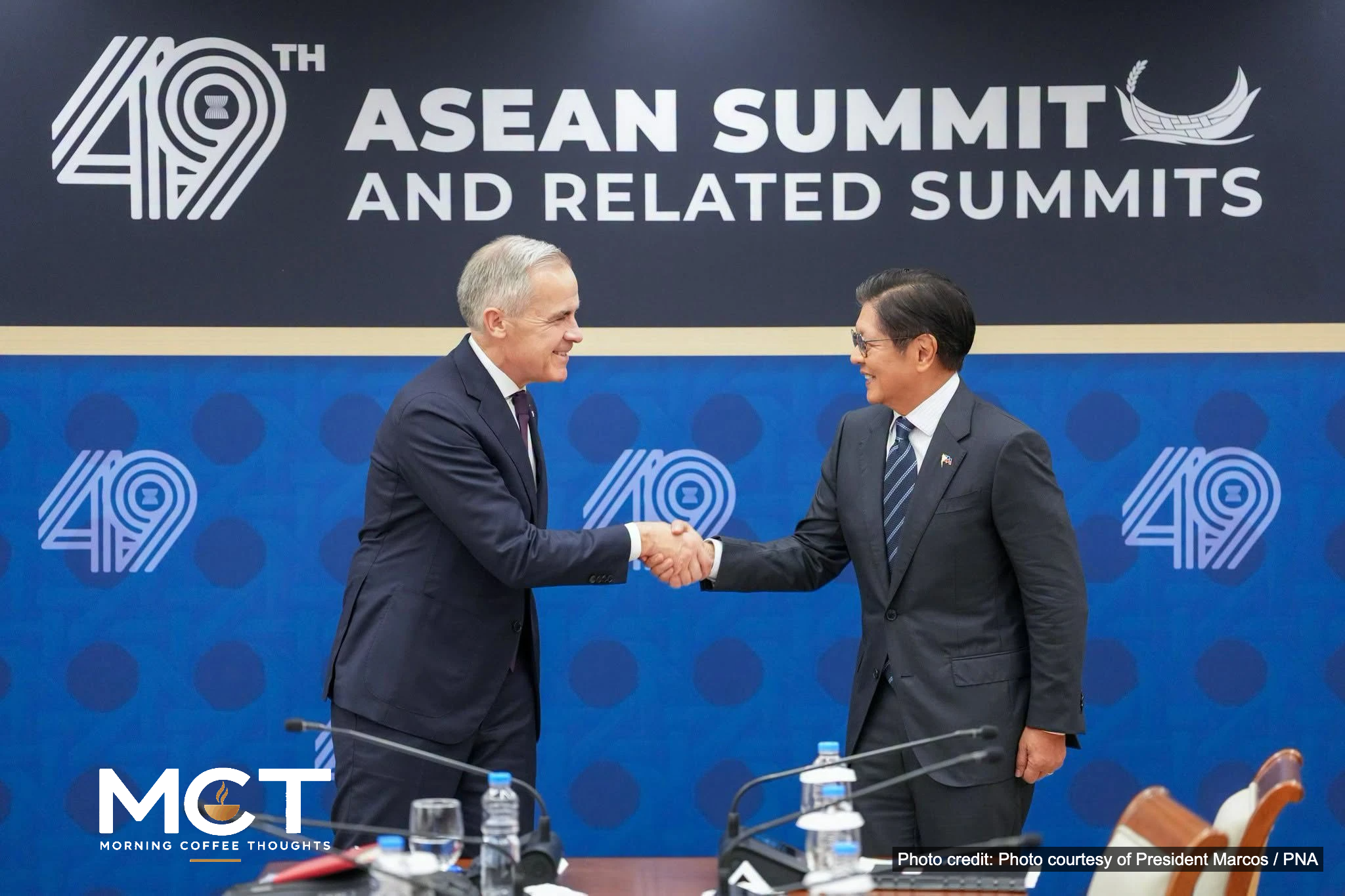
A vessel can stop broadcasting its location without disappearing from the sea. That is the problem Canada's Dark Vessel Detection program helps Philippine authorities tackle. On November 14, Prime Minister Mark Carney announced that the program would continue until 2033.
The extension gives the Philippines a longer period of satellite assistance against illegal fishing. But a dot on a screen is only the start of the work. Someone still has to identify the vessel, check what it was doing and decide how to respond. Here are five things to know about the extension and the work ahead.
1
THIS EXTENDS AN EXISTING PROGRAM
The Philippines gained access to the Canadian system through an arrangement signed in 2023. The National Coast Watch Center was among the Philippine users. November 14's announcement extends that cooperation; it is not the country's first access to the technology.
The 2033 date gives the partnership a longer horizon. It does not tell us how many patrols will be sent out, how quickly every alert will reach a crew or how much illegal fishing will be stopped. Those are results to look for after the announcement.
WHAT TO WATCH
Look for the extension's implementation details: which Philippine agencies will receive the data, what training they will get and how the service will be maintained through 2033.
2
A VESSEL’S BROADCAST IS NOT THE SAME AS AN INDEPENDENT OBSERVATION
The Automatic Identification System, or AIS, broadcasts information such as a vessel's identity, position, speed and course. It helps other ships and shore stations know what is nearby. An AIS track therefore depends on a message being transmitted and received.
Dark Vessel Detection uses satellite observations to help locate vessels even when their location transmitters are off. Satellites can also receive AIS broadcasts. The difference here is between receiving a vessel’s own message and sensing its presence independently. A missing broadcast need not leave authorities searching the sea without a lead.
Think of the two as different pieces of a record. The broadcast says where a vessel reports itself to be. A satellite observation helps check what was present at a place and time.
WHAT TO WATCH
When an agency releases an image or map, check its date and whether it shows a vessel's transmitted position, a satellite observation or a combination of both.
3
A MISSING SIGNAL DOES NOT AUTOMATICALLY MEAN ILLEGAL FISHING
AIS reception has limits. Messages can be missed because of coverage gaps or overlapping transmissions. The international rules on carrying AIS also vary by vessel type and size; they do not cover every boat in the same way. IMO guidance allows a master to switch AIS off in areas where an imminent pirate or terrorist attack threatens the ship.
A missing signal alone cannot tell readers why it disappeared. Calling a vessel an illegal fishing boat takes a factual basis beyond an empty patch in its transmitted track.
WHAT TO WATCH
Look for how officials identified the vessel and what they say it was doing. Keep an unexplained signal gap, suspected evasion and a confirmed fishing violation distinct.
4
DETECTION HELPS DIRECT ENFORCEMENT; IT DOES NOT REPLACE IT
Canada designed the program to help coastal states focus investigations and enforcement against illegal, unreported and unregulated fishing. Its value is practical: a useful lead can help officials decide where to look instead of searching a vast stretch of sea without a specific lead.
The next steps still need people. Analysts must check the information. Authorities must decide whether a response is justified and possible. If they report a violation, the public should be able to understand the basis for it without being shown sensitive patrol details.
A rising detection count could reflect better visibility. It would not, by itself, show that illegal fishing had risen by the same amount, or that enforcement had succeeded.
WHAT TO WATCH
Ask what happened after the alert: a further check, an interception, a case or no confirmed violation. Count those outcomes separately instead of calling every detection a catch.
5
FISHERS NEED RESULTS, NOT JUST BETTER MAPS
Illegal fishing threatens fish stocks and the livelihoods of fishers who follow the rules. Better surveillance can help protect that work. The extension deserves attention because it keeps a useful source of information available to Philippine authorities.
For fishers, the practical concern is whether authorities can act on useful information. A detection system cannot supply a patrol crew, fuel or time at sea. Those needs belong in the same conversation as the satellite assistance.
WHAT TO WATCH
Look for dated accounts of completed enforcement work, with clear outcomes and any limits on what was confirmed. A useful public report should connect the satellite alert to the action that followed.
BOTTOM LINE
Canada's extension keeps satellite assistance available to the Philippines through 2033. The next task is to turn that information into timely checks and action at sea. Agencies should report what those efforts achieved, with enough detail for the public to judge the results.
SOURCES
- Prime Minister of Canada, November 14, 2026 announcement: https://www.pm.gc.ca/en/news/news-releases/2026/11/14/canada-concludes-negotiations-two-new-free-trade-agreements
- Philippine News Agency, November 15, 2026 report and Philippine ambassador's statement: https://www.pna.gov.ph/article/envoy-anti-dark-vessel-system-shows-strong-canada-ph-fight-vs-iuuf
- Fisheries and Oceans Canada, February 24, 2021 program description: https://www.canada.ca/en/fisheries-oceans/news/2021/02/government-of-canada-launches-international-program-to-track-illegal-fishing-using-satellite-technology.html
- International Maritime Organization, AIS transponders: https://www.imo.org/en/ourwork/safety/navigation/ais.aspx
- Transport Canada, AIS methodology and reception limits: https://tdih-cdit.tc.canada.ca/en/marine-and-port-dashboard-supplementary-information
- International Maritime Organization, maritime security questions and AIS safety exceptions: https://www.imo.org/en/ourwork/security/pages/faq.aspx
GOOGLE PREFERRED SOURCES
FOLLOW MCT ON GOOGLE
Google’s Preferred Sources feature lets you choose publications you want Google to prioritize for you. Select “Add to Preferred Sources” to make MCT easier to find in Top Stories and other eligible Google results. This does not subscribe you to email.