FIVE THINGS TO KNOW…

Short explainers published throughout the day.

10:45 PM7-minute read

ABOUT THE OCTOBER WATER-RATE INCREASES

Metro Manila households served by Maynilad and Manila Water will see slightly higher water charges beginning October 1. The announced increases are small for many residential customers, but the figures vary by concessionaire and consumption level. That makes it easy to misunderstand a notice expressed only in centavos per cubic meter.

Read the explainer →
7:21 AM6-minute read

ABOUT THE NOTE HANDED TO GIBO TEODORO IN SEOUL

Defense Secretary Gilberto “Gibo” Teodoro Jr. was answering questions at the Seoul Defense Dialogue on September 8 when a man handed him a note. He read it aloud, challenged its rejection of the 2016 South China Sea ruling and objected to being interrupted that way.

Read the explainer →
9:55 AM8-minute read

ABOUT EL NIÑO AND PREPARING FOR LESS RAIN

It can be raining outside while PAGASA warns about El Niño. That can sound confusing when the immediate problem is a wet road or a flooded field. The two warnings describe different periods: the weather happening now and the rainfall conditions that may develop over the coming months.

Read the explainer →
5:30 AM8-minute read

ABOUT THE NEW ARREST WARRANTS AGAINST ZALDY CO, MARTIN ROMUALDEZ AND TWO OTHERS

The Sandiganbayan has ordered the arrest of Zaldy Co, Martin Romualdez and two other accused in the plunder case filed on September 7. By Monday evening, authorities had served Romualdez's warrant and carried out booking procedures at Cardinal Santos Medical Center in San Juan. His arrest is a confirmed development; it does not establish that his three co-accused are also in custody.

Read the explainer →
3:15 PM8-minute read

ABOUT THE PLUNDER CASE AGAINST MARTIN ROMUALDEZ

The Office of the Ombudsman filed a plunder case against former House Speaker Martin Romualdez at the Sandiganbayan on September 7 over his alleged involvement in flood-control kickbacks. The accusations have now reached the court that will handle the criminal case. Romualdez denies wrongdoing and remains presumed innocent.

Read the explainer →
1:18 PM7-minute read

ABOUT THE NEW SWS POVERTY NUMBERS

Self-rated poverty and food poverty declined in June, but the figures also show how many Filipino families remain under pressure and why lower household budgets do not necessarily mean life became cheaper.

Read the explainer →
2:02 PM11-minute read

ABOUT THE CHILDREN'S SOCIAL MEDIA SAFETY ACT

House Bill No. 9965 would bar children below 13 from having social media accounts, require parental consent for users aged 13 to 17, regulate platform algorithms, and impose fines reaching P50 million. It is still being deliberated in the House.

Read the explainer →
12:02 PM7-minute read

ABOUT THE SEALED BIR BOX

Marcos authorized the BIR to comply with the Senate subpoena. That did not open the records to the public or prove the unexplained-wealth allegation.

Read the explainer →

MCT READER PULSE · MCT-PULSE-2026-008

MCT READER SURVEY

Senator-judges who are absent from the impeachment trial—including those on medical leave, in hiding, or detained—should still be allowed to cast a vote. Do you agree?Ang mga senator-judge na wala sa impeachment trial—kabilang ang naka-medical leave, nagtatago, o nakadetine—ay dapat payagan pa ring bumoto. Sang-ayon ka ba?

Senator-judge Erwin Tulfo asked the impeachment court to clarify who may validly vote and how absent members affect the constitutional two-thirds requirement. He cited one senator on medical leave abroad, one in hiding, and two in detention. The court had not resolved those questions when this survey opened. This survey asks for your view; it does not state what the Constitution or the impeachment rules require.

Background: Senate impeachment records, INQUIRER.net, and MindaNews.

This is an informal survey of verified MCT readers who choose to participate. It is not nationally representative.

Open the shareable survey page →
View previous survey results →
Checking your reader session…

September 20, 2026 · 6:46 AM9-minute read

ABOUT THE CHINA COAST GUARD COLLISION WITH A PHILIPPINE FISHERIES VESSEL

A Philippine fisheries vessel was damaged in a collision off Palawan. Manila and Beijing disagree about how it happened, while fishermen still need fuel.

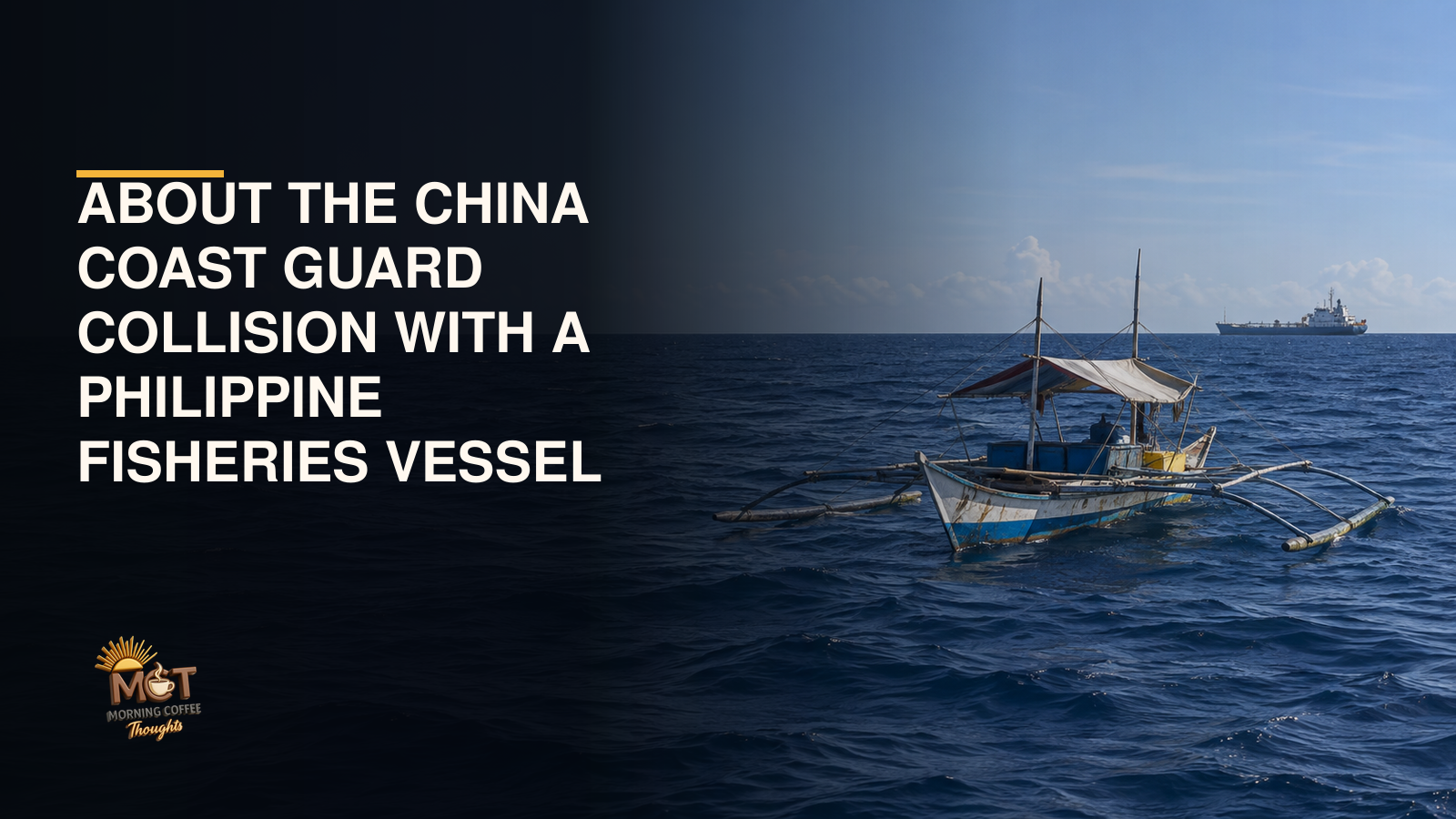
A Filipino fishing boat at sea with a larger vessel in the distance.

A Chinese Coast Guard ship and a Philippine government fisheries vessel collided off Palawan on Friday while the Philippine vessel was taking fuel to Filipino fishing boats. The Philippine Coast Guard says the Chinese ship rammed it deliberately. China blames the Philippine crew. Video, damage to the vessel and the two governments' statements give us more than a headline, but they do not settle every question about the encounter. The crew needs to be safe, and fishermen still need the promised support. Here are five things worth knowing about the mission, the competing accounts and what officials can do next.

1

THE PHILIPPINE SHIP WAS CARRYING SUPPORT FOR FISHERMEN

The vessel was the BRP Datu Magat Salamat, operated by the Bureau of Fisheries and Aquatic Resources, or BFAR. On September 18, it was taking fuel to Filipino fishermen in the West Philippine Sea. Fuel helps small fishing boats stay at sea and return with their catch. BFAR vessels also bring food and other supplies on such missions. This was a civilian government operation, even though the Philippine Coast Guard was nearby and later sent help.

The encounter took place at about 11:13 a.m., roughly 54 nautical miles off Palawan, according to the Philippine Coast Guard. It identified the Chinese ship as CCG-21585. There is a separate September 17 incident that can easily be confused with this one: the same BFAR vessel had run aground near Hasa-Hasa Shoal and was refloated with Coast Guard assistance. Friday's collision happened afterward. The grounding did not, on its own, establish who caused the later collision.

For a fishing crew, a supply trip has a simple purpose. Without fuel, working farther from shore becomes harder or impossible. If a government support vessel is damaged or forced to turn back, fishermen can lose access to help they were expecting. We should still wait for BFAR to say which boats received fuel and whether any deliveries were missed; the collision alone does not prove the entire mission failed.

WHAT TO WATCH

BFAR's account of the fuel delivered before and after the collision, the condition of the Datu Magat Salamat, and whether another vessel will finish any interrupted deliveries. Those details show the direct effect on fishing families.

2

THE SHIP WAS DAMAGED, AND THE CREW'S SAFETY COMES FIRST

The Philippine Coast Guard says the Chinese ship made dangerous maneuvers and struck the BFAR vessel. Photos and video released after the encounter show damaged railings and deck fittings on the Philippine ship. The Coast Guard sent vessels and aircraft to assist and check on its crew. Available reports did not identify an injured crew member from Friday's collision, but the absence of a reported injury is no reason to treat a collision at sea as harmless.

A vessel can remain afloat and still need inspection before continuing a long mission. Bent railings leave a deck less safe, especially when crew must work near the edge in rough weather. Damaged equipment can also affect whether supplies can be carried or transferred. BFAR and the Coast Guard, rather than online viewers of a short clip, are in the position to assess the ship's seaworthiness and the crew's condition.

The released footage is useful evidence of the encounter. It should be examined alongside the complete recording, vessel tracks and the crews' accounts. A short excerpt may show contact without showing every maneuver that led to it. That is why a careful report should state what the video shows and attribute claims about intent to the officials making them.

WHAT TO WATCH

A dated inspection report on the ship, a confirmed crew-status update and any release of longer video or vessel-track data. Those can clarify the damage, the sequence of maneuvers and whether the ship can safely return to service.

3

MANILA AND BEIJING GIVE OPPOSITE ACCOUNTS

The Philippine Coast Guard calls the strike deliberate. The Department of Foreign Affairs says there was no justification for aggressive action against a Philippine civilian vessel carrying out lawful support for fishermen. China says the Philippine ship ignored warnings, changed course and crossed the bow of the Chinese vessel. Those are competing official claims about responsibility, not two established versions of the same fact.

The place of the encounter is also central. Philippine officials put it about 54 nautical miles from Palawan and within the country's exclusive economic zone. Under the law of the sea, a coastal state has rights over resources, including fish, in that zone. An exclusive economic zone is not the same as national territory on land, and other states still have navigation rights. But those navigation rights do not make it acceptable to endanger another crew or prevent lawful fishing support.

The 2016 South China Sea arbitral ruling rejected China's claim to historic rights to resources beyond what the law of the sea allows. China rejects the ruling. Neither side's present statement is a new judgment on this collision. To decide who maneuvered into whom, officials need to examine the full record of this specific encounter. The legal background explains why the Philippine mission can proceed in the area; it does not replace an investigation of the impact itself.

WHAT TO WATCH

Full, time-stamped evidence from both ships and any formal Philippine account that reconciles video with vessel tracks. Watch the exact language of China's response too, rather than a social-media summary of it.

4

THE IMMEDIATE COST FALLS ON PEOPLE WORKING AT SEA

The dispute is often discussed as a contest between capitals. The people closest to it are fishermen who need fuel and food, and the crew asked to bring those supplies. When support vessels face a risk of collision, BFAR and the Coast Guard may have to spend more time and resources protecting a trip that should have a straightforward purpose. A damaged ship may also be unavailable for another run while it is inspected or repaired.

That can affect livelihoods without appearing immediately in a national price index. A fisherman's catch depends on time, weather, fuel and the ability to reach fishing grounds safely. A delayed supply run can change those calculations. It would be careless, however, to claim that Friday's collision has already raised fish prices or stopped fishing throughout the area. BFAR has not supplied that evidence. The concrete question is whether specific boats and communities lost a service they were due to receive.

The government promised these fishermen support. After the collision, it needs to show how it will deliver that help safely. Condemning the incident does not fill a boat's fuel tank; a completed supply trip would.

WHAT TO WATCH

BFAR's list of completed and pending deliveries, any replacement vessel, and testimony from the fishing crews who were waiting for fuel. Those will show the livelihood impact more clearly than diplomatic statements alone.

5

DIPLOMATIC REACTIONS ARE A START, NOT THE LAST STEP

The Philippine Foreign Affairs Department condemned the Chinese ship's conduct on Friday night and called on China to respect Philippine rights and avoid actions that raise tensions. The United States, Canada and the European Union voiced concern on Saturday. Their statements show international attention, but they do not repair the Philippine vessel, complete a fuel delivery or settle the two sides' disagreement about the maneuver.

Manila has several possible next steps: preserve and publish the evidence it can safely release, raise the incident through diplomatic channels, inspect and repair the ship, and adjust protection for future BFAR missions. We should not say a formal diplomatic protest has been filed unless the government confirms one. We should also not treat a foreign expression of concern as a promise to intervene at sea.

The useful measure is what changes before the next trip. Can BFAR continue taking supplies to fishermen? Will the Coast Guard document new encounters and keep crews safe? Will officials publish enough evidence for the public to judge their account? These questions are more concrete than a cycle of angry statements after each collision.

WHAT TO WATCH

Any confirmed diplomatic filing, the government's full incident report and BFAR's schedule for the next support mission. A safe, completed delivery would be a meaningful result for the fishermen at the center of this story.

BOTTOM LINE

The Datu Magat Salamat was on a fuel mission for Filipino fishermen when it collided with a Chinese Coast Guard ship off Palawan. Its damage is visible. The Philippine Coast Guard says it was rammed; China says the Philippine vessel caused the contact. The two accounts require close examination of the full evidence, while the rights of Filipino fishermen and the safety of both crews remain immediate concerns. Watch what happens to the damaged ship, the interrupted supply work and the government's documented response. That is where the consequences become clear.

GOOGLE PREFERRED SOURCES

FOLLOW MCT ON GOOGLE

Google’s Preferred Sources feature lets you choose publications you want Google to prioritize for you. Select “Add to Preferred Sources” to make MCT easier to find in Top Stories and other eligible Google results. This does not subscribe you to email.

← Back to MCT home

LATEST COMMENTARY

View all commentary →

SUPPORT MCT

HELP KEEP INDEPENDENT POLITICAL WRITING GOING.

Morning Coffee Thoughts is reader-supported. Contributions help pay for research tools, hosting, and the work required to verify and explain each development.

Choose the monthly support amount you are comfortable with.Continue through PayPal
Send support through GCash or Maya0969 314 4839