
LATEST COMMENTARY
FIVE THINGS TO KNOW
MCT READER PULSE · MCT-PULSE-2026-017
MCT READER SURVEY
Gaano ka nagtitiwala na tama ang ginagawa ng Kongreso sa budget ng bayan?
This is an informal survey of people who choose to participate. It is not a scientific or nationally representative sample.
ABOUT THE BARANGAY AND SK ELECTIONS: WHY ARE WE WAITING UNTIL 2028?
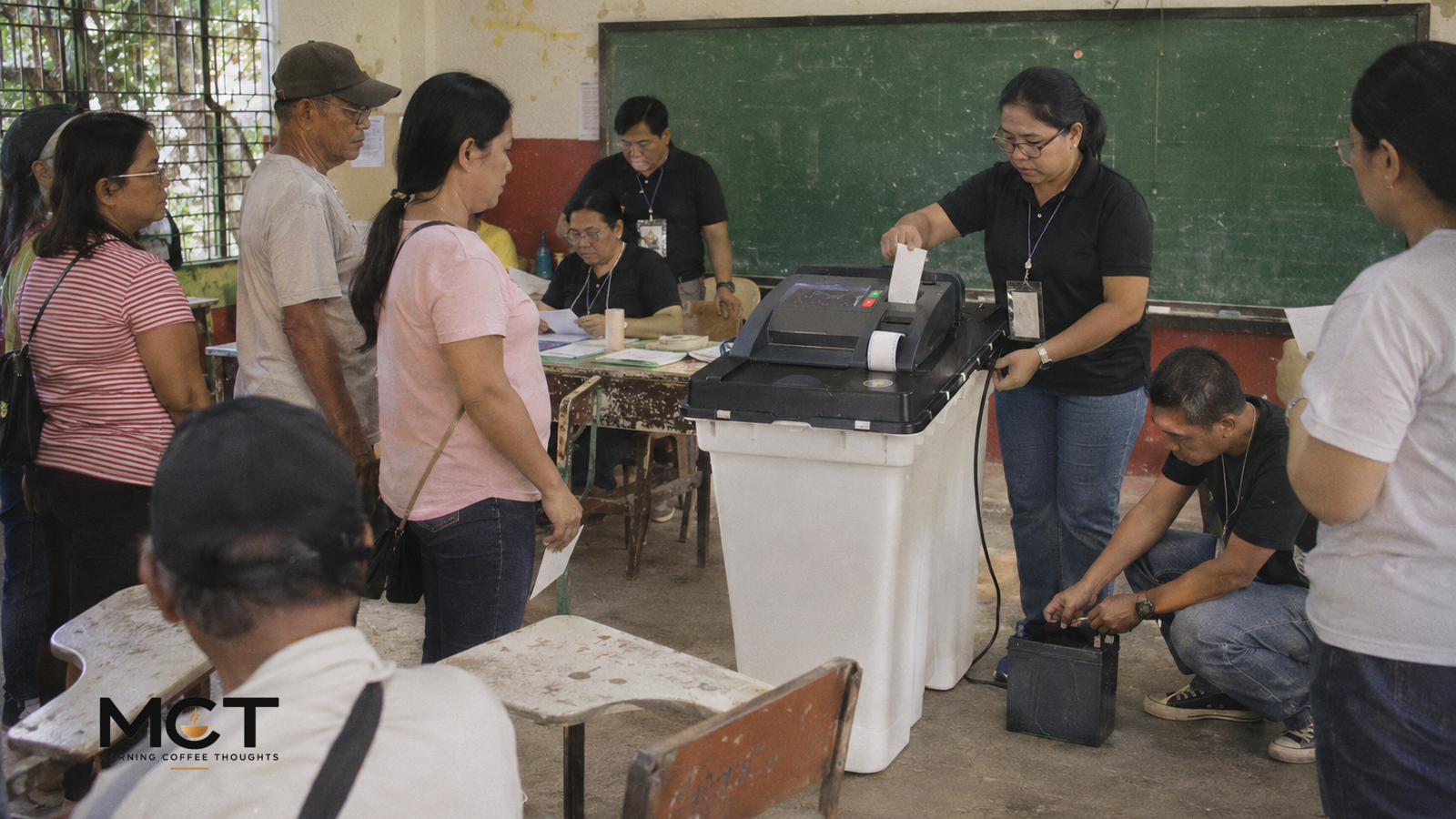
Filipinos were supposed to choose their barangay and Sangguniang Kabataan officials on November 2, 2026. That election did not take place. Under the law now in effect, the next regular barangay and SK elections are scheduled for November 13, 2028.
The Supreme Court has upheld the law, but the lawyer who challenged it wants the Court to reconsider part of its decision. Comelec, meanwhile, says it cannot simply choose a new date if the ruling is reversed.
Here are five things to know about the law, the Court’s decision and what could happen next.
1
THE LAW SETS FIVE-YEAR TERMS AND A 2028 ELECTION
President Ferdinand Marcos Jr. signed Republic Act 12326 in September 2026. It sets the term of elected barangay and SK officials at five years and schedules the next regular elections for the second Monday of November 2028. Regular elections would then be held every five years.
The officials now serving were elected in October 2023. The November 2028 schedule means they are expected to complete five years in office before the next regular election.
The law also limits elected barangay officials to two consecutive terms in the same position. An elected SK official may serve only one term in the same position.
This was not the original schedule voters were waiting for. Before the new law, the elections had been set for November 2, 2026. MCT’s earlier explainers described the move to 2028 while it was still a proposal. It has since become law and been reviewed by the Supreme Court.
2
THE SUPREME COURT UPHELD THE LAW
Election lawyer Romulo Macalintal challenged RA 12326 before the Supreme Court. He argued that moving the 2026 polls violated voters’ rights and did not meet the standards the Court had laid down in a 2023 case on postponing barangay elections.
The Court dismissed his petition and upheld the law. Reports on the decision say the Court viewed RA 12326 primarily as a measure fixing the length of officials’ terms. In that reasoning, the change in election date followed from the new five-year term.
That distinction is central to the ruling. Macalintal argued that a postponement still needed a sufficient justification, even if it came through a law setting terms. The Court said the 2023 postponement guidelines did not apply in the same way to this term-setting measure.
3
MACALINTAL WANTS PART OF THE DECISION RECONSIDERED
Macalintal has filed a motion for partial reconsideration. This is a request for the Court to review part of its own decision. It is not a new ruling, and filing it does not automatically stop the existing law or schedule an election.
In his motion, he argues that Congress’s power to set terms and the postponement of the 2026 vote can be treated separately. He asks the Court to recognize the former while finding the latter unconstitutional.
That is his proposed solution, not a decision the Court has adopted. Until the Court acts differently or another valid legal change is made, Comelec is preparing for the November 2028 barangay and SK elections.
4
WHY CAN’T COMELEC JUST SET AN EARLIER DATE?
Comelec Chairman George Garcia says the commission’s authority to set a replacement date within 30 days applies when an election is postponed before its scheduled date. November 2 has already passed.
Garcia says that if the Supreme Court reverses its ruling, Congress would have to determine a new election schedule. His statement explains his understanding of what would happen after a possible reversal; it does not mean the Court has ordered a new vote.
There is a practical question behind the legal one. Election preparations involve voter lists, ballots, personnel and supplies. A new date would require a clear legal basis and enough time for Comelec to prepare. None of that, however, changes the fact that voters have already waited beyond the date originally set for 2026.
5
DOES THIS CANCEL THE 2028 NATIONAL ELECTION?
No. The barangay and SK election is separate from the national and local elections in May 2028. RA 12326 sets the barangay and SK schedule; it does not cancel the presidential or national election.
Macalintal has warned that the ruling could encourage future efforts to alter the national election calendar. Constitutional lawyer Ralph Sarmiento, quoted by The Philippine Star, said a postponement of the presidential and national elections was unlikely because the Constitution contains clearer provisions fixing their schedule.
Those are arguments about a possible future issue. They are not evidence that the 2028 presidential election has been cancelled or that a postponement has already been approved.
For now, the immediate questions are whether the Supreme Court will change its decision on RA 12326 and, if it does, what legal steps would be needed to set a new barangay and SK election date.
SOURCES
- Republic Act No. 12326
- GMA News — Supreme Court upholds the law
- BusinessMirror — Macalintal’s motion for partial reconsideration
- The Philippine Star — Comelec on resetting the election
Photo credits
AI illustration / OpenAI OpenAI
GOOGLE PREFERRED SOURCES
FOLLOW MCT ON GOOGLE
Google’s Preferred Sources feature lets you choose publications you want Google to prioritize for you. Select “Add to Preferred Sources” to make MCT easier to find in Top Stories and other eligible Google results. This does not subscribe you to email.
SUPPORT MCT
HELP KEEP INDEPENDENT POLITICAL WRITING GOING.
Morning Coffee Thoughts is reader-supported. Contributions help pay for research tools, hosting, and the work required to verify and explain each development.