
LATEST COMMENTARY
FIVE THINGS TO KNOW
MCT READER PULSE · MCT-PULSE-2026-017
MCT READER SURVEY
Gaano ka nagtitiwala na tama ang ginagawa ng Kongreso sa budget ng bayan?
This is an informal survey of people who choose to participate. It is not a scientific or nationally representative sample.
ABOUT WINNING THE LOTTO: WHAT TO DO BEFORE YOU SPEND A PESO
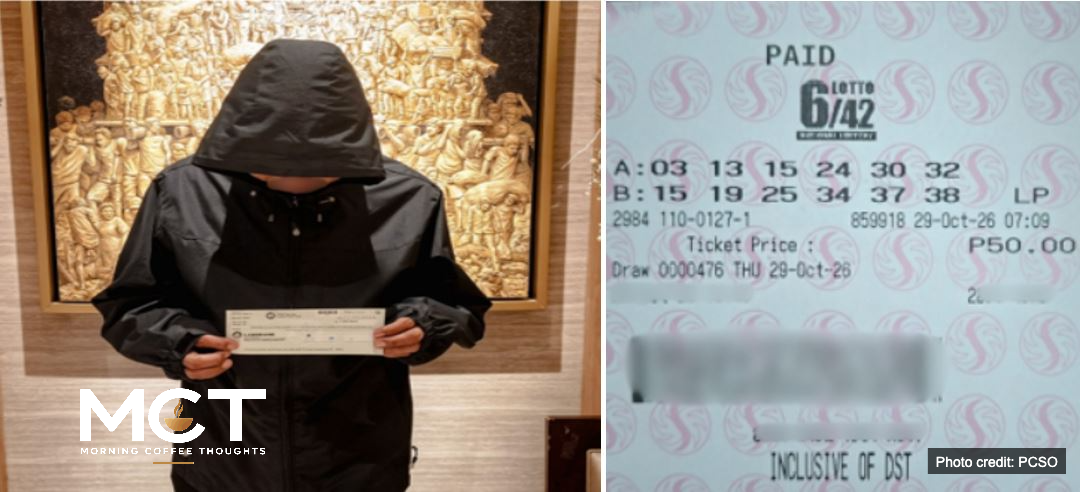
If you've spent years making a paycheck last until payday, nobody should expect you to know how to manage ₱50 million overnight. You can win today and be back where you started five years later. It doesn't have to take one spectacular mistake. A few big purchases, a business that keeps needing cash, and bills that go up for good can do it.
1
KEEP QUIET AND SECURE THE TICKET
Check the numbers, game and draw date against PCSO's official results. For a paper ticket you bought yourself, sign the back and keep the original somewhere safe. Don't post a photo, forward a scan, or let someone else hold it for you. If you chipped in with other people, save the messages and payment records and speak to a lawyer before anyone claims it as their own.
A jackpot can change who approaches you as well as what you can afford. Once word gets out, you may hear from relatives you never knew you had, people asking for loans or help, and companies offering investments. Some requests may be genuine. Others may be sales pitches or scams. You do not have to decide which is which while everyone is calling.
Keep the news to the few people who need to know while you secure the ticket and get advice. Avoid posting your win, ticket or bank details. Privacy gives you time to decide whom to help and what to invest in without making promises under pressure. Deal directly with PCSO, not with someone who offers to claim the money for you.
The first rule is still to keep quiet. Boasting about a large amount of money can attract scammers and put you and your family at risk. Discretion helps protect your privacy, as well as your own safety and your family’s safety and security.
2
CLAIM THE PRIZE AND DEPOSIT IT SAFELY
● CLAIM REQUIREMENTS. For a paper-ticket jackpot, PCSO directs winners to its main office in Mandaluyong with the original winning ticket and two valid government-issued IDs. You have one year from the draw date to claim it. Confirm the requirements with PCSO before traveling.
● TAX. PCSO lotto winnings of ₱10,000 or less are exempt. Above ₱10,000, PCSO withholds a 20% final tax on the full taxable prize, not just the amount over ₱10,000. If you're the sole winner of a ₱50 million jackpot, that's ₱10 million in tax and ₱40 million after withholding. Keep your claim and tax records. Ask your accountant about any separate tax obligations before giving away large sums.
● BANK ARRANGEMENTS. Before you collect the prize, talk to the bank where you plan to deposit it. You are not required to open a PNB account to claim the jackpot. Ask whether you can use an existing account or need to open one, which documents to bring and how the bank will handle the deposit. Arranging this in advance is practical: you avoid carrying a high-value cheque around longer than necessary or taking the winnings away in cash.
● RECEIVE AND DEPOSIT THE CHEQUE. At PCSO, first present your winning ticket and IDs and complete the claim requirements. PCSO validates the ticket and processes the claim. Once approved, the prize is released as a cheque. The practical next step is to deposit that cheque into your bank account. Keep the deposit receipt and ask the bank when the funds will become available; handing over the cheque does not mean you can use the money immediately.
● AMLC CHECKS. The bank may ask where the money came from and request supporting documents. Keep your PCSO claim and tax records, and ask which documents the bank needs. Banks must follow anti-money-laundering rules, including reporting covered transactions to the Anti-Money Laundering Council (AMLC). A routine report does not by itself mean that you are suspected of wrongdoing. The bank handles its reporting obligations. You do not need to pay for an “AMLC clearance” to release your winnings: AMLC does not issue fund-release clearances or collect fees for them.
● KEEPING THE MONEY IN THE BANK. Once you've claimed the prize, you can take time before buying property, quitting work or putting money into a business. Ask where to keep it while you decide. Eligible bank deposits are insured up to ₱1 million per depositor, per bank. Opening several accounts at the same bank in the same name doesn't multiply that limit. Ask which products are actually deposits before assuming they're insured.
3
GIVE YOUR LAWYER, ACCOUNTANT AND INVESTMENT ADVISER DIFFERENT JOBS
You need three people for these jobs, especially if you do not know how to manage a large sum: a lawyer, an accountant and, if you plan to invest, an investment consultant. You do not need to tell everyone that you won the lottery. Share that detail only when it is relevant to the service you need, and give your bank and advisers the accurate information and documents they need to do their work.
● LAWYER. Your lawyer should help establish who has a legal claim to the winnings and review contracts, gifts, property purchases and inheritance plans. You can also agree that requests for money and business proposals go through the lawyer first. The lawyer can check who is making a request, ask for documents, examine the terms and answer on your behalf within the authority you give. That screening role must be part of your agreement; it does not come automatically with hiring a lawyer. You still decide whether to lend, give or invest.
● ACCOUNTANT. Your accountant should do more than prepare a tax return. Ask a CPA to set up a record of money coming in and going out: the prize, investment income, purchases, family assistance, loans, taxes and professional fees. Agree on regular reports that show what you spent, what remains and whether you are drawing down your capital faster than planned. Compare those reports with statements sent directly by your bank or investment provider. The records should help you spot a problem early enough to change your spending.
● INVESTMENT ADVISER. Your investment consultant or adviser should work out how the money could support you for decades, and what you hope to leave to your family. Ask for a written plan covering spending, accessible cash, investments, risks, taxes and fees. Someone selling a product is not necessarily being paid to look after your whole financial situation. Ask what experience they have, what they are authorized to do, how they are paid and whether a recommendation earns them a commission.
Check the lawyer against the Supreme Court's list and the CPA through the PRC. Verify the investment professional's and firm's authority for the service or product with the SEC or relevant regulator. A company registration certificate alone does not authorize every investment activity. Get each person's services and fees in writing. Do not give anyone your passwords or unrestricted control of your accounts.
4
PLAN DEBT PAYMENTS AND SPENDING
● EXISTING LOANS. Before making big purchases, list your existing loans, remaining balances, interest rates, monthly payments and any overdue amounts. Ask each lender for a written calculation of the amount needed to settle the loan on a specific date, including any early-payment fee. Give overdue and high-interest debts priority in your repayment plan, while keeping enough for essential expenses and emergencies. For a housing or car loan, compare the interest you would save with the settlement costs before deciding whether to pay it off. After full settlement, get written confirmation that the loan is fully paid and ask how any collateral will be released. Have your accountant or financial adviser check the figures with you.
● HOUSEHOLD NEEDS AND HELP FOR FAMILY. List what your household needs each month and what you want to set aside for emergencies and old age. If you want to help family, set a total budget before making individual promises. “I'm still working out what I can afford” is a fair answer.
● THE CONTINUING COST OF A HOUSE. With a large jackpot, you may be tempted to buy a big, luxurious house straight away. Paying for it is only the beginning. Even if you pay cash, there is still annual real property tax, or amilyar, plus electricity, water, repairs, insurance premiums if you take out cover, and association dues where applicable. More rooms can mean more space to cool, clean and maintain. A garden or swimming pool adds work and expense, and so does hiring help.
Before buying, ask for the latest property-tax bill, the applicable association charges and an estimate of necessary repairs. Have your accountant work out the yearly cost of keeping the house, including money set aside for future repairs. Actual costs depend on the location, condition, size and features of the property. The money left after the purchase still has to cover your other needs, emergencies and old age.
● OTHER PURCHASES. Apply the same check to other purchases: a car needs insurance and repairs, while a business may need more capital before it earns anything. Set a monthly spending limit based on the money you actually have, and compare your spending with it.
5
PLAN FOR YOUR LIFETIME, AND WHAT YOU WANT TO LEAVE BEHIND
Say you take home ₱40 million and spend ₱10 million up front on a house, cars, gifts and a business. That leaves ₱30 million. Spend ₱500,000 a month after that and the rest is gone in five years, assuming no investment gains or losses. A house may still be worth something, but it won't pay the bills unless it brings in income or you sell it.
Then ask the investment adviser to test the plan: how much could you spend each year if prices rise, investments fall or you live much longer than expected? Keep money for near-term needs accessible and discuss spreading longer-term investments so one failed business or investment does not take everything with it. Judge the plan after fees and taxes, not just by the return in a sales presentation. Diversification can reduce some risks; it cannot prevent every loss.
If you want the money to benefit your family after your lifetime, say so from the start. Have the adviser work with your lawyer and accountant on how assets will pass to your heirs, the documents needed and the taxes and expenses they may face. Leaving wealth behind takes a spending and investment plan as well as an inheritance plan. No consultant can promise that the money will last forever.
WHAT TO WATCH
Anyone who rushes you to sign, promises guaranteed high returns, or asks you to send money to a personal account.
BOTTOM LINE
Claim the prize on time. Take your time spending it. Keep control of who gets access to you and your money. Make the winnings support the life you want, with a plan for the people you want to leave something to.
SOURCES
- PCSO, official lotto draw results https://www.pcso.gov.ph/searchlottoresult.aspx
- PCSO, jackpot claim requirements https://www.pcso.gov.ph/ReadPost.aspx?read=10184
- PCSO, Citizen's Charter, prize payment and withholding https://www.pcso.gov.ph/pcsofiles/transparency/2025%20PCSO%20Citizen%27s%20Charter%202nd.pdf
- Republic Act No. 12214, Sections 4 and 16 https://lawphil.net/statutes/repacts/ra2025/ra_12214_2025.html
- BIR, cash donations and donor's tax https://bir-cdn.bir.gov.ph/BIR/pdf/RMC%20No.%2010-2026.pdf
- Supreme Court, Lawyers’ List https://sc.judiciary.gov.ph/lawyers-list-2
- PRC, online license verification https://verification.prc.gov.ph/Verification
- SEC, Investment 101 https://appointment.sec.gov.ph/investors-education-and-information/investment-101/
- PDIC, maximum deposit insurance and examples https://www.pdic.gov.ph/files/ccd/Q%26A%20on%20the%20New%20MDIC.pdf
- PCSO, FOI Manual, confidentiality of winners’ records https://www.pcso.gov.ph/pcsofiles/transparency/FOI%20Manual%202021%20asof20230109.pdf
- Republic Act No. 9298, Section 4, scope of accountancy practice https://lawphil.net/statutes/repacts/ra2004/ra_9298_2004.html
- Supreme Court, Code of Professional Responsibility and Accountability, Canon III, Sections 3–6 https://bir-cdn.bir.gov.ph/local/pdf/RMC%20No.%20123-2023%20Annex%20A.pdf
- FINRA, managing a financial windfall, cash flow and fraud risks https://syndication.finra.org/content/tips-managing-financial-windfall
- Bangko Sentral ng Pilipinas, Financial Planning 101 https://www.bsp.gov.ph/Media_and_Research/Primers%20Faqs/Financial%20Planning%20101.pdf
- Investor.gov, asset allocation and diversification https://www.investor.gov/introduction-investing/getting-started/asset-allocation
- Republic Act No. 11765, Section 7, investment advisers https://www.sec.gov.ph/wp-content/uploads/2023/08/2023_RA_11765_22_FCPA.pdf
- Local Government Code, Sections 232–235 and 246, annual real property tax https://lawphil.net/statutes/repacts/ra1991/ra_7160_1991.html
- Republic Act No. 9904, Sections 8 and 12, homeowners’ association dues and assessments https://lawphil.net/statutes/repacts/ra2010/ra_9904_2010.html
- BPI, costs and upkeep to consider before owning a home https://www.bpi.com.ph/wealth/preferred/next/coaching/the-program/to-rent-or-to-own-your-guide-to-making-the-call
- Bangko Sentral ng Pilipinas, banking regulations on customer information and source of funds https://www.bsp.gov.ph/Regulations/MORB/2023_MORB/2023_MORB.pdf
- AMLC, 2021 Registration and Reporting Guidelines, covered and suspicious transaction reporting https://www.insurance.gov.ph/wp-content/uploads/2023/03/2021-AMLC-REGISTRATION-AND-REPORTING-GUIDELINES.pdf
- AMLC, official clarification on fund-release clearances and fees https://www.foi.gov.ph/requests/issuance-of-anti-money-laundering-certificate/
- Bangko Sentral ng Pilipinas, Circular No. 1160, prepayment of loans and disclosure of fees https://www.bsp.gov.ph/Regulations/Issuances/2022/1160.pdf
GOOGLE PREFERRED SOURCES
FOLLOW MCT ON GOOGLE
Google’s Preferred Sources feature lets you choose publications you want Google to prioritize for you. Select “Add to Preferred Sources” to make MCT easier to find in Top Stories and other eligible Google results. This does not subscribe you to email.