
These are my notes from the September 16 impeachment hearing. If I missed anything critical or described anything inaccurately, please let me know. I will be happy to verify and correct it.
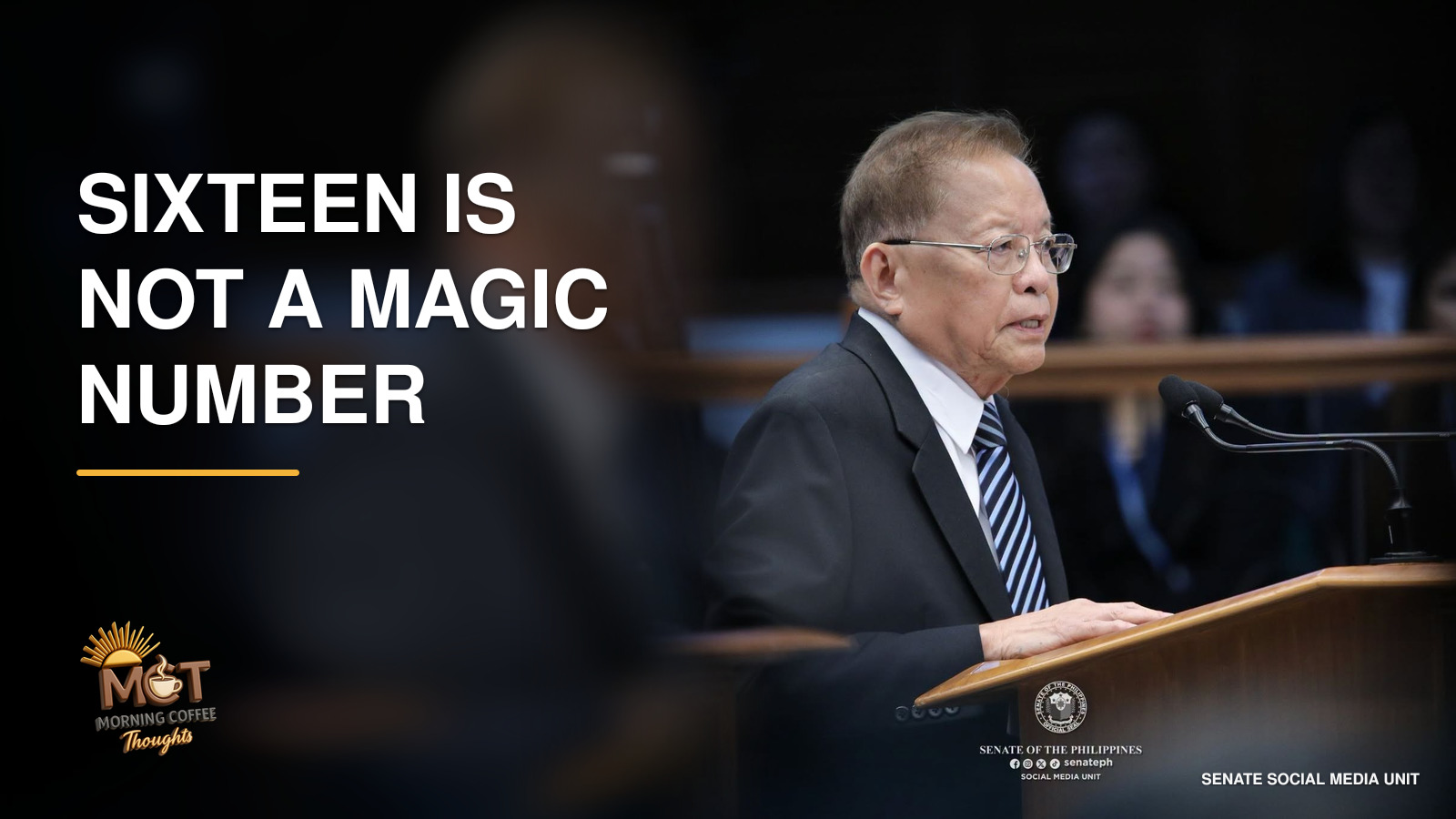
Day 26 of Vice President Sara Duterte’s impeachment trial did not feature a new witness or another pile of financial records. Instead, the Senate impeachment court confronted a constitutional question that could determine whether the trial can reach a meaningful conclusion. The Constitution requires “two-thirds of all the Members of the Senate” to convict, and with 24 senators, the usual calculation is 16.
But does conviction always require exactly 16 votes?
That question has become harder to answer because some senators are detained, one is in hiding, and another has been abroad on extended medical leave. Others have missed significant portions of the trial. The real issue is whether senators who cannot—or simply do not—participate should still be counted when determining the number required to convict.
WHAT THE LEGAL EXPERTS SAID
The impeachment court invited four retired Supreme Court justices to offer independent legal advice. Retired Chief Justices Artemio Panganiban and Reynato Puno and retired Associate Justice Adolfo Azcuna appeared personally, while retired Chief Justice Hilario Davide Jr. submitted a written memorandum. Their opinions were advisory, and the court did not change the threshold during the hearing, but three of the four said that 16 is not necessarily a fixed number.
Davide argued that the calculation should be based on senators who are legally and physically qualified to vote. Senators who are detained, suspended, seriously incapacitated, in hiding, or otherwise unable to perform their duties should not automatically remain part of the denominator. Panganiban similarly acknowledged that a literal calculation produces 16, but said this is true only “in the abstract.” Reality can change the denominator, and the Constitution should not be interpreted in a way that makes it impossible for the impeachment court to perform its duty.
Puno made the clearest mathematical point. If the framers intended conviction to require exactly 16 votes under every circumstance, they could have written the number 16 into the Constitution. Instead, they used a fraction: two-thirds. A fraction can produce a different result when the valid denominator changes.
Azcuna disagreed with the other three. For him, “all” means all, and every sitting senator must be counted unless that person’s membership permanently ends through death, resignation, removal, or a similar event. His warning deserves consideration because allowing the denominator to change too easily could let a political majority manufacture a conviction by excluding its opponents. But the opposite danger is just as real: a group of senators could prevent a verdict simply by disappearing or refusing to participate.
The court also received a separate memorandum from Rev. Fr. Ranhilio Aquino, dean of the San Beda University Graduate School of Law. Aquino was not one of the four invited former justices, but Presiding Officer Francis Escudero said the court would consider his arguments and provide copies to the senator-judges, prosecution, and defense. Aquino argued that the Constitution assumes the senators being counted actually heard the evidence, participated in the proceedings, and joined the deliberations. His position added another respected legal voice to the argument that two-thirds is a proportion rather than an unchanging number.
HOW THE SENATORS TESTED THE ARGUMENTS
Erwin Tulfo, who challenged the original 16-vote ruling, asked whether the impeachment court had the authority to interpret the threshold. Puno and Panganiban said it did because the Senate’s sole power to try and decide impeachment cases necessarily includes the power to resolve the rules needed to complete a trial. Tulfo also asked whether senator-judges needed to think like Supreme Court justices. Panganiban said they did not: senators were chosen to exercise judgment as elected representatives, not to imitate the technical procedures of regular courts.
Juan Miguel Zubiri introduced an interesting Senate precedent from 2001. The Constitution also requires two-thirds of all senators to concur in treaties, yet the Senate journal showed four treaties being approved with only 13 affirmative votes. Zubiri asked whether those approvals were unconstitutional or whether they demonstrated that the Senate had previously treated two-thirds as something other than a fixed 16. Treaty concurrence and impeachment are different constitutional powers, but the example showed that the Senate itself has not always applied the phrase mechanically.
Joel Villanueva identified the danger on both sides of the argument. He asked how the court could prevent absent senators from creating a veto while also preventing a majority from excluding opponents to make conviction easier. Risa Hontiveros then asked about senators who willfully refuse to attend. Panganiban said they should not be allowed to diminish the votes of those who showed up, heard the witnesses, and studied the evidence, while Puno and Azcuna were more open to allowing absent senators to vote after reviewing transcripts, recordings, and documents.
Panfilo Lacson tested Azcuna’s position with a hypothetical in which nine senators became stranded abroad during a prolonged war, leaving only 15 able to participate. Azcuna maintained that the denominator would remain 24, which would make conviction impossible because 16 votes could never be obtained. Panganiban rejected an interpretation that would require the impossible and eliminate the Senate’s ability to decide the case. Lacson’s example exposed the practical weakness of treating 16 as an immutable number.
Francis Pangilinan raised a separate concern: Would changing the threshold after the trial had begun violate the respondent’s right to due process? The retired justices said reconsidering the threshold would not, by itself, violate due process because the court would be resolving a constitutional question rather than changing the evidence or declaring the respondent guilty. Both sides would also receive an opportunity to argue their positions before the court reached a decision.
THE MOST CRINGE PART OF THE HEARING
While the entire session was educational, Pia Cayetano’s interjection was, for me, the most cringe part. The discussion had been about constitutional language, participation, and protecting the impeachment process from manipulation. Cayetano shifted the focus to the pressure she personally felt, saying she feared for her liberty and her right to speak as members of the Senate minority faced cases and investigations. She also brought up the attention given to her recent trip to Singapore and asked whether she should inhibit because she felt pressured.
Any credible threat against a senator-judge should be investigated, and legal cases should never be manufactured to alter the composition of an impeachment court. Still, the way Cayetano raised her concerns felt self-centered. A discussion about a constitutional rule that could affect every future impeachment suddenly became about her fears, her travel, and her political circumstances. Her interjection did not help answer how the court should distinguish genuine incapacity from voluntary absence or strategic nonparticipation.
If anything, the episode showed why the court needs an objective rule. The threshold cannot depend on which senators feel safe, persecuted, sympathetic to the respondent, or hostile to the prosecution. It must be based on legal capacity, genuine participation, fairness to both sides, and the Senate’s constitutional duty to reach a judgment.
WHAT THE COURT DECIDED
The court did not settle the threshold question during Day 26. Escudero’s original ruling therefore remains in force, meaning conviction still requires 16 votes unless the impeachment court overturns it. The prosecution and defense are scheduled to present oral arguments on September 23, after which the senator-judges are expected to resolve the issue.
Before ending the session, the court also issued subpoenas for Davao City Mayor Sebastian “Baste” Duterte and several government, police, legal, and corporate-record witnesses. It issued undisclosed show-cause orders involving two members of the prosecution panel over possible violations of its restrictions on public comments. These were important procedural developments, but the constitutional debate over the denominator remained the defining event of the day.
WHY THIS GIVES ME HOPE
My biggest takeaway is that 16 is not necessarily a hard number. It remains the current threshold, but three former chief justices and the dean of the San Beda University Graduate School of Law explained why the Constitution may require more than blind arithmetic. Their arguments showed that the two-thirds requirement can be interpreted in a way that preserves both fairness and the Senate’s ability to perform its constitutional duty.
That gives me hope for the Philippines because absence, detention, or political maneuvering may not be allowed to paralyze an institution created to demand accountability. It also shows that an earlier interpretation can still be questioned, examined, and corrected through an open constitutional process. No majority should be allowed to manufacture a conviction by excluding opposing senators, but absent senators should not be allowed to manufacture a veto either.
The Constitution says two-thirds. It does not say 16.