MCT DAILY
No fake news. No noise. Just the facts you need.
The morning Daily Brief anchors the day. New developments and short explainers follow when the story changes.
FIVE THINGS TO KNOW…
Short explainers published throughout the day.
MCT READER PULSE · MCT-PULSE-2026-002
MCT READER SURVEY
Are you in favor of Pax Silica?Pabor ka ba sa Pax Silica?
This short reader pulse asks MCT readers for their present view of Pax Silica.
This is an informal MCT reader pulse, not a scientific or nationally representative poll. It reflects only the views of verified readers who choose to participate.
View reader pulse archive →Thank you for joining this MCT reader pulse. Results will be published after it closes.
Results reflect only verified MCT readers who voluntarily participated. They do not represent the views of the general Philippine population. Demographic groups with fewer than five responses are not displayed.
MCT DAILY BRIEF: August 6, 2026 · Morning
No fake news. No noise. Just the facts you need.
Good morning.
The government says inflation slowed in July. Many families will probably ask why groceries, electricity and transportation still feel expensive.
The answer is simple. Prices continued rising. They just rose more slowly than before.
Today’s brief explains that problem, the receipts being questioned in Vice President Sara Duterte’s impeachment trial, the latest Supreme Court ruling, record Philippine exports and the higher fuel subsidy promised to public-utility drivers.
INFLATION EASED, BUT FAMILIES ARE STILL LOSING PURCHASING POWER
Inflation slowed to 6.2% in July from 6.4% in June, according to the Philippine Statistics Authority.
Prices continued rising. A basket of goods that cost ₱1,000 in July 2025 would cost around ₱1,062 in July 2026 if its price followed the national inflation rate exactly.
The actual increase experienced by each family will be different because households buy different products. A family spending most of its income on food, electricity and transportation can feel a heavier increase than the national average suggests.
Food inflation remained at 5.3%.
Inflation for housing, water, electricity, gas and other fuels increased to 8.2%. Transport inflation slowed, although it remained very high at 11.9%.
A worker whose salary did not increase during the past year now has to stretch the same income across higher prices. Even someone who received a 4% raise may still have lost purchasing power if the family’s expenses increased by 6.2%.
The national figure also hides a large regional gap.
Inflation in Metro Manila was 4.4%. Areas outside Metro Manila recorded 6.7%. Central Visayas reached 8.7%.
A family outside the capital may therefore be facing much faster increases in food, electricity and transportation than someone reading only the national figure would expect.
The Bangko Sentral ng Pilipinas may respond by raising interest rates again. That could help control spending and prevent inflation from spreading, but it would also make housing, vehicle, business and other loans more expensive.
WHAT TO WATCH
Watch the next reports on rice, fish, vegetables, fuel and electricity. Also watch the separate July inflation report for households in the bottom 30% of the income distribution. Their inflation rate was 8% in June, compared with the 6.4% national rate that month. If the gap remains, poorer families will continue carrying a larger share of the burden. The Monetary Board will meet on August 27. Another interest-rate increase could affect borrowers, small businesses and families using credit.
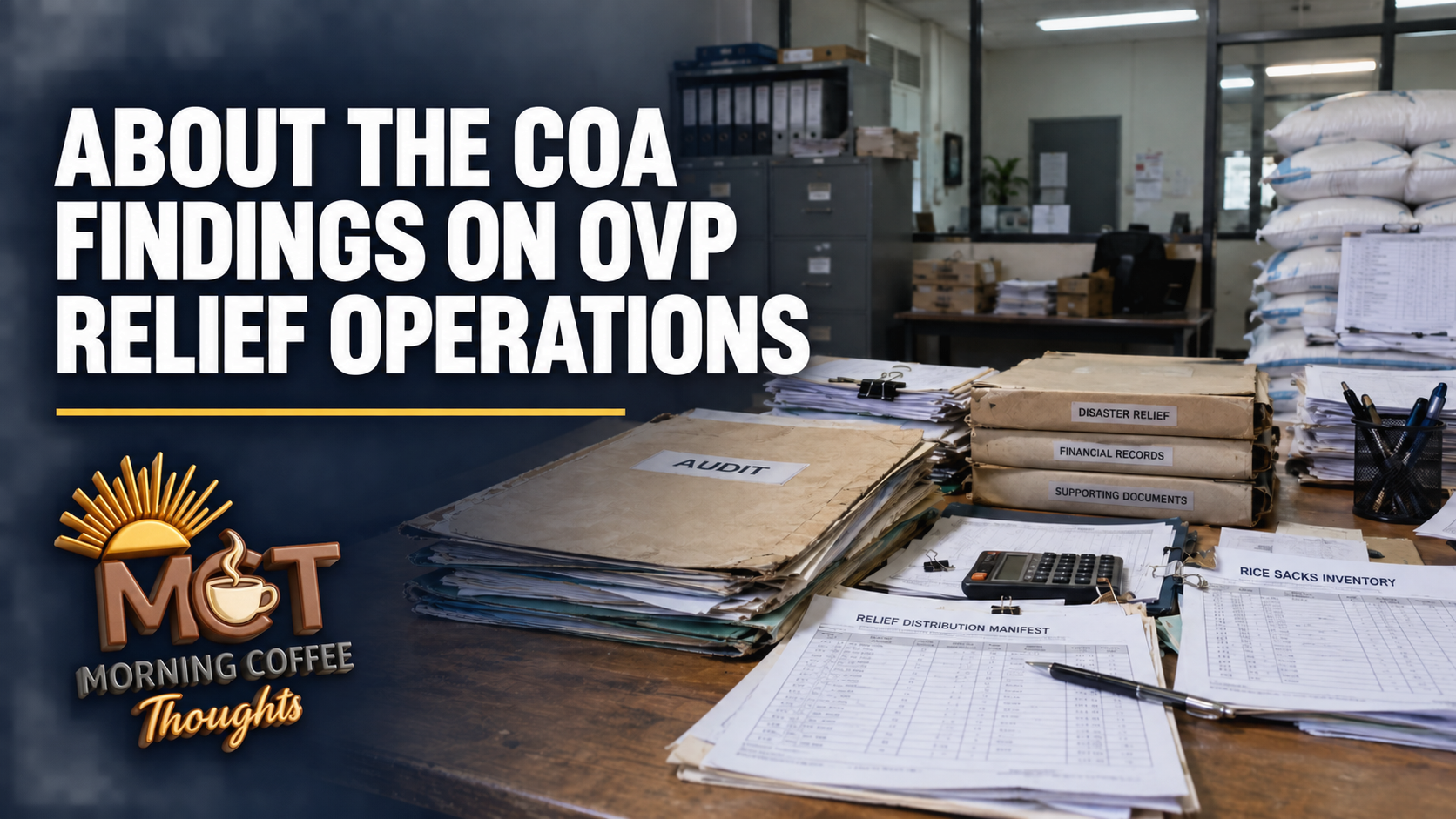
THE OVP USED 845 ACKNOWLEDGMENT RECEIPTS TO LIQUIDATE ₱125 MILLION
Former Commission on Audit auditor Roderick Wamil told the Senate impeachment court that the Office of the Vice President submitted 845 acknowledgment receipts to account for ₱125 million in confidential funds spent during the fourth quarter of 2022.
Wamil said it was the first confidential-fund liquidation he had encountered that relied entirely on acknowledgment receipts.
An acknowledgment receipt can be allowed when the government pays an informant whose identity must remain protected.
The problem begins when the reported transaction involves buying medicine, equipment or other goods from an ordinary supplier. Wamil said those purchases should have proper invoices or official receipts.
One acknowledgment receipt showed “Mary Grace Piattos” receiving ₱70,000 worth of medicine as a reward for information.
Wamil said he had never before encountered medicine reported as payment to an informant.
The submitted records did not identify the illness or show whether the medicine reached a real person. COA also could not confirm whether the information produced a successful confidential operation.
For an ordinary taxpayer, the issue is familiar.
If an employee spends company money at a pharmacy, a handwritten acknowledgment may not be enough. The employer will normally ask for the pharmacy receipt, the items purchased and proof that the expense was authorized.
Confidential funds receive special protection because exposing an informant can place lives or operations at risk. Secrecy, however, makes reliable auditing even more necessary. Without adequate records, the public has no way to check whether the money went to a confidential operation, an ordinary purchase or something that never happened.
COA raised observations or requested additional documents covering ₱75 million of the ₱125 million.
That figure is not proof that ₱75 million was stolen. It shows that auditors found records requiring an explanation or further documentation.
The senator-judges have not decided whether Duterte committed an impeachable offense.
WHAT TO WATCH
Watch how the prosecution connects the paperwork to Duterte herself. Showing that receipts were unusual or inadequate is only part of the case. The prosecution must establish Duterte’s responsibility and explain why the transactions support an impeachable charge. The defense will have to explain why the OVP relied exclusively on acknowledgment receipts and how the informants, medicine rewards and reported confidential operations can be verified without exposing protected identities. Those answers will help the public judge whether secrecy protected legitimate operations or prevented meaningful scrutiny of public money.
THE SUPREME COURT RULING DID NOT END THE IMPEACHMENT TRIAL
The Supreme Court dismissed two petitions questioning the House proceedings that led to Duterte’s impeachment.
One petition came from Duterte. The other was filed by lawyer Israelito Torreon.
They questioned how the House Committee on Justice gathered evidence, compelled witnesses and evaluated the impeachment complaints.
The Court dismissed the petitions because the House had already completed those proceedings. The Articles of Impeachment had been approved and transmitted to the Senate, which had already begun the trial.
A court ruling against the completed House proceedings would no longer stop an action that had already moved to the Senate.
The Supreme Court did not examine whether Duterte was guilty or innocent. It did not decide whether the prosecution’s evidence could support a conviction.
For the public, the immediate effect is that the Senate trial continues.
People should be careful with headlines saying the Court “dismissed” a case involving Duterte. The dismissed cases were challenges to the House process. The impeachment case remains before the senator-judges.
WHAT TO WATCH
Watch for legal challenges involving actions taken by the Senate impeachment court. Duterte’s lawyers may continue raising questions about subpoenas, evidence and Senate procedure. Any new petition must be read carefully to determine which part of the process it affects. A court can reject one procedural challenge while leaving the trial and its evidence untouched.
RECORD EXPORTS DO NOT GUARANTEE THAT ORDINARY WORKERS WILL IMMEDIATELY BENEFIT
Philippine merchandise exports reached a record $8.77 billion in June.
The figure was 24.1% higher than the $7.07 billion recorded in June 2025. It was the highest monthly export value since the current government series began in 1991.
Electronic products accounted for $5.25 billion, or almost 60% of all exports.
Manufactured goods produced $7.21 billion, representing more than four-fifths of the total.
Higher exports can support factories, transport companies, ports and businesses supplying materials or services to exporters. Continued orders can protect jobs and encourage companies to expand.
One record month does not guarantee higher salaries, additional jobs or cheaper products.
The Philippines also imported $13.71 billion worth of goods during June. Imports therefore exceeded exports by $4.94 billion.
Some of those imports were consumer products. Much of the total consisted of raw materials, machinery and equipment that Philippine businesses use for production.
A factory may import electronic components, assemble them in the Philippines and export the finished product. The import creates a cost, while the final export supports production and employment.
The question for workers is whether the record sales continue long enough to produce stable jobs, better wages and new investment.
The country also depends heavily on electronics and a small number of export markets. A decline in semiconductor demand or orders from the United States, Hong Kong, China or Japan could weaken the gains.
WHAT TO WATCH
Watch employment, working hours and wages in manufacturing and electronics. The next several trade reports will show whether June was an exceptional month or the beginning of sustained growth. A record becomes useful to ordinary Filipinos when it leads to reliable jobs, stronger local businesses and income that keeps up with rising prices.
THE HIGHER FUEL SUBSIDY MAY HELP DRIVERS, BUT IT DOES NOT LOWER PUMP PRICES
President Ferdinand Marcos Jr. increased the fuel subsidy for public-utility vehicle drivers from ₱10 to ₱12 per liter beginning August 15.
Under the current program, the government pays part of the fuel expense of qualified drivers and operators.
The original ₱10 subsidy covered up to 150 liters per week. If the same limit applies after August 15, the maximum weekly discount would increase from ₱1,500 to ₱1,800.
The final rules still need to confirm whether that limit will remain.
For a jeepney or bus driver, the subsidy can reduce the amount taken from daily earnings to buy diesel. That can help a driver bring home more money or absorb part of another fuel-price increase.
For commuters, the possible benefit is indirect.
The assistance could reduce some of the pressure behind demands for higher fares. It does not guarantee that fares will remain unchanged, especially if fuel prices continue climbing.
The subsidy also leaves the price displayed at the pump unchanged. The government pays part of the qualified driver’s bill using public funds.
More than 93,000 PUV drivers had reportedly received assistance under the earlier program.
Transport groups have asked for additional help. The Land Transportation Franchising and Regulatory Board recommended a subsidy of ₱20 per liter, while some groups continued seeking an interim fare increase.
The government settled on ₱12.
WHAT TO WATCH
Watch the rules that will take effect on August 15. Drivers need to know who qualifies, how many liters are covered, how the discount will be claimed and how quickly payments will be released. Commuters should watch the pending fare petitions. If fuel prices rise faster than the subsidy, transport groups may continue asking passengers to shoulder part of the additional cost.
BOTTOM LINE
The July inflation figure offers limited relief. Food prices did not improve, housing and utility inflation increased, and transport remained considerably more expensive than one year ago. Families whose incomes have not kept up are still losing purchasing power. The higher fuel subsidy may help qualified drivers and reduce pressure for an immediate fare increase. Its effect will depend on the final rules and the direction of pump prices. Record exports can support jobs, although one strong month will not automatically improve wages or household income. Inside the Senate, the impeachment trial is asking whether confidential public funds can be properly traced and verified. The acknowledgment receipts raise serious questions, while the prosecution still has to connect the deficiencies to Duterte and prove its charge. For ordinary Filipinos, today’s developments eventually return to the same concerns: how far their income can go, whether their jobs are secure and whether officials can account for the public money placed under their control.
SUPPORT MCT
HELP KEEP INDEPENDENT POLITICAL WRITING GOING.
Morning Coffee Thoughts is reader-supported. Contributions help pay for research tools, hosting, and the work required to verify and explain each development.
RECENT COMMENTARY
THE LATEST FROM MCT