FIVE THINGS TO KNOW…

Short explainers published throughout the day.

MCT READER PULSE · MCT-PULSE-2026-005

MCT READER SURVEY

Based on the evidence presented so far, has the prosecution made a convincing case that the confidential funds of the OVP and DepEd were improperly spent?Batay sa mga ebidensiyang naiharap sa ngayon, nakapaglahad na ba ang prosekusyon ng kapani-paniwalang kaso na hindi wastong ginastos ang confidential funds ng OVP at DepEd?

This question asks readers to assess the prosecution’s presentation so far. The impeachment trial is still ongoing, and this survey does not presume that any allegation has been proven.

Review a recent recap of the evidence and arguments before answering.

This is an informal survey of verified MCT readers who choose to participate. It is not nationally representative.

Open the shareable survey page →
View reader pulse archive →
Checking your reader session…

August 27, 2026 · 8:55 AM6-minute read

FIVE THINGS TO KNOW ABOUT THE NEW GSIS EMERGENCY LOANS

Five checks government workers and pensioners should make before applying, from covered areas and deadlines to net proceeds and repayment.

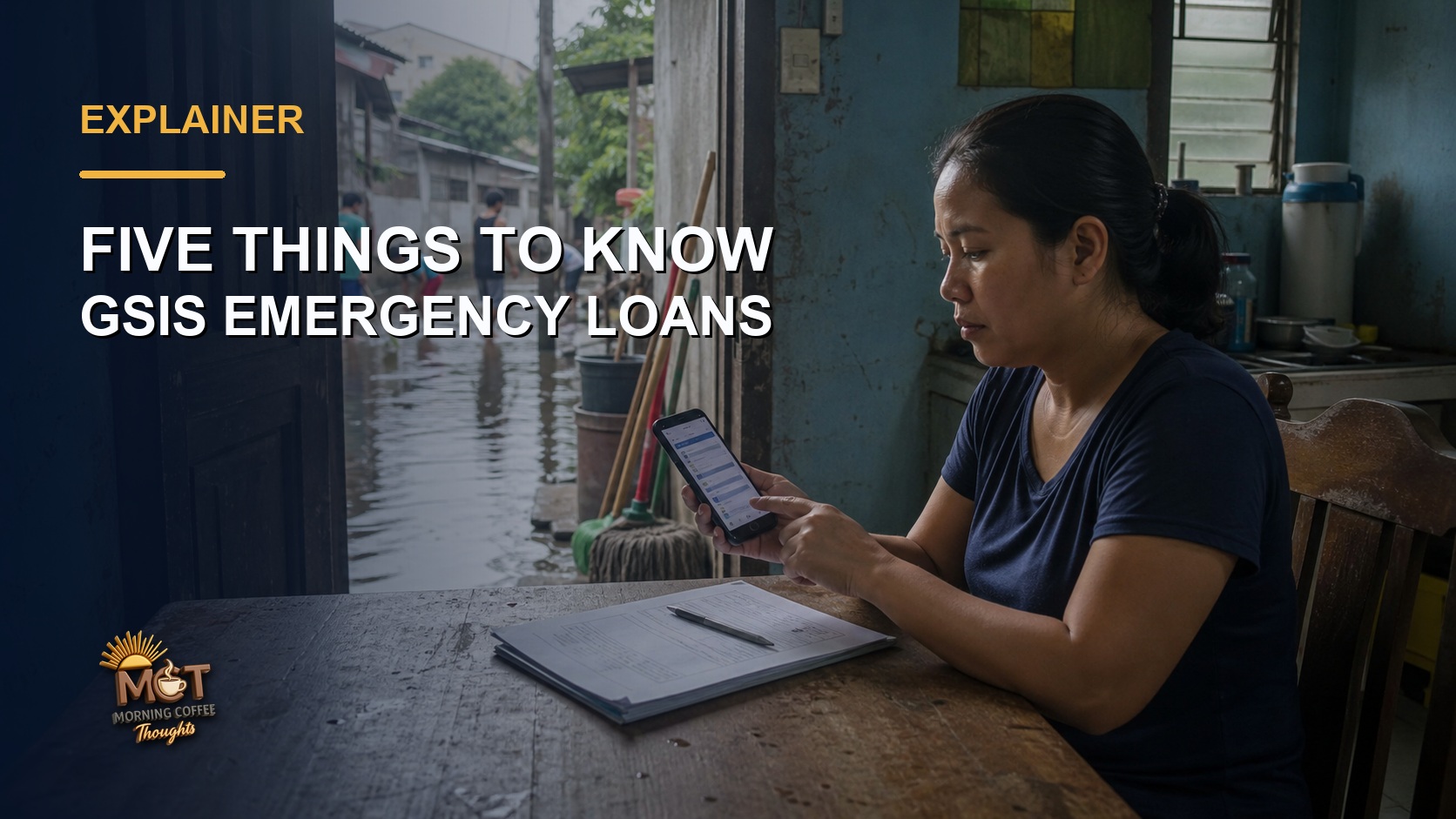
A government worker checks a loan application on her phone inside a modest flood-affected home while neighbors clean the wet street outside.

The Government Service Insurance System has opened a ₱4.4-billion emergency-loan facility for government workers and pensioners in nine areas of Luzon affected by recent cyclones and the southwest monsoon.

More than 166,000 people may be eligible, but the deadline and amount depend on the borrower's location and existing GSIS loan record. Here are five checks to make before applying.

1

Your home or workplace must be in a covered calamity area

The current loan window covers Pampanga; Cavite; Rodriguez, Rizal; Calumpit and Hagonoy in Bulacan; Mangaldan, Dagupan City, and Santa Barbara in Pangasinan; and Masinloc, Zambales.

Active members may qualify if they live or work in a covered area. Old-age and disability pensioners may qualify if they live there. A nearby town's inclusion does not automatically make a person eligible because GSIS uses the declared calamity area and its own records to determine coverage.

For an active member, being in the correct location is only the first check. GSIS also reviews service status, premium payments, pending administrative or criminal cases, and the net salary that will remain after deductions. Pensioners must retain the required portion of their monthly pension after the new amortization is deducted.

This is why two people in the same municipality may receive different results. One may have a current employment record and enough take-home pay, while the other may need to correct an account, premium, address, or loan problem first.

WHAT TO WATCH

Check the current list in GSIS Touch or through an official GSIS channel before applying. Additional areas may be added if they are declared under a state of calamity and the required information reaches GSIS.

2

The application deadline is different for each area

Members and pensioners in Pampanga, Calumpit, Mangaldan, and Dagupan City may apply until September 13. The deadline is September 18 for Santa Barbara, and September 20 for Hagonoy and Masinloc. Cavite applications are open until November 12, while those in Rodriguez are open until November 16.

These are closing dates, not a promise that every application filed on the final day will be approved. Waiting until the deadline also leaves less time to resolve an account or eligibility problem.

The wide difference between September and November deadlines comes from when each locality completed the calamity declaration and the supporting process required to open the loan window. Borrowers should use the date assigned to their own area. A social-media post about another province may carry the wrong deadline for them.

Applicants should also avoid assuming that a deadline will automatically be extended after another period of rain. GSIS can issue a new announcement, but borrowers should work from the official closing date currently shown in the system.

WHAT TO WATCH

Confirm the date shown for your area inside the official application channel. If the loan option does not appear, contact GSIS early enough to correct your address, employment, pension, or account record.

3

The available amount depends on an existing emergency loan

A qualified borrower without an existing emergency loan may borrow up to ₱20,000. A qualified borrower with an outstanding emergency-loan balance may apply for up to ₱40,000. Part of the new amount will first settle the previous balance, so the cash actually released may be lower than ₱40,000.

The word "up to" is important. Eligibility for the program does not guarantee the maximum amount or approval because GSIS still applies its loan rules and checks the borrower's account.

A borrower renewing an emergency loan should pay close attention to the net proceeds. If someone is approved for ₱40,000 and part of that amount is used to clear the previous emergency-loan balance, only what remains after that settlement and any applicable deductions will be released. The ₱40,000 figure should never be treated as automatic cash in hand.

Before accepting the loan, the borrower should ask whether the amount released is enough for the intended recovery expense. Taking a new three-year obligation for a small net amount may not always be the best choice.

WHAT TO WATCH

Review the estimated proceeds before confirming the application. Look separately at the gross loan, the amount used to pay the old balance, deductions, and the net amount that will reach your account.

4

This is a three-year loan with interest

The emergency loan is payable in 36 equal monthly installments at 6 percent interest per year, computed in advance. It also carries loan redemption insurance, which can settle the balance if the borrower dies while payments are up to date.

Emergency access can help with urgent repairs, food, medicine, or other recovery costs. It still creates a monthly obligation. Borrowers should compare the expected installment with their take-home pay or pension before accepting it.

Interest computed in advance deserves attention. The stated 6 percent rate is applied differently from interest calculated every month on a declining balance, so the borrower should look at the total repayment shown in the disclosure rather than judging the cost from the percentage alone. The insurance is useful protection, but it does not remove the duty to keep the account current while the borrower is alive.

The loan may be more manageable than borrowing from an informal lender, but that does not make it free relief. It should be used for needs that justify three years of deductions.

WHAT TO WATCH

Read the disclosure and repayment schedule shown before final confirmation. Check the first due date, monthly deduction, total repayment, and the effect of late or missed payments.

5

Apply through the official GSIS channel and check your records first

GSIS says applications may be filed through the GSIS Touch mobile application. Approved proceeds are credited to the borrower's GSIS eCard or UMID card.

Active members must satisfy GSIS eligibility rules, including active-service, premium-payment, case-status, and net-take-home-pay requirements. Pensioners must retain the required share of their monthly pension after the loan deduction. An incorrect address, missing premium, inactive card, or unresolved account record can delay the application.

The app should show whether the emergency-loan option is available and provide the terms before final confirmation. Borrowers should read every amount on that screen and keep a screenshot or transaction reference after submitting. Approved proceeds should go to the registered GSIS account, not to a private processor, recruiter, or middleman.

Anyone who cannot see the correct loan window should contact GSIS through its official website, verified social-media pages, or contact center. Sharing an account password or one-time PIN with a person offering to "fix" the application creates a separate risk of fraud.

WHAT TO WATCH

Use only the official GSIS app and never pay a person to process the loan. Before applying, verify your contact details, service or pension status, bank card, premium record, and existing emergency-loan balance.

BOTTOM LINE

The loan can provide quick help, but eligibility begins with the covered location and ends with the borrower's actual GSIS record. Check the deadline, expected net proceeds, monthly repayment, and official account details before pressing confirm. A calamity loan should support recovery without creating a surprise deduction later.

← Back to MCT home

RECENT COMMENTARY

THE LATEST FROM MCT

View all commentary →

SUPPORT MCT

HELP KEEP INDEPENDENT POLITICAL WRITING GOING.

Morning Coffee Thoughts is reader-supported. Contributions help pay for research tools, hosting, and the work required to verify and explain each development.

Choose the monthly support amount you are comfortable with.Continue through PayPal
Send support through GCash0969 314 4839