
THE DAILY BRIEFSEPTEMBER 22, 2026
LATEST COMMENTARY
FIVE THINGS TO KNOW
ABOUT PROTECTING YOUR GAMER CHILD FROM GROOMING INTO VIOLENCE
Warning signs, conversations, and practical steps for parents whose children play online games.
ABOUT THE RIGHT AGAINST SELF-INCRIMINATION
What a witness can refuse to answer, and why invoking the right is not a confession.
ABOUT THE CHINA COAST GUARD COLLISION WITH A PHILIPPINE FISHERIES VESSEL
A Philippine fisheries vessel was damaged in a collision off Palawan. Manila and Beijing disagree about how it happened, while fishermen still need fuel.
ABOUT HARRY ROQUE’S DISPUTED ASYLUM STATUS
Remulla announced a denial, then said he was still confirming it. Without an official Austrian decision, Roque’s asylum status remains disputed.
ABOUT THE DOJ SUBPOENA TO ROBIN PADILLA OVER BATO DELA ROSA’S DEPARTURE
A DOJ subpoena requires the senator to answer an obstruction complaint. It is not an arrest warrant, a criminal charge in court or a conviction.
ABOUT CONGRESS’ PLAN TO MOVE THE BARANGAY AND SK ELECTIONS TO 2028
Both chambers have backed longer terms, but the November 2026 election remains the law until Congress completes one final bill and the President acts on it.
ABOUT THE OCTOBER WATER-RATE INCREASES
Metro Manila households served by Maynilad and Manila Water will see slightly higher water charges beginning October 1. The announced increases are small for many residential customers, but the figures vary by concessionaire and consumption level. That makes it easy to misunderstand a notice expressed only in centavos per cubic meter.
ABOUT UNEXPLAINED WEALTH AT TODAY'S IMPEACHMENT HEARING
Retired Sandiganbayan Presiding Justice Amparo Cabotaje-Tang explained the legal framework for Article II. Her testimony laid out the test; it did not prove the allegations against Vice President Sara Duterte.
ABOUT THE MANHUNT FOR BATO DELA ROSA
Authorities say they know where he is. An arrest has yet to be confirmed.
ABOUT WHY MARCOLETA AND ESTRADA CANNOT SIMPLY VOTE FROM DETENTION
Why holding a Senate seat does not cancel court custody, preventive suspension, or the need for judicial permission to join an impeachment vote.
ABOUT WHETHER THE IMPEACHMENT VOTE THRESHOLD CAN CHANGE
Why the Constitution points to 16 votes, why the current absences created a real dispute, and why the Senate must settle the counting rule before judgment.
ABOUT SARA DUTERTE'S SECURITY DETAIL
The reported 400 personnel, her complaints about safety, and what the military has actually said.
ABOUT THE NOTE HANDED TO GIBO TEODORO IN SEOUL
Defense Secretary Gilberto “Gibo” Teodoro Jr. was answering questions at the Seoul Defense Dialogue on September 8 when a man handed him a note. He read it aloud, challenged its rejection of the 2016 South China Sea ruling and objected to being interrupted that way.
ABOUT AMICI CURIAE IN SARA DUTERTE’S IMPEACHMENT TRIAL
An amicus curiae is someone who helps a court understand a legal question. The phrase means “friend of the court.” When more than one person takes that role, they are called amici curiae. They give advice. The court still makes the decision.
ABOUT EL NIÑO AND PREPARING FOR LESS RAIN
It can be raining outside while PAGASA warns about El Niño. That can sound confusing when the immediate problem is a wet road or a flooded field. The two warnings describe different periods: the weather happening now and the rainfall conditions that may develop over the coming months.
ABOUT THE NEW ARREST WARRANTS AGAINST ZALDY CO, MARTIN ROMUALDEZ AND TWO OTHERS
The Sandiganbayan has ordered the arrest of Zaldy Co, Martin Romualdez and two other accused in the plunder case filed on September 7. By Monday evening, authorities had served Romualdez's warrant and carried out booking procedures at Cardinal Santos Medical Center in San Juan. His arrest is a confirmed development; it does not establish that his three co-accused are also in custody.
ABOUT THE PLUNDER CASE AGAINST MARTIN ROMUALDEZ
The Office of the Ombudsman filed a plunder case against former House Speaker Martin Romualdez at the Sandiganbayan on September 7 over his alleged involvement in flood-control kickbacks. The accusations have now reached the court that will handle the criminal case. Romualdez denies wrongdoing and remains presumed innocent.
ABOUT DOUBLE JEOPARDY AND SARA DUTERTE’S CASES
The alleged threats appear in both her impeachment case and a criminal case. Does that mean she is being tried twice for the same offense?
ABOUT RECEIVING A BIR AUDIT NOTICE
The authority, records and questions to check under the consolidated audit rules.
ABOUT SARA DUTERTE’S ARREST WARRANT
What the charges require prosecutors to prove, how bail works, and why impeachment is a separate proceeding.
ABOUT THE EXPANDED FREE TERTIARY EDUCATION LAW
What Republic Act No. 12325 changes for subsidies, costly training, and qualified disadvantaged students.
ABOUT THE PHILIPPINES' ₱19.39-TRILLION NATIONAL DEBT
What the record figure includes, why the peso matters, and how debt service affects future public spending.
ABOUT ZERO BALANCE BILLING
What the new ₱10.377-billion funding covers, where the program applies, and why patients should still confirm the rules before admission.
ABOUT THE PROPOSED FREE FREIGHT SERVICE FOR RELIEF GOODS
What the proposed service would cover, who could qualify, which costs may be waived, and why the program is not available yet.
ABOUT THE HAZE AFFECTING PARTS OF THE PHILIPPINES
What unhealthy air readings mean, who faces greater risk, and how to reduce exposure while authorities verify the haze’s source.
ABOUT GILAS’ WORLD CUP QUALIFYING POSITION AFTER BEATING IRAN
The 68-56 win revived the Philippines’ campaign, but Gilas remains fifth in Group E and still has work to do.
ABOUT THE DAVAO REGION MINIMUM-WAGE TRANCHE TAKING EFFECT SEPTEMBER 1
The increase was divided between March and September, so workers and payroll staff who remember only the first adjustment may apply the wrong rate after September 1.
ABOUT THE 2027 DOST-SEI UNDERGRADUATE SCHOLARSHIP
Five checks graduating students and their families should make before the September 17 application deadline.
ABOUT THE NEW GSIS EMERGENCY LOANS
Five checks government workers and pensioners should make before applying, from covered areas and deadlines to net proceeds and repayment.
ABOUT NEW ZEALAND JOB SCAMS
Five checks Filipino applicants can use to verify a recruiter, employer, fees, visa route, and written job offer before paying or travelling.
ABOUT LEPTOSPIROSIS AFTER FLOOD EXPOSURE
Cases rose after weeks of flooding. Here is how exposure happens, which symptoms to watch, and when to seek care.
ABOUT THE FIRST BANGSAMORO PARLIAMENTARY ELECTION
More than two million BARMM voters are scheduled to choose the first regular 80-seat Bangsamoro Parliament on September 14.
ABOUT DEPED'S CANCELLED SCHOOL SAFETY DRILL
DepEd cancelled the nationwide active-attack drill after mental-health specialists raised concerns. The need for safer school planning remains.
ABOUT THE EV CHARGING RULE FOR PARKING LOTS
The five-percent EV parking rule is already law. The detailed charging rules for older and new properties are still being finalized.
ABOUT THE NATIONAL LAND USE ACT AND FLOODING
Flood control is not only about pumps, canals and drainage. It also depends on where communities build, which lands remain open, and whether development decisions follow the same hazard information.
ABOUT ORLY GUTEZA'S RECANTATION
Orly Guteza has withdrawn his earlier accusation. Here is what a recantation changes, what it does not prove, and what the Ombudsman still needs to examine.
ABOUT PRIVATE-SECTOR WORK DURING DANGEROUS WEATHER
What private workers need to know about attendance, discipline and pay when severe weather makes travel unsafe.
ABOUT THE PHILIPPINES–US DISASTER-RESPONSE TRAINING PARTNERSHIP
The program has trained senior officers since 2016. It is a disaster-planning course, not a newly announced ten-year military pact.
ABOUT THE ENHANCED ANTI-HOSPITAL DETENTION BILL
The Senate has approved stronger protections for patients who cannot immediately pay, but hospital debt does not disappear and the proposal is not yet law.
ABOUT THE PROPOSED ₱58.32-BILLION LOCAL GOVERNMENT SUPPORT FUND
The fund can pay for useful local projects, but it is separate from the automatic tax share of local governments and still depends on national budget decisions.
ABOUT THE NEW SWS POVERTY NUMBERS
Self-rated poverty and food poverty declined in June, but the figures also show how many Filipino families remain under pressure and why lower household budgets do not necessarily mean life became cheaper.
ABOUT PAX SILICA AFTER THE SENATE HEARING
The Philippines has joined a technology partnership, but the proposed New Clark City hub still needs detailed agreements, investors, utilities, and safeguards.
ABOUT THE PROPOSED KALINGA ACT
The proposal promises faster help when fuel and energy costs rise, but it would also give the President temporary additional powers.
ABOUT TEACHING THE WEST PHILIPPINE SEA IN SCHOOLS
Two Senate proposals would make lessons about the West Philippine Sea a permanent part of school education.
ABOUT THE CADENA ACT AND WHETHER IT CAN HELP PEOPLE TRACK GOVERNMENT SPENDING
CADENA could connect budgets, contracts, payments, and reported results in one public trail. The technology still cannot determine whether the information entered is true.
ABOUT THE PHILIPPINES’ €200-MILLION FRENCH BLUE-ECONOMY LOAN
The French financing belongs to a nearly US$970-million package and supports the national budget after policy reforms, rather than a list of local marine projects.
ABOUT THE DOJ CASE AGAINST SARA DUTERTE
What prosecutors filed, what they must prove, how Duterte’s conditional wording may affect the charge, and the unresolved question of whether the case can proceed while she remains vice president.
ABOUT THE PROPOSAL TO MOVE THE BARANGAY AND SK ELECTIONS TO 2028
The election is still scheduled for November 2, 2026. A newly filed Senate bill would move it by two years, keep current officials in office longer, and change who can run for the Sangguniang Kabataan.
ABOUT THE CHILDREN'S SOCIAL MEDIA SAFETY ACT
House Bill No. 9965 would bar children below 13 from having social media accounts, require parental consent for users aged 13 to 17, regulate platform algorithms, and impose fines reaching P50 million. It is still being deliberated in the House.
ABOUT THE PROPOSED NATIONAL AI GOVERNANCE ACT
The proposal would add rights over automated decisions, six months’ notice for major workplace AI changes, deepfake rules, and environmental disclosure for AI infrastructure. It is not law yet.
ABOUT THE PROPOSED ₱2,000 MONTHLY PWD ALLOWANCE
The proposed benefit is not available yet. Congress still has to settle who qualifies, how claims will be verified, and how the program will be funded.
ABOUT THE PROPOSED ₱7.2-TRILLION 2027 NATIONAL BUDGET
The record nominal spending plan is not yet law, will require deficit financing, and could change substantially in Congress.
ABOUT JAPAN’S ₱11.54-BILLION UNIVERSAL HEALTH CARE LOAN
Why the financing is tied to health-system reforms, what it is meant to improve, and why the loan alone cannot guarantee better care.
ABOUT THE PHILIPPINES’ DEFENSE PACTS WITH CANADA AND NEW ZEALAND
What the visiting-forces agreements regulate, why the Senate must concur, and what they do not require the three countries to do.
ABOUT THE 6.2 PERCENT INFLATION RATE AND WHY PRICES STILL FEEL HIGH
What the 6.2 percent national rate measures, why lower-income households recorded 8.2 percent inflation, and what the figures mean for an ordinary family budget.
ABOUT THE COA TESTIMONY ON SARA DUTERTE’S CONFIDENTIAL FUNDS
What the auditor found in the OVP’s confidential-fund submissions, what those findings mean, and what prosecutors still have to connect to Sara Duterte personally.
ABOUT THE BENEFITS OF LAUNCHING ROCKETS FROM THE PHILIPPINES
A 2027 sounding-rocket test could build skills and research capacity, but it is still far from placing satellites into orbit.
ABOUT LITHUANIA’S OFFER TO HELP FIGHT DISINFORMATION
Lithuania is offering technology, training, and experience in tracking organized propaganda campaigns, but no detailed Philippine program has been announced.
ABOUT THE PROPOSED BANK-SECRECY CHANGES
The House and Senate approved different proposals for opening bank records, and the final safeguards have not yet been settled.
ABOUT THE FIGHT OVER THE FLOOD-CONTROL HEARINGS
Tulfo says the minority is blocking the probe, but the documented delay was the committee’s unfinished formal organization.
ABOUT THE REJECTED PLAN TO CHANGE SARA DUTERTE’S TRIAL ORDER
The impeachment court kept the prosecution-first format after Duterte’s defense rejected an article-by-article presentation.
ABOUT THE OMBUDSMAN ORDER AGAINST MARTIN ROMUALDEZ
Romualdez has been ordered to answer serious flood-control allegations under oath, but no court has ruled on the accusations.
ABOUT THE SEALED BIR BOX
Marcos authorized the BIR to comply with the Senate subpoena. That did not open the records to the public or prove the unexplained-wealth allegation.
ABOUT THE SYSTEM-LOSS CHARGE
If consumers stop paying for system loss, who will shoulder the cost instead?
MCT READER PULSE · MCT-PULSE-2026-010
MCT READER SURVEY
Should Vice President Sara Duterte resign while her impeachment trial is ongoing?
Vote Now →This is an informal survey of people who choose to participate. It is not a scientific or nationally representative sample.
View previous survey results →ABOUT PROTECTING YOUR GAMER CHILD FROM GROOMING INTO VIOLENCE
Warning signs, conversations, and practical steps for parents whose children play online games.
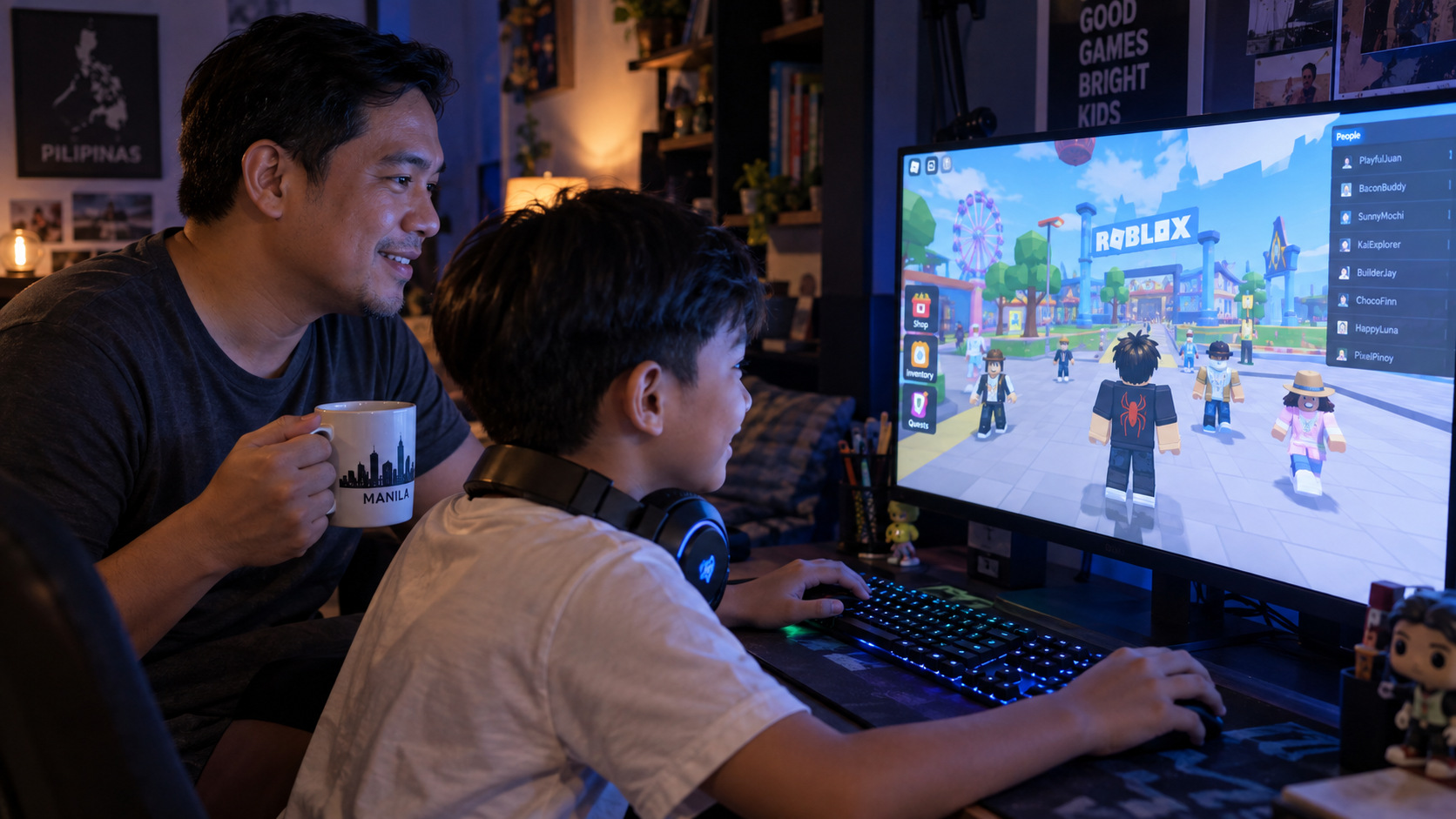
Your child may be talking to someone while playing, even when you only hear the game. That person could be a classmate, a regular teammate, or someone whose real identity neither of you knows. Understanding those relationships is part of keeping a child safe online.
Child-protection agencies have warned about online groups that build trust and then pressure children into harming themselves or others. Contact can begin on gaming or social platforms. Some people involved are themselves under 18, so an apparent friendship between peers is not automatically safe.
Playing games, wanting privacy, or becoming irritable does not establish that a child is being groomed. The more specific concerns are secrecy demanded by another person, coercion, threats, and requests to cause harm. No setting or checklist can guarantee prevention, but parents can reduce opportunities for abuse and make it easier for a child to ask for help.
1
KNOW WHO IS TALKING TO YOUR CHILD
Ask your child to show you the games and chat apps they use, who they usually play with, and how those friendships began. Make this a regular conversation. You do not have to be good at the game to take an interest in the people around it.
Someone trying to exploit a child may first offer attention, help, gifts, or game currency. The conversation may continue outside the game, on Discord, Telegram, or another messaging app. These platforms also have ordinary, legitimate uses. A move to private chat deserves a closer look when it comes with demands for secrecy or increasingly personal information. A gift alone does not prove abuse; look at what the person expects in return.
Explain that receiving something never obliges your child to send a photograph, disclose an address, keep a frightening secret, or accept a challenge.
WHAT TO WATCH
Notice if your child becomes unusually secretive about who they talk to or what happens online. Increased secrecy can be a warning sign, especially alongside fear, distress, or pressure from a contact, but it does not prove grooming by itself. Ask calmly what has changed. Pay attention when someone asks your child to hide conversations, share a school or home location, or move to another app so adults cannot see the exchange.
2
TAKE PRESSURE AND THREATS SERIOUSLY
The FBI has warned that violent online networks can use blackmail and threats to push young people into harming themselves, other people, or animals. A child may feel trapped after sharing personal information or an image, or after being persuaded to do something they regret.
Watch for an online contact who insists that your child prove loyalty, threatens exposure if they refuse, or demands an act of harm. You do not need a complete checklist before seeking help about a direct threat.
Withdrawal, disrupted sleep, or a sudden fear of a particular contact can be reasons to start a conversation. They can also have other explanations. Avoid accusing your child of belonging to a dangerous group on the strength of those changes alone.
WHAT TO WATCH
A threat naming a target, place, or time, or involving access to a weapon, calls for urgent help. Treat an immediate danger to your child or anyone else as an emergency.
3
STAY INVOLVED WHILE YOUR CHILD PLAYS
For younger children, keep gaming in a shared space where you can regularly see and hear what is happening. Stay nearby and check in. With older children, agree on regular check-ins and supervision suited to their age and needs. Being at home does not mean they are only interacting with people you know.
Online play can bring a child into contact with people of different ages, experiences, and values. Pay attention to the behavior around them: how teammates speak, how they treat others, and what the group praises or pressures members to do. Explain that the rules at home about respect, cruelty, threats, and keeping others safe also apply online. Your child needs help recognizing when a group's behavior crosses those boundaries.
Review the game's settings and any separate chat apps together. Use an age-appropriate account, restrict contact from unknown users where possible, and check voice chats, friend requests, purchases, and location sharing. Discuss what to do if someone offers a gift with conditions attached or sends a disturbing message. Your child can stop responding and ask for help.
Parental controls cannot replace your involvement. Neither constant observation nor any filter can guarantee safety, so keep the conversation open even when you are not beside the screen.
WHAT TO WATCH
Check who your child continues talking to after a game ends. Ask about new language or behavior that concerns you without assuming it proves grooming. Review message and voice-chat permissions whenever a new game, app, or account is added, and locate its reporting and blocking tools together.
4
MAKE IT POSSIBLE TO TELL YOU THE TRUTH
A child who expects to be shouted at or immediately punished may hide the conversation. Start calmly: "You're not in trouble for telling me. We'll deal with this together."
Listen without demanding every detail at once. Reassure your child that threats and coercion are the other person's responsibility, even if your child broke a household rule or sent something they now regret. Avoid promising absolute secrecy, because you may need help from people who can protect them.
If you need to pause access to a contact or device for safety, explain why and stay involved. Give your child another trusted adult they can approach. Persistent distress or signs of self-harm also warrant professional help. Do not pose as your child to bait the person or try to confront them yourself.
WHAT TO WATCH
Take seriously a child who says they cannot leave a group, fears what will happen if they stop replying, or asks whether you will still help after they have done something wrong.
5
GET HELP, AND PRESERVE EVIDENCE SAFELY
If someone faces immediate harm, call 911 and move to safety. Stay with your child if it is safe to do so. Do not approach an armed person or delay getting help while collecting screenshots.
For child-protection assistance in the Philippines, contact Makabata Helpline 1383 or the police. If there is a threat to a school, tell police and the school promptly so they can coordinate a response.
When safe, record usernames, profile links, dates, and threatening text. Avoid deleting the conversation or account before seeking advice about preserving evidence. Do not download, forward, or create new copies of sexual images of children. Ask police how to handle the device and any such material already on it.
Report the account to the platform and stop further contact. Seek guidance about blocking if you are concerned it could trigger an immediate threat. Do not publish the child's identity or the exchange on social media.
WHAT TO WATCH
Keep the report or case reference and agree with the responding agency on the next step. Report renewed contact from other accounts and any new threat. Continue checking how your child is coping after contact stops.
BOTTOM LINE
Start with a simple conversation: "Who do you play with, and has anyone asked you to do something that made you uncomfortable?" Listen to the answer, check the settings together, and act when there is pressure or a threat. Your child needs to know that asking for help will bring you closer, even when the story is difficult to hear.
GOOGLE PREFERRED SOURCES
FOLLOW MCT ON GOOGLE
Google’s Preferred Sources feature lets you choose publications you want Google to prioritize for you. Select “Add to Preferred Sources” to make MCT easier to find in Top Stories and other eligible Google results. This does not subscribe you to email.
SUPPORT MCT
HELP KEEP INDEPENDENT POLITICAL WRITING GOING.
Morning Coffee Thoughts is reader-supported. Contributions help pay for research tools, hosting, and the work required to verify and explain each development.