4
FARM PREPARATION HAS TO MATCH THE CROP AND ITS WATER SUPPLY
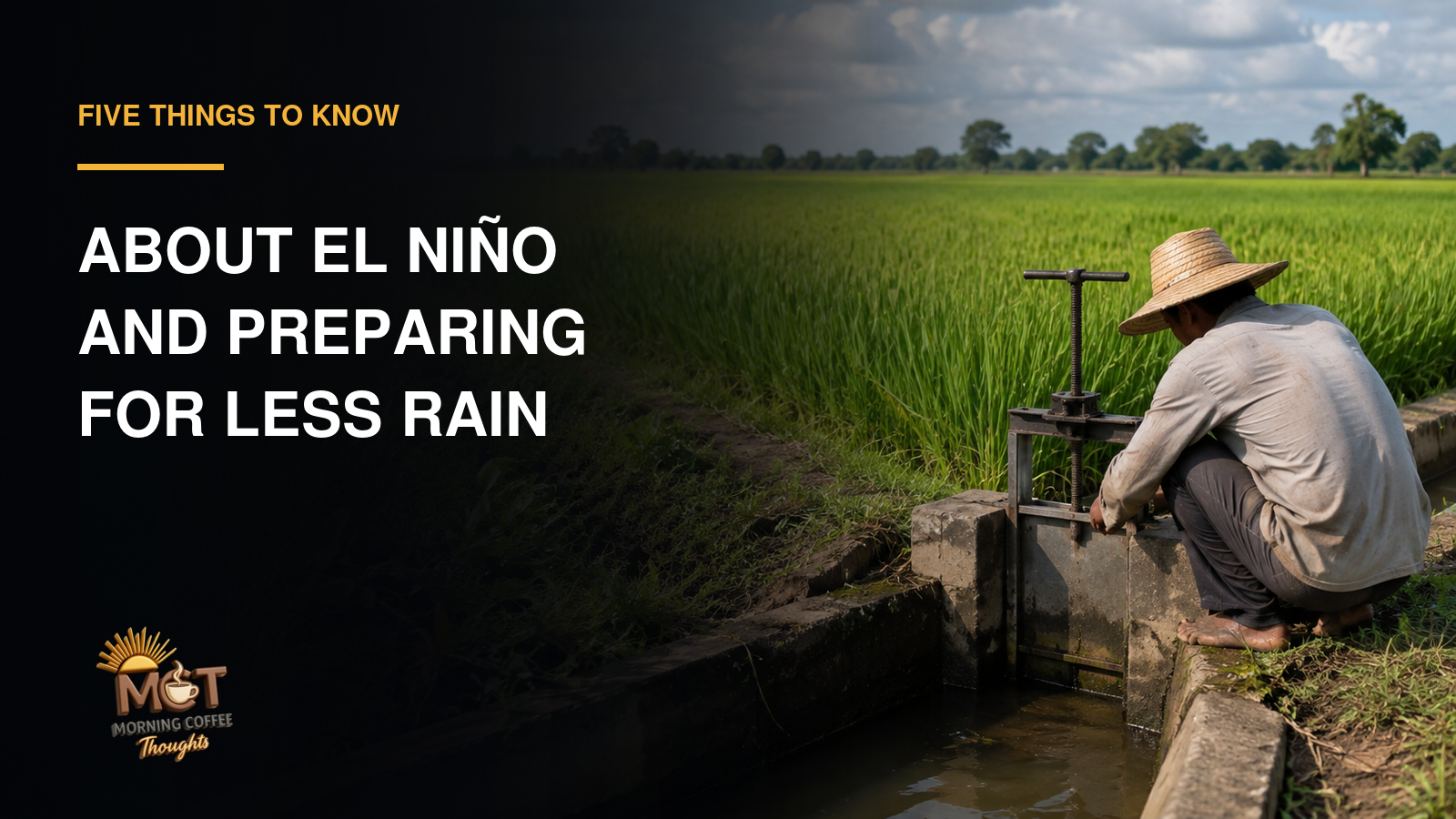
A farmer cannot choose a planting date from the word El Niño alone. The crop, its stage of growth, soil conditions and available irrigation all affect the decision. PAGASA's agricultural assessments take crop water requirements and growing stages into account rather than assuming that the same rainfall amount serves every field equally well.
The agency advises conserving water, maintaining irrigation systems, collecting rainwater and using suitable drought-tolerant crops and practices that retain soil moisture. Its current advisory also calls for checking pumps and drainage after heavy rain, since damage or blockage can interfere with water management.
Before buying seed or changing a planting plan, ask the local agriculture office and irrigation provider about the specific crop and the expected water schedule. A general recommendation to change crops leaves too much unanswered if the farmer does not know the cost, suitability or water requirement of the alternative.
That conversation needs to happen while choices remain open. Once money has gone into seed, labor and land preparation, discovering that irrigation will be unavailable can leave a farming household with expenses it cannot recover from the planned harvest.
WHAT TO WATCH
Watch for the next local irrigation schedule and crop-specific advisory before committing to planting. Ask whether the expected supply covers the crop's growing period, and what adjustment the agriculture office recommends if it does not.