MCT DAILY
No fake news. No noise. Just the facts you need.
The morning Daily Brief anchors the day. New developments and short explainers follow when the story changes.
FIVE THINGS TO KNOW…
Short explainers published throughout the day.
MCT READER PULSE · MCT-PULSE-2026-003
MCT READER SURVEY
Do you find Sen. Loren Legarda’s explanation for her medical leave and overseas travel credible?Sa tingin mo, kapani-paniwala ba ang paliwanag ni Sen. Loren Legarda tungkol sa kanyang medical leave at pagbiyahe sa ibang bansa?
This short reader pulse asks whether MCT readers find Sen. Loren Legarda’s public explanation credible.
This survey measures reader perception. It cannot establish anyone’s medical condition or determine wrongdoing. It reflects only the views of verified MCT readers who choose to participate and is not nationally representative.
View reader pulse archive →Thank you for joining this MCT reader pulse. Results will be published after it closes.
Results reflect only verified MCT readers who voluntarily participated. They do not represent the views of the general Philippine population. Demographic groups with fewer than five responses are not displayed.
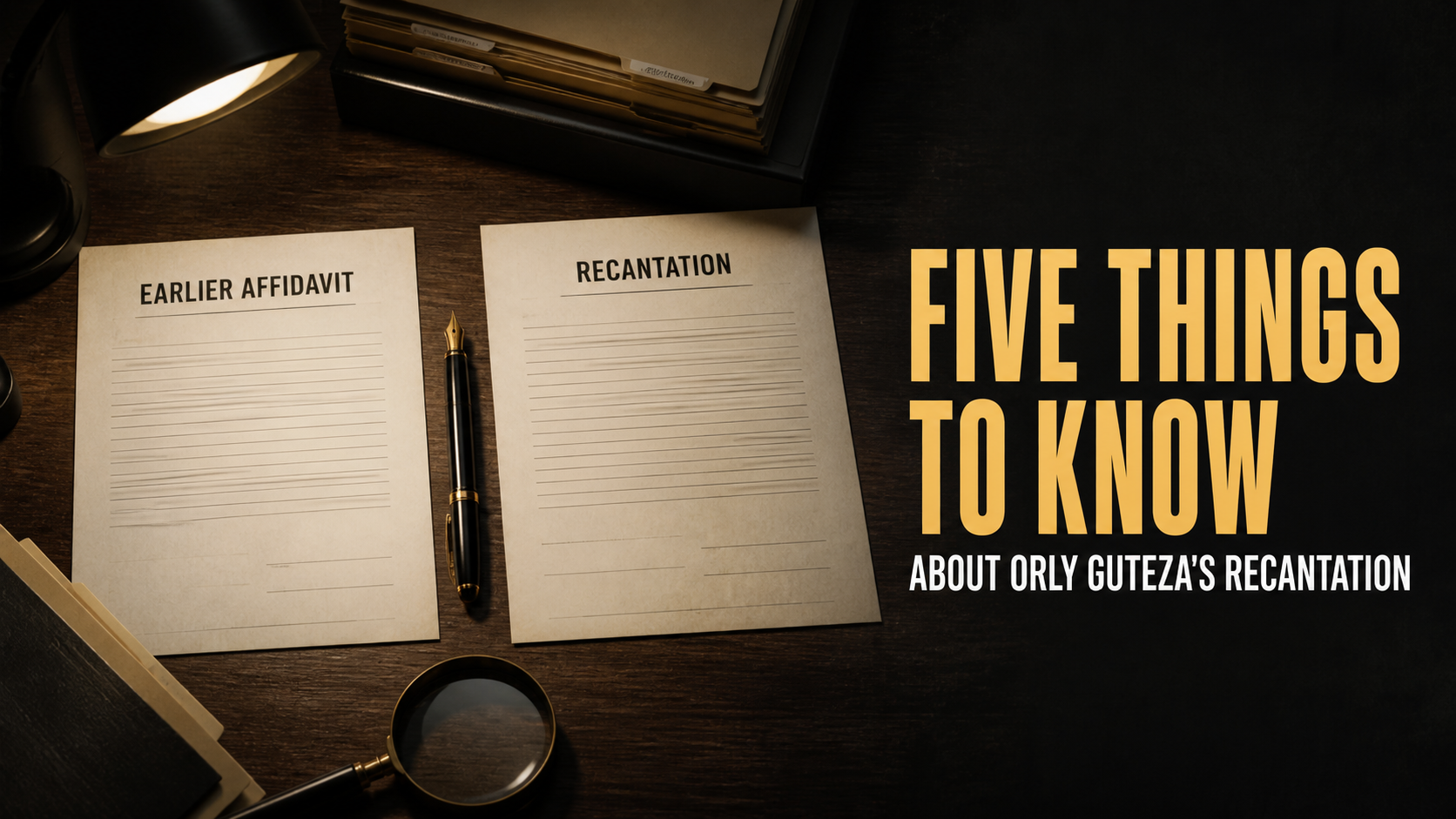
FIVE THINGS TO KNOW ABOUT ORLY GUTEZA'S RECANTATION
Orly Guteza has withdrawn his earlier accusation. Here is what a recantation changes, what it does not prove, and what the Ombudsman still needs to examine.

Orly Guteza has withdrawn the accusation that made him a central witness in the flood-control controversy. In a new affidavit reportedly dated August 13, he took back his earlier claim that he delivered suitcases of cash to former House Speaker Martin Romualdez and former Ako Bicol Representative Zaldy Co. He also alleged that Senator Rodante Marcoleta and former Anakalusugan Representative Mike Defensor helped prepare or coach his earlier account.
The new affidavit changes the evidentiary picture, but it does not settle the case. Here are five things readers should understand before accepting anyone's preferred conclusion.
A RECANTATION DOES NOT AUTOMATICALLY ERASE THE EARLIER STATEMENT
Philippine courts generally treat recantations with caution. A witness cannot always make an earlier statement disappear simply by signing a new affidavit that contradicts it.
Investigators and courts compare the two versions. They examine when each was made, whether the witness had personal knowledge, how specific the account was, whether it was voluntary, and whether other evidence supports it.
The Supreme Court has repeatedly warned that recantations can be unreliable because witnesses may be pressured, paid, frightened, or persuaded to change their story. That does not mean every recantation is false. It means the second statement must be tested instead of automatically accepted.
For readers, the practical rule is simple: a changed affidavit creates a credibility problem that investigators must resolve. It is not an eraser.
WHAT TO WATCH
Watch whether Guteza is placed under oath and questioned about both versions, including exactly why he changed his account and who was present when each affidavit was prepared.
THE ORIGINAL ACCOUNT ALREADY HAD A SERIOUS AUTHENTICATION PROBLEM
Before the recantation, the first affidavit was already under scrutiny because the lawyer whose name appeared as the notary reportedly denied notarizing it. A Manila executive judge later recommended a preliminary investigation for possible falsification.
That defect does not automatically prove every factual claim in the document was false. It does raise an obvious question about how the affidavit was produced and whether normal safeguards were bypassed.
The new allegation that other political figures helped prepare the earlier statement makes the document trail even more important. Investigators should identify who drafted it, who arranged the signing, who supplied the details, and how the disputed notarization entered the record.
WHAT TO WATCH
Look for handwriting, electronic files, messages, meeting records, travel records, and testimony from the people involved in preparing and handling both affidavits.
THE RECANTATION DOES NOT BY ITSELF CLEAR ROMUALDEZ OR CO
Guteza's withdrawal weakens any case that depends heavily on his earlier account. It does not establish that Romualdez or Co is innocent of every allegation connected to flood-control funds.
The Ombudsman's preliminary investigation into alleged kickbacks must be assessed on the whole record. That may include procurement documents, financial records, contractor testimony, communications, project inspections, and evidence from witnesses other than Guteza.
Romualdez and Co have denied the accusations. Those denials, Guteza's first account, and his recantation all need to be tested against independent evidence.
WHAT TO WATCH
Watch whether the Ombudsman identifies evidence that stands without Guteza. If the case has no meaningful support beyond his disputed statement, that should become clear. If documents and other witnesses corroborate parts of the allegation, the recantation will not end the inquiry.
THE NEW ACCUSATIONS AGAINST MARCOLETA AND DEFENSOR ARE STILL ALLEGATIONS
The same caution must apply to Guteza's new story. His claim that Marcoleta and Defensor coached him or helped manufacture the earlier accusation is not proven merely because it appears in a later affidavit.
If investigators rejected the first statement without testing it, they would be careless. If they accepted the second statement without testing it, they would repeat the same mistake.
Marcoleta and Defensor must be given the chance to answer. Investigators must then look for communications, witnesses, drafts, schedules, or other records that could confirm or contradict Guteza's new account.
WHAT TO WATCH
Watch for independent proof of meetings or coordination, and for formal responses from Marcoleta and Defensor. Political reactions are not substitutes for evidence.
AFFIDAVITS ARE STARTING POINTS, NOT COMPLETE PROOF
An affidavit records what a person says. It is not automatically the same as tested testimony. In court, the witness may have to appear, identify the statement, explain inconsistencies, and answer questions from the other side.
The Supreme Court has emphasized that affidavits are generally treated as hearsay unless the person who made them is presented as a witness. The precise rules depend on the proceeding, and an Ombudsman preliminary investigation is not the same as a full criminal trial. Even so, the core lesson is useful: signed paper cannot replace corroboration and questioning when the story keeps changing.
For the public, this is where patience becomes necessary. The loudest interpretation may arrive first, but the evidentiary record takes longer to build.
WHAT TO WATCH
Watch whether Guteza appears before the Ombudsman or another proper forum, whether he is questioned on both affidavits, and whether investigators preserve the records needed to test his claims.
BOTTOM LINE
Guteza's recantation damages his credibility and forces investigators to reexamine the role his first statement played in the case. It does not automatically clear Romualdez and Co, and it does not prove the new accusations against Marcoleta and Defensor. The proper response is to compare both accounts with evidence that does not change when a witness changes his mind.
SUPPORT MCT
HELP KEEP INDEPENDENT POLITICAL WRITING GOING.
Morning Coffee Thoughts is reader-supported. Contributions help pay for research tools, hosting, and the work required to verify and explain each development.
RECENT COMMENTARY
THE LATEST FROM MCT