FIVE THINGS TO KNOW…

Short explainers published throughout the day.

10:45 PM7-minute read

ABOUT THE OCTOBER WATER-RATE INCREASES

Metro Manila households served by Maynilad and Manila Water will see slightly higher water charges beginning October 1. The announced increases are small for many residential customers, but the figures vary by concessionaire and consumption level. That makes it easy to misunderstand a notice expressed only in centavos per cubic meter.

Read the explainer →
7:21 AM6-minute read

ABOUT THE NOTE HANDED TO GIBO TEODORO IN SEOUL

Defense Secretary Gilberto “Gibo” Teodoro Jr. was answering questions at the Seoul Defense Dialogue on September 8 when a man handed him a note. He read it aloud, challenged its rejection of the 2016 South China Sea ruling and objected to being interrupted that way.

Read the explainer →
9:55 AM8-minute read

ABOUT EL NIÑO AND PREPARING FOR LESS RAIN

It can be raining outside while PAGASA warns about El Niño. That can sound confusing when the immediate problem is a wet road or a flooded field. The two warnings describe different periods: the weather happening now and the rainfall conditions that may develop over the coming months.

Read the explainer →
5:30 AM8-minute read

ABOUT THE NEW ARREST WARRANTS AGAINST ZALDY CO, MARTIN ROMUALDEZ AND TWO OTHERS

The Sandiganbayan has ordered the arrest of Zaldy Co, Martin Romualdez and two other accused in the plunder case filed on September 7. By Monday evening, authorities had served Romualdez's warrant and carried out booking procedures at Cardinal Santos Medical Center in San Juan. His arrest is a confirmed development; it does not establish that his three co-accused are also in custody.

Read the explainer →
3:15 PM8-minute read

ABOUT THE PLUNDER CASE AGAINST MARTIN ROMUALDEZ

The Office of the Ombudsman filed a plunder case against former House Speaker Martin Romualdez at the Sandiganbayan on September 7 over his alleged involvement in flood-control kickbacks. The accusations have now reached the court that will handle the criminal case. Romualdez denies wrongdoing and remains presumed innocent.

Read the explainer →
1:18 PM7-minute read

ABOUT THE NEW SWS POVERTY NUMBERS

Self-rated poverty and food poverty declined in June, but the figures also show how many Filipino families remain under pressure and why lower household budgets do not necessarily mean life became cheaper.

Read the explainer →
2:02 PM11-minute read

ABOUT THE CHILDREN'S SOCIAL MEDIA SAFETY ACT

House Bill No. 9965 would bar children below 13 from having social media accounts, require parental consent for users aged 13 to 17, regulate platform algorithms, and impose fines reaching P50 million. It is still being deliberated in the House.

Read the explainer →
12:02 PM7-minute read

ABOUT THE SEALED BIR BOX

Marcos authorized the BIR to comply with the Senate subpoena. That did not open the records to the public or prove the unexplained-wealth allegation.

Read the explainer →

MCT READER PULSE · MCT-PULSE-2026-008

MCT READER SURVEY

Senator-judges who are absent from the impeachment trial—including those on medical leave, in hiding, or detained—should still be allowed to cast a vote. Do you agree?Ang mga senator-judge na wala sa impeachment trial—kabilang ang naka-medical leave, nagtatago, o nakadetine—ay dapat payagan pa ring bumoto. Sang-ayon ka ba?

Senator-judge Erwin Tulfo asked the impeachment court to clarify who may validly vote and how absent members affect the constitutional two-thirds requirement. He cited one senator on medical leave abroad, one in hiding, and two in detention. The court had not resolved those questions when this survey opened. This survey asks for your view; it does not state what the Constitution or the impeachment rules require.

Background: Senate impeachment records, INQUIRER.net, and MindaNews.

This is an informal survey of verified MCT readers who choose to participate. It is not nationally representative.

Open the shareable survey page →
View previous survey results →
Checking your reader session…

September 14, 2026 · 10:45 PM7-minute read

ABOUT THE OCTOBER WATER-RATE INCREASES

Metro Manila households served by Maynilad and Manila Water will see slightly higher water charges beginning October 1. The announced increases are small for many residential customers, but the figures vary by concessionaire and consumption level. That makes it easy to misunderstand a notice expressed only in centavos per cubic meter.

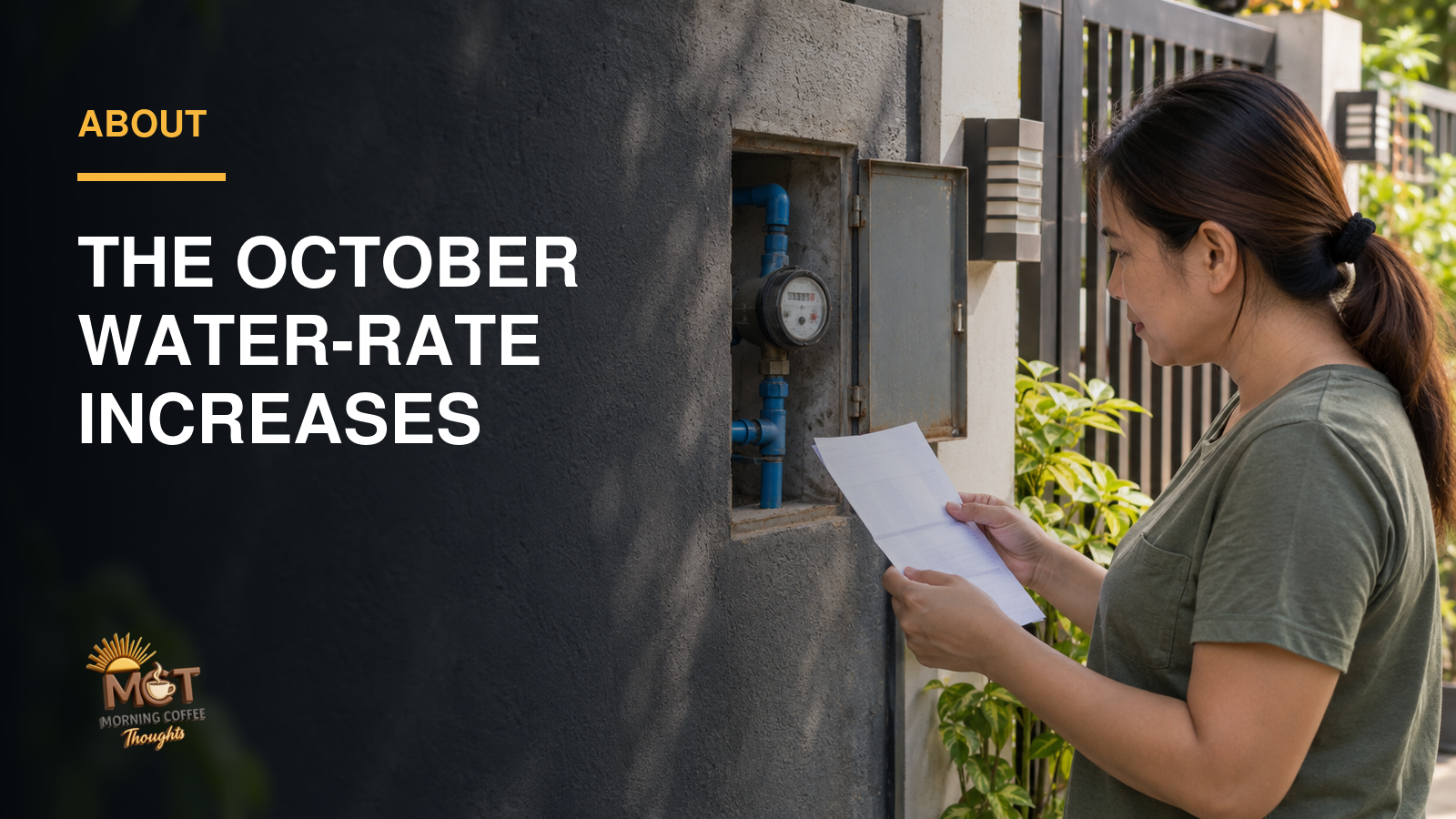
A Filipino homeowner compares a water bill beside a household water meter.

The change comes from the foreign currency differential adjustment, or FCDA. It is separate from a household using more water and separate from a penalty for late payment. Here are five things to know about how the adjustment works, how much it adds to typical bills, who may be exempt and what to check when the October bill arrives.

1

1. THE INCREASE STARTS OCTOBER 1, AND MAYNILAD CUSTOMERS WILL SEE THE LARGER CHANGE

The Metropolitan Waterworks and Sewerage System approved new fourth-quarter adjustments for the two private concessionaires serving Metro Manila and nearby areas. Maynilad, which serves the West Zone, will add an average of ₱0.24 per cubic meter. Manila Water, which serves the East Zone, will add an average of ₱0.08 per cubic meter.

Those per-cubic-meter figures do not simply multiply into every bill in the same way because residential water charges use consumption brackets and other components. The regulator therefore gave sample monthly effects. For Maynilad customers using 10 cubic meters or less, the increase is ₱0.67. At 20 cubic meters it is ₱2.54, and at 30 cubic meters it is ₱5.19.

For Manila Water, the corresponding increases are ₱0.34, ₱0.75 and ₱1.53. These are additions to the bill, not the new total amount due. The customer’s full bill will still depend on consumption, the applicable minimum or bracketed charge, environmental or sewerage charges and other authorized components.

WHAT TO WATCH

Look at the billing period, not only the date the bill arrives. The new adjustment should apply beginning October 1. Compare the concessionaire named on the bill and the actual cubic meters used with the correct published bracket before deciding whether the increase is wrong.

2

2. THE FCDA LINKS PART OF THE WATER BILL TO FOREIGN EXCHANGE MOVEMENTS

FCDA stands for foreign currency differential adjustment. Maynilad and Manila Water collect from customers in pesos, but some fees and loans for water and wastewater projects are paid in foreign currencies. When exchange rates move, the peso cost of those payments can rise or fall.

MWSS uses the FCDA every quarter to account for that difference. If the peso cost of the allowed foreign payments increases, the adjustment can add to bills. If exchange rates move the other way, it can reduce charges or produce a rebate. This quarter’s approved change is an increase for both water companies.

That does not mean every foreign-currency loss claimed by a company is automatically charged to customers. MWSS reviews the calculations and approves the amount that may be included. The October increase is also not a new tax. It is part of the water rate approved by the regulator to account for specified foreign-currency costs.

WHAT TO WATCH

MWSS reviews this component every quarter, so the October figure is not permanent. Watch the regulator’s next FCDA notice and whether it explains the exchange rates and approved calculation. A later quarter can raise, lower or reverse the adjustment depending on the validated figures.

3

3. THE TWO CONCESSIONAIRES HAVE DIFFERENT INCREASES BECAUSE THEIR APPROVED COSTS AND RATES ARE DIFFERENT

Maynilad and Manila Water operate separate service zones, and MWSS calculates and approves their adjustments separately. Their approved rates and the foreign-currency costs that MWSS allows them to include are not identical. That is why the same period of exchange-rate movement does not produce the same centavo increase or the same bill effect for every household.

The West Zone includes much of western Metro Manila and parts of Cavite, while the East Zone covers eastern Metro Manila and parts of Rizal. A household should use the notice from the company that actually supplies its meter. Comparing a Maynilad bill with Manila Water’s smaller sample increase can create the false impression that the larger amount is automatically an error.

Consumption matters too. A 30-cubic-meter household receives a larger peso adjustment than one using 10 cubic meters or less. That difference reflects the amount of water billed under the approved structure. It does not show that the higher-use household was singled out for a separate penalty.

WHAT TO WATCH

Check three things together: the supplier, the billing period and the metered consumption. If the amount still does not match the concessionaire’s published calculation, ask for a breakdown of the FCDA and other bill components rather than comparing only the total with last month.

4

4. QUALIFIED LIFELINE CUSTOMERS ARE EXEMPT FROM THE ANNOUNCED ADJUSTMENT

The regulator’s announcement says qualified enhanced-lifeline customers of both concessionaires will not be charged the new adjustment. For Maynilad, the notice specifically identifies eligible Pantawid Pamilyang Pilipino Program households under the enhanced lifeline. Manila Water also announced exemptions for qualified low-income or enhanced-lifeline customers.

The exemption is important because even a small increase matters more to a household already struggling with basic expenses. But low income alone may not cause a bill to update automatically. A customer may need to be enrolled, matched with the correct account or submit documents under the concessionaire’s rules.

Customers should not assume that every household using 10 cubic meters or less is automatically exempt. Low consumption and lifeline eligibility are related but not identical. The safest check is whether the account is already tagged under the approved lifeline program and whether that status appears correctly in the October computation.

WHAT TO WATCH

Before the new rate takes effect, check the concessionaire’s official lifeline requirements and the status of the account. If an eligible household is charged the adjustment, keep the bill and proof of enrollment, then use the company’s official customer-service channel or the MWSS regulatory complaint route.

5

5. A HIGHER OCTOBER BILL MAY NOT BE CAUSED BY THIS RATE CHANGE ALONE

The approved FCDA adds only centavos to a few pesos in the sample residential bills. If a household’s total jumps by hundreds of pesos, the new adjustment is unlikely to explain the entire difference. Higher metered use, a leak, an estimated reading corrected later, arrears, sewerage or environmental charges, or a change in account status may be involved.

Start with the meter reading shown on the bill. Compare the current and previous readings, the number of cubic meters charged and the length of the billing period. Then find the FCDA as a separate component or ask the concessionaire to identify it. This keeps a small authorized adjustment from being blamed for an unrelated billing problem.

If the meter appears to keep moving while every tap is closed, a leak is possible. If the reading itself looks wrong, photograph the meter and keep previous bills before reporting the discrepancy. Do not send account numbers or personal details to unofficial pages offering to fix the bill.

WHAT TO WATCH

When October bills arrive, compare the actual FCDA line with the published increase and check whether lifeline status was applied. Watch for any MWSS correction or updated consumer advisory. Use verified concessionaire or regulator channels if the bill cannot be explained by consumption and authorized charges.

BOTTOM LINE

The October adjustment is real, but it is modest: up to ₱5.19 in the published Maynilad examples and up to ₱1.53 in the Manila Water examples. Its purpose is to account for validated foreign-exchange costs, and qualified lifeline customers are exempt. The useful response is not to panic over the rate announcement, but to read the bill carefully. Check the supplier, consumption, billing period, FCDA amount and lifeline status. Keep the October bill beside the previous one so every changed line can be compared. A much larger increase needs a separate explanation.

GOOGLE PREFERRED SOURCES

FOLLOW MCT ON GOOGLE

Google’s Preferred Sources feature lets you choose publications you want Google to prioritize for you. Select “Add to Preferred Sources” to make MCT easier to find in Top Stories and other eligible Google results. This does not subscribe you to email.

← Back to MCT home

LATEST COMMENTARY

View all commentary →

SUPPORT MCT

HELP KEEP INDEPENDENT POLITICAL WRITING GOING.

Morning Coffee Thoughts is reader-supported. Contributions help pay for research tools, hosting, and the work required to verify and explain each development.

Choose the monthly support amount you are comfortable with.Continue through PayPal
Send support through GCash or Maya0969 314 4839