MCT DAILY

No fake news. No noise. Just the facts you need.

The morning Daily Brief anchors the day. New developments and short explainers follow when the story changes.

FIVE THINGS TO KNOW…

Short explainers published throughout the day.

MCT READER PULSE · MCT-PULSE-2026-004

MCT READER SURVEY

Do you agree with Atty. Lorna Kapunan’s view that Vice President Sara Duterte’s public remarks about threats and hiring an assassin contribute to the problem of violence among Filipino youth?Sang-ayon ka ba sa pananaw ni Atty. Lorna Kapunan na nakadaragdag sa problema ng karahasan sa kabataang Pilipino ang mga pampublikong pahayag ni Vice President Sara Duterte tungkol sa pagbabanta at pagkuha ng assassin?

During an August 19 online press briefing, Kapunan said she was not blaming the Vice President alone. She said Sara Duterte was “contributing to the problem and not to the solution,” while also pointing to political leadership, family values, news coverage, and social media.

Read the report and Kapunan’s quoted remarks before answering.

This survey measures reader opinion. It cannot establish that a public statement or action caused a violent incident. It reflects only the views of verified MCT readers who choose to participate and is not nationally representative.

Open the shareable survey page →
View reader pulse archive →
Checking your reader session…

August 23, 2026 · 9:16 AM5-minute read

ABOUT THE EV CHARGING RULE FOR PARKING LOTS

The five-percent EV parking rule is already law. The detailed charging rules for older and new properties are still being finalized.

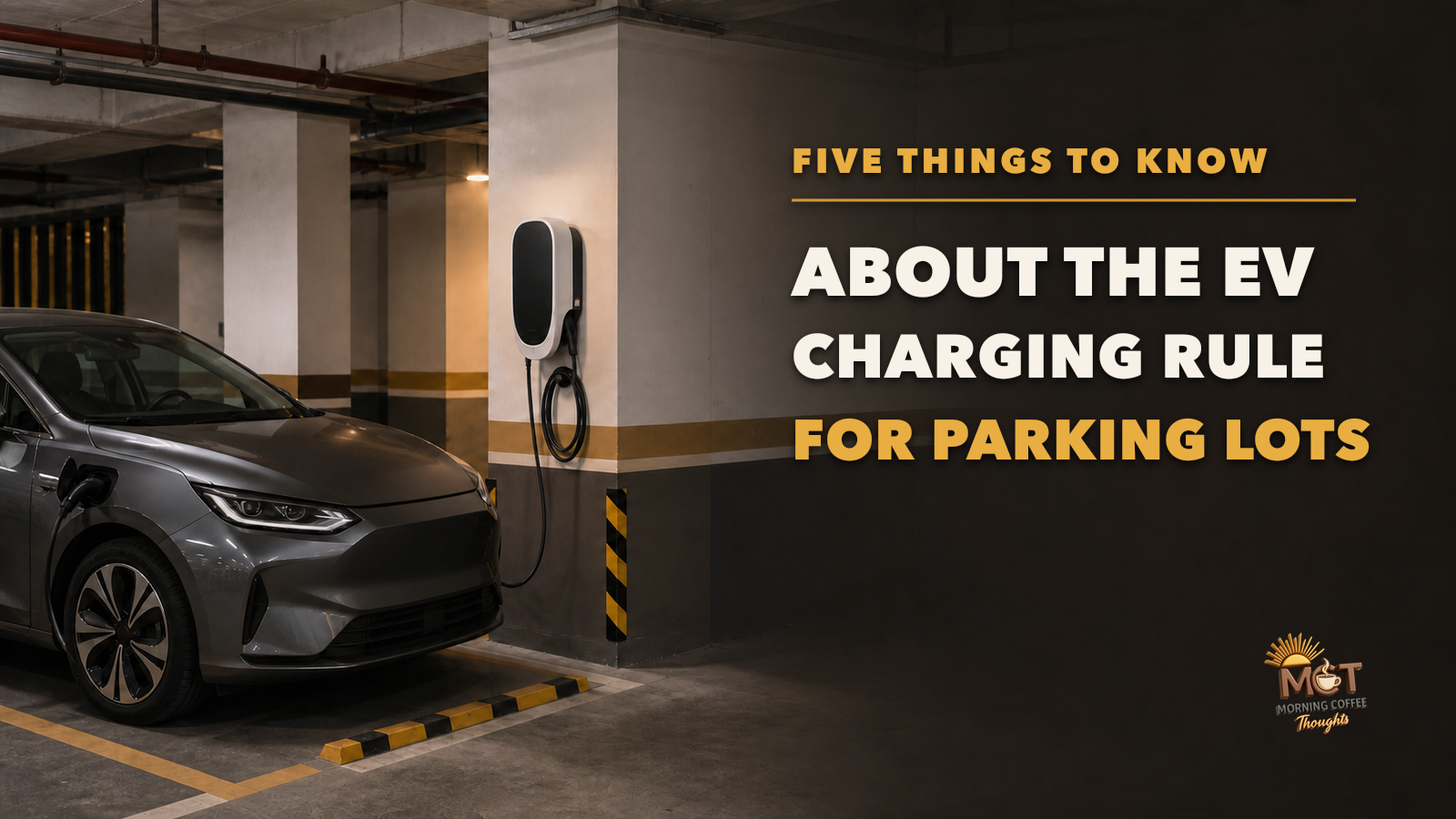
A generic electric car charging inside an older condominium parking garage.

The parking rule is easy to misread. Republic Act No. 11697, or the Electric Vehicle Industry Development Act, already requires dedicated electric-vehicle parking in covered buildings. A new Department of Energy circular now being prepared deals with when charging equipment must be installed and which establishments will be covered.

The distinction affects malls, offices, schools, hotels, factories, condominiums, apartment buildings, transport facilities, and many other properties. It also raises immediate questions for older buildings: Is there enough electrical capacity? Who pays for the equipment? What happens when a charger cannot fit safely on the property?

The DOE document available during this research is still a draft. Its final wording, publication date, and compliance calendar can change.

1

THE FIVE-PERCENT RULE IS ALREADY IN THE LAW

Buildings and establishments constructed after the law took effect must reserve parking spaces for electric vehicles. When a property has 20 or more parking spaces, at least five percent of the total must be dedicated to EVs.

Existing buildings are also covered, with their timetable tied to the government's electric-vehicle roadmap. This means an older condominium is not automatically exempt simply because it was built before the law.

A reserved EV space and a charger-equipped space are separate requirements. Drivers may therefore see EV-only parking markings at a property before charging equipment appears there.

WHAT TO WATCH

Watch for the final DOE circular and its official publication date. That document should state when each group of existing properties must move from reserved parking to working chargers.

2

THE DOE DRAFT COVERS FAR MORE THAN MALLS

The draft's list includes condominiums, apartment buildings, offices, schools, hotels, factories, restaurants, banks, stores, parking garages, airports, seaports, resorts, and several other types of property. Government offices, public transport terminals, gasoline stations, and expressways have separate proposed requirements.

Parking size would help determine the number and power of chargers. The draft reaches some establishments with fewer than 20 spaces and proposes higher minimum charger ratings for properties with larger parking areas.

This could bring chargers closer to where people live and work. Property owners will need the final annex before ordering equipment because a charger that falls below the required rating may receive only partial credit under the draft formula.

WHAT TO WATCH

Read the final Annex A when the DOE issues the circular. Check whether your type of property is named, how parking spaces are counted, how many chargers are required, and what power rating receives full compliance credit.

3

OLDER CONDOMINIUMS MAY HAVE OTHER WAYS TO COMPLY

Republic Act No. 11697 directs existing buildings to comply within the timetable set through the government roadmap. The DOE draft proposes several routes when installation on the property is infeasible because of limited space or an inadequate power supply.

An establishment may seek approval to use a nearby designated EV route or corridor, join a shared charging facility with neighboring properties, or work with an accredited third-party or mobile charging provider. A combination of approved methods may also be allowed.

The draft proposes a two-year compliance period counted from the final circular's effectivity. No countdown should begin while the circular remains unsigned and unpublished, and later implementing guidelines will still have to explain the approval process for alternative sites.

WHAT TO WATCH

Older condominium corporations should look for the final procedure covering electrical limitations, shared facilities, third-party agreements, and DOE approval. A clear engineering assessment will be needed before a board can tell residents which option is workable.

4

THE RULE DOES NOT SET ONE PAYMENT FORMULA FOR EVERY PROPERTY

The law gives the building or establishment owner first priority to install, operate, or maintain a charging station. An accredited charging provider may also be engaged under an agreement with the owner.

An own-use charger cannot collect a charging fee. A commercial charging station may collect fees, subject to DOE rules that require the amount to be broken down so users can see what they are paying for.

No universal condominium-dues formula appears in the law and draft reviewed for this article. Residents should ask whether the proposed equipment will be owned by the condominium corporation, run by an outside operator, or shared with another property, since the contract can affect installation costs and charging fees.

WHAT TO WATCH

Check the final circular for the treatment of mandated chargers as commercial stations, public-access rules, fee disclosure, and any provision on cost allocation. Condominium boards should also disclose the proposed contract before asking owners to approve capital spending or changes in dues.

5

ELECTRICAL AND FIRE-SAFETY CHECKS COME BEFORE INSTALLATION

The DOE draft calls for minimum power ratings, approved connector types, and technical plans signed by a licensed professional engineer. The permit package includes an electrical plan with a load schedule, an electrical permit, and a fire-safety clearance.

These checks help determine whether an old building's panel, wiring, transformer connection, and parking layout can support the equipment. A property may need an electrical upgrade before a charger can be used safely.

The draft also allows off-site or shared compliance when limited power makes installation on the property infeasible. Approval and technical standards will still come from the DOE, local permitting offices, fire authorities, and the distribution utility involved.

WHAT TO WATCH

Watch for the final power ratings, connector rules, permit checklist, and distribution-utility instructions. Property owners should compare those requirements with a signed electrical assessment before buying equipment or announcing a completion date.

BOTTOM LINE

The EV parking requirement is already law. The detailed rules that would convert more reserved spaces into working chargers are still being finalized. For older condominiums, the main questions are physical feasibility, electrical capacity, contracts, and the final compliance timetable. Claims that every parking lot must immediately install chargers go beyond the official record available today.

RECENT COMMENTARY

THE LATEST FROM MCT

View all commentary →

SUPPORT MCT

HELP KEEP INDEPENDENT POLITICAL WRITING GOING.

Morning Coffee Thoughts is reader-supported. Contributions help pay for research tools, hosting, and the work required to verify and explain each development.

Choose the monthly support amount you are comfortable with.Continue through PayPal
Send support through GCash0969 314 4839